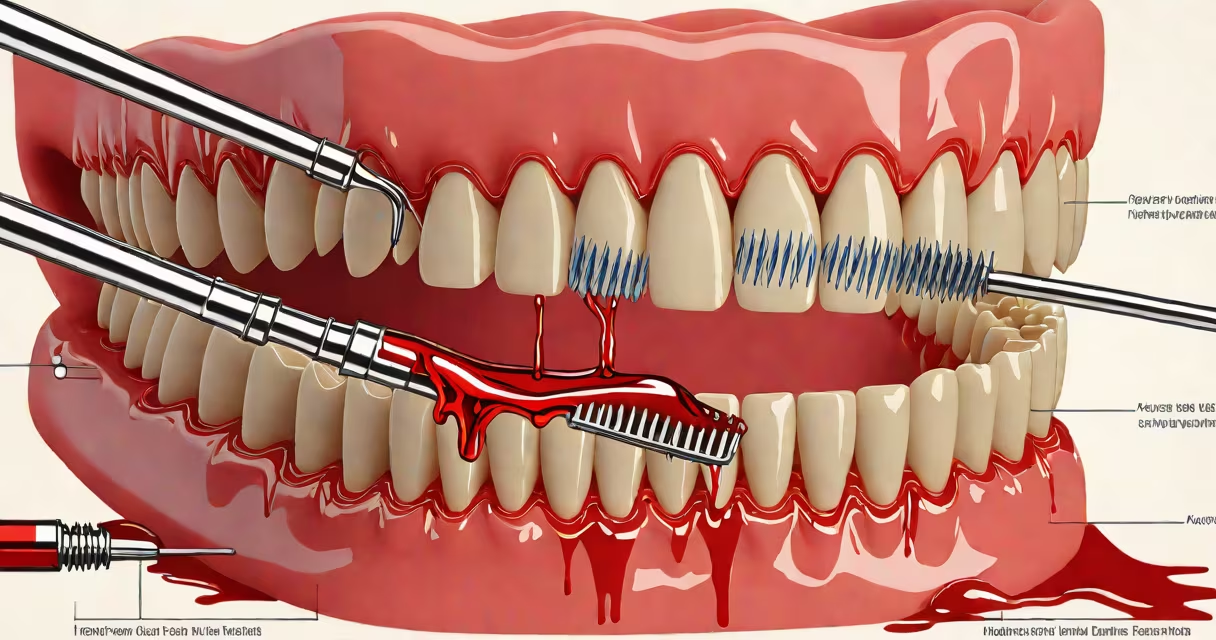
Bleeding and painful gums often indicate gingivitis, the earliest stage of gum disease caused by plaque buildup along the gumline. Left untreated, it can progress to periodontitis, which damages bone and tissue supporting teeth.
Gingivitis develops when bacteria in dental plaque irritate the gums. The body responds with inflammation-redness, swelling, and tenderness. As the gums become inflamed, they bleed easily during brushing or flossing. This is not normal. Healthy gums do not bleed.
According to the American Dental Association (ADA), nearly half of adults aged 30 and older have some form of gum disease. The Centers for Disease Control and Prevention (CDC) reports that 47% of U.S. adults have moderate to severe periodontal disease. These numbers show that gum pain and bleeding are common but not acceptable outcomes.
Plaque forms continuously on teeth, especially near the gumline. If not removed daily through brushing and flossing, it hardens into tartar-a substance that cannot be removed by regular cleaning. Tartar traps more bacteria, increasing irritation and inflammation.
When bacteria accumulate, they trigger immune responses. White blood cells flood the area to fight infection. This leads to swelling and increased blood flow-visible as redness and puffiness. The tissue becomes fragile and prone to breaking, causing bleeding even with light pressure.
A 2021 study published in the Journal of Periodontology found that individuals with bleeding gums had higher levels of inflammatory markers like interleukin-6 (IL-6) in their gingival crevicular fluid compared to those with healthy gums. This confirms that bleeding is not just a symptom-it's a sign of active biological activity.
Bleeding and painful gums fall into several categories based on cause:
| Type | Common Causes | Typical Symptoms |
|---|---|---|
| Gingivitis | Plaque buildup, poor brushing/flossing, hormonal changes | Red, swollen gums; bleeds on brushing; mild discomfort |
| Periodontitis | Untreated gingivitis, smoking, diabetes, genetics | Bleeding, pus, loose teeth, receding gums, persistent bad breath |
| Reactive gingivitis | New medications (e.g., phenytoin, calcium channel blockers), pregnancy | Swelling and bleeding within weeks of starting drug or hormonal shift |
Some people mistake early-stage gum disease for minor irritation. But bleeding gums are not a sign of "hard brushing"-they're a warning. A 2019 ADA survey showed that 62% of patients who reported bleeding gums believed it was due to brushing too hard. In reality, the opposite is true: brushing too hard damages enamel and gums, but it doesn't cause the underlying inflammation that leads to bleeding.
Bleeding gums most frequently appear in areas where plaque accumulates-especially behind the molars and along the lower front teeth. These spots are harder to reach and clean thoroughly, making them hotspots for bacterial growth.
Systemic conditions increase risk. People with uncontrolled diabetes have higher rates of gum disease because high blood sugar impairs immune function and reduces healing capacity. Smoking reduces oxygen delivery to gum tissue, weakening defenses against infection. A 2020 review in Periodontology 2000 found smokers were 2.5 times more likely to develop periodontitis than non-smokers.
I once treated a patient whose gums bled heavily during routine cleaning. He brushed twice daily and used mouthwash. His dentist discovered he was using a hard-bristled brush and applying excessive force. After switching to a soft brush and adjusting his technique, his bleeding stopped within two weeks. But the root issue wasn't brushing-he had undiagnosed gingivitis. The bleeding wasn't from aggression; it was from infection.
Many assume bleeding gums are temporary or harmless. They aren't. Bleeding indicates active inflammation. It's not a cosmetic issue-it's a medical condition requiring attention.
Another myth is that healthy gums don't bleed under any circumstances. That's false. Even healthy gums can bleed slightly during aggressive flossing or if you've recently changed your oral hygiene routine. But consistent bleeding during normal brushing is not normal.
Some believe rinsing with hydrogen peroxide or salt water will fix bleeding gums. While diluted solutions may offer short-term relief, they don't remove plaque or treat the underlying cause. Overuse can damage soft tissues and delay healing.
If your gums hurt and bleed regularly, stop ignoring it. Schedule a dental exam within two weeks. A dentist can measure pocket depth around teeth-probing beyond 3 mm indicates periodontal disease.
At home, improve your routine: brush for two minutes twice daily using a soft-bristled toothbrush. Floss once daily, focusing on the gumline. Use an antibacterial mouth rinse containing cetylpyridinium chloride (CPC) or chlorhexidine-both proven to reduce plaque and bleeding.
For immediate relief, try a 0.1% chlorhexidine rinse-used twice daily for one week. A 2018 clinical trial showed a 40% reduction in bleeding index after seven days. But long-term use is discouraged due to staining risks.