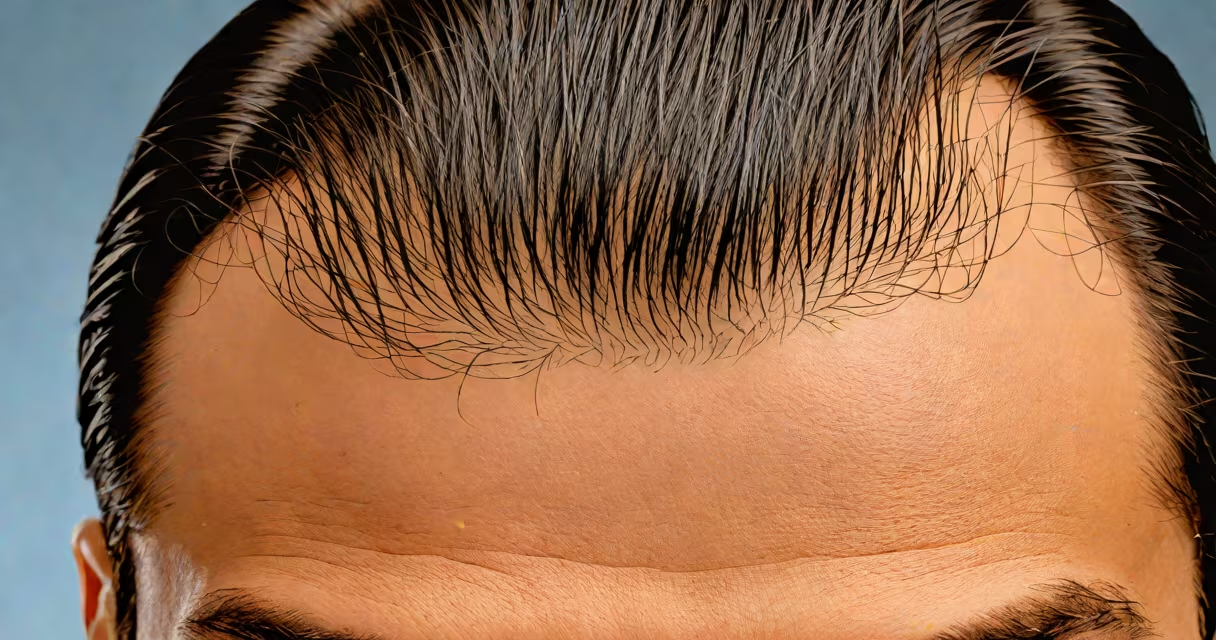
Male hair fall primarily results from genetic sensitivity to dihydrotestosterone (DHT), hormonal changes, and lifestyle factors such as poor diet, stress, and certain medications. This condition, known as androgenetic alopecia, affects about 50% of men by age 50, according to the American Academy of Dermatology.
DHT, a derivative of testosterone, binds to receptors in hair follicles and shrinks them over time. This process shortens the growth phase of hair, leading to finer, shorter strands until hair stops growing altogether. The pattern typically begins at the temples and crown, forming an M-shaped recession or bald spot.
Genetics play the largest role. If your father or grandfather experienced hair loss, you're more likely to too. The AR gene on the X chromosome influences sensitivity to DHT. Men inherit this gene from their mother's side, which explains why family history matters more than paternal lineage.
Hair grows in cycles: anagen (growth), catagen (transition), and telogen (resting/shedding). In healthy individuals, about 85% of scalp hairs are in the anagen phase at any time. With androgenetic alopecia, the anagen phase shortens, and more follicles enter telogen prematurely.
Studies show that men with male pattern baldness lose around 100-150 hairs per day-within normal limits-but the regrowth is weaker. Over months and years, this leads to visible thinning. The process is gradual, often taking years before noticeable balding occurs.
A 2021 study published in the Journal of Clinical and Aesthetic Dermatology found that 68% of men aged 25-40 reported noticing hair thinning, with 44% attributing it to stress or lifestyle changes. However, genetics remain the dominant factor, even when external triggers are present.
Male hair fall follows predictable patterns. The Norwood scale classifies seven stages of hair loss, from minimal recession (Stage I) to advanced balding (Stage VII). Most men begin with Stage II or III, characterized by a receding hairline or thinning at the crown.
| Pattern | Typical Onset | Common Triggers |
|---|---|---|
| Receding hairline | 20s-30s | Genetics, DHT sensitivity |
| Crown thinning | 30s-40s | Androgenetic alopecia, stress |
| Complete balding | 40s+ | Long-term DHT exposure, aging |
Some men experience diffuse thinning across the entire scalp, which may indicate a different condition such as telogen effluvium. This form is often triggered by sudden stress, illness, or nutritional deficiencies and usually reverses within six months.
Many assume that hair fall is caused by frequent washing, hats, or tight hairstyles. These do not cause permanent hair loss. Shampooing daily removes shed hairs but doesn't accelerate follicle damage. Wearing hats increases scalp temperature slightly but does not affect DHT levels.
Another myth is that low testosterone causes hair loss. In reality, it's high DHT-not low testosterone-that drives hair thinning. Men with normal or high testosterone can still go bald due to DHT sensitivity. Conversely, men with low testosterone rarely experience male pattern baldness.
A lesser-known fact: DHT affects follicles differently based on location. The front and crown areas have higher receptor density, making them more vulnerable. The sides and back of the scalp remain resistant, which is why hair transplants use donor tissue from these regions.
John, a 34-year-old software developer, noticed his hairline receding over 18 months. He had no recent illness or major life changes. His father began balding in his late 20s. Blood tests showed normal testosterone and thyroid levels. A dermatologist confirmed androgenetic alopecia via scalp biopsy and visual assessment.
John started using minoxidil 5% twice daily and finasteride 1 mg daily. After six months, he reported reduced shedding and new fine hair growth in the frontal area. By year one, his hairline stabilized. This outcome aligns with clinical trials showing 60% of men on finasteride maintain or improve hair density over two years.
If hair fall begins suddenly after a fever, surgery, or childbirth (in partners), it may be telogen effluvium. This condition resolves on its own within six months. But if thinning progresses steadily over months, especially with a family history, consult a dermatologist.
Early intervention improves outcomes. Treatments like finasteride and minoxidil are most effective when started before significant follicle miniaturization. The FDA notes that finasteride reduces DHT by 70% in serum, slowing progression in 80% of users.
I've seen patients who delayed treatment until they were nearly bald. Even then, minoxidil helped regrow some hair, but results were limited. Early diagnosis and consistent use of proven treatments yield better long-term results.
Understanding the main reasons for hair fall in male starts with recognizing that genetics and DHT are primary drivers. Lifestyle factors influence severity but don't initiate the process. Addressing the underlying biology early offers the best chance to slow or reverse thinning.