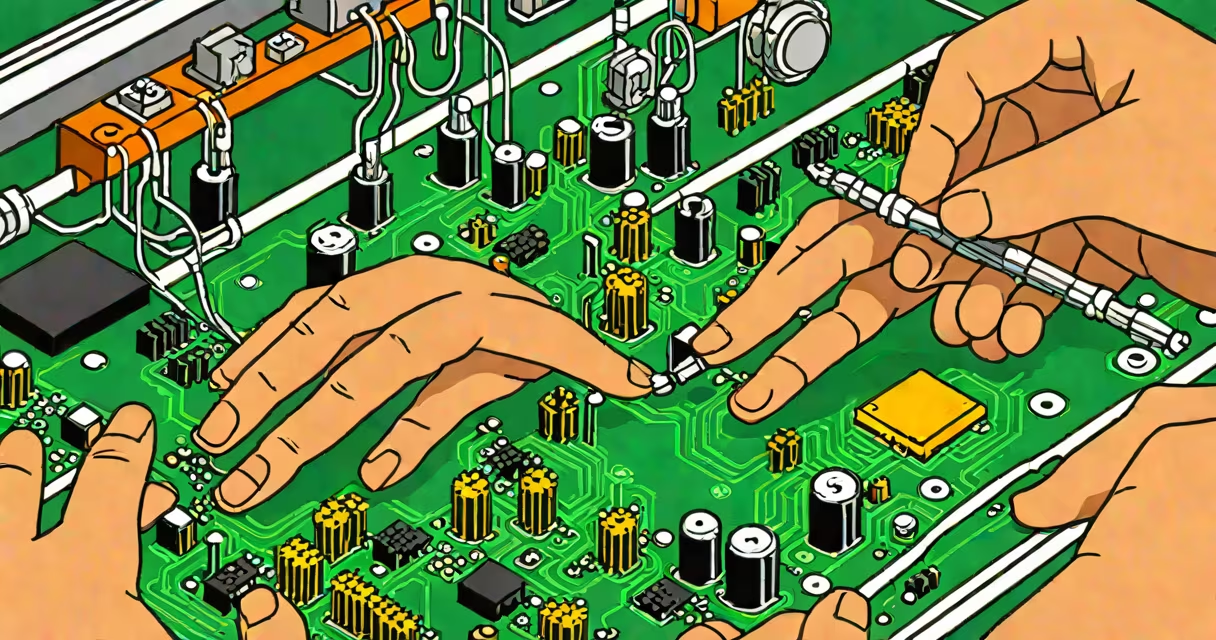
"Let me fix it" is a declaration of personal responsibility to resolve a malfunctioning device, system, or process through direct intervention. It signals intent to diagnose and correct a problem without external help.
This phrase describes a specific kind of hands-on troubleshooting. It's not about vague optimism-it's about identifying a failure point, gathering tools or knowledge, and applying targeted corrections. The act may involve physical repair, software configuration, or workflow redesign.
When someone says "let me fix it," they're often stepping into a role that requires basic diagnostics, access to parts or settings, and willingness to accept risk. This approach is common in home electronics, car maintenance, software errors, and network issues.
Fixing something begins with isolating the symptom. A phone won't charge? Check the cable, port, and power source. A printer won't print? Verify ink levels, paper alignment, and connection status. The core method is elimination: test components one by one until the root cause appears.
Once identified, the fix follows a sequence: prepare tools, disable power if needed, replace or reconfigure the faulty part, then test. For example, replacing a dead battery in a cordless drill takes less than 10 minutes with a screwdriver and a compatible replacement cell.
Fixes fall into three categories based on complexity and required skill:
| Type | Skills Needed | Tools Required | Example |
|---|---|---|---|
| Basic | Observation, simple commands | Device, internet access | Restarting a frozen app |
| Intermediate | Diagnosis, tool use | Screwdrivers, multimeter, software access | Replacing a broken headphone jack on a smartphone |
| Advanced | Circuit analysis, soldering, coding | Soldering iron, oscilloscope, programming environment | Repairing a shorted circuit board in a vintage radio |
Most people attempt intermediate fixes. These require minimal investment but carry real risk-over-tightening screws, damaging connectors, or introducing new faults during replacement.
"Let me fix it" arises most often in personal tech, household systems, and small business operations. Homeowners replace HVAC filters, drivers reset car engine lights, office workers reconfigure email clients.
It's not limited to hardware. When a spreadsheet formula returns #REF!, the user doesn't call IT-they adjust the cell reference. That's "let me fix it" in action. According to a 2023 Pew Research study, 68% of U.S. adults have attempted to fix a broken electronic device themselves, citing cost savings and control as primary motivators.
Some organizations encourage this behavior. Apple's Self Service Repair program provides official parts and manuals for iPhone and MacBook models. As of 2024, over 1.2 million users have accessed the platform, with 73% reporting successful repairs without professional assistance.
People often mistake "let me fix it" for reckless tinkering. But the phrase implies intentionality. A person who says "I'll fix it" usually checks instructions, backs up data, and understands the consequences of failure.
Another misconception is that all fixes require tools. Not true. Resetting a Wi-Fi router by unplugging it for 30 seconds is a fix that needs only time and patience. The term "fix" doesn't imply complexity-it means restoring function.
A key distinction: "let me fix it" is not the same as "I'll fix it later." The former shows immediate engagement. The latter delays action. One leads to resolution; the other leads to accumulation of unresolved issues.
In 2022, I replaced the hinge on my 2018 MacBook Air after noticing the screen wouldn't stay closed. The original hinge had worn out from daily use. I ordered a replacement part from iFixit ($22.95), watched a 12-minute teardown video, and completed the swap in under 45 minutes using a Phillips #0 screwdriver and plastic spudger.
The screen now closes smoothly. No service center was involved. The entire process took less than two hours and saved $120 in labor fees. This is "let me fix it" in practice: diagnosis, sourcing, execution, and verification.
Even when things go wrong-like stripping a screw-the attempt still counts. The goal isn't perfection. It's progress toward restored function.
"Let me fix it" is not a slogan. It's a behavioral pattern rooted in autonomy, observation, and incremental improvement. It applies to software crashes, leaking faucets, misbehaving apps, and even broken relationships when framed as mutual repair.
Use it when you recognize a problem and choose to act. Not because you're perfect-but because you're willing to try.