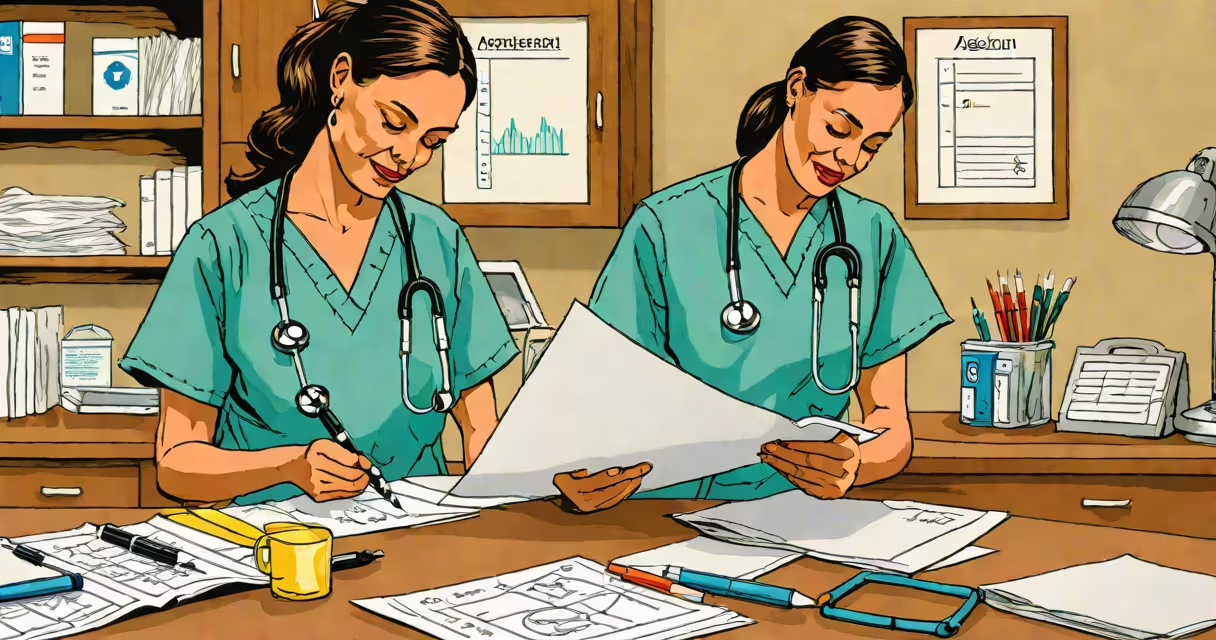
A medical assistant performs clinical and administrative tasks in outpatient healthcare settings such as doctors' offices, clinics, and surgical centers. They support physicians, nurses, and patients by managing appointments, collecting patient data, preparing exam rooms, and assisting during procedures.
Medical assistants work under physician supervision and follow state-specific regulations. Their role combines direct patient interaction with behind-the-scenes coordination. Tasks vary by setting-primary care clinics focus on routine checkups, while urgent care or specialty practices may involve more complex procedures.
The U.S. Bureau of Labor Statistics reports that medical assistants held about 694,000 jobs in 2022, with employment projected to grow 16% from 2022 to 2032-much faster than average. This growth reflects rising demand for preventive care and expanded access to health services.
Medical assistants operate in a dual capacity: they perform hands-on clinical duties and manage office operations. In a typical day, they might start by checking in patients, updating electronic health records (EHRs), and verifying insurance eligibility. Then they assist with physical exams, take important signs, and prepare instruments for procedures.
They often serve as the first point of contact for patients. A medical assistant might greet a new patient, explain consent forms, and collect demographic and medical history. They then relay this information to the provider. Accuracy matters-misrecorded allergies or medications can lead to adverse events.
During a visit, they may draw blood, administer injections, apply bandages, or conduct basic tests like urinalysis. They also prepare patients for exams by draping them properly and ensuring exam tables are sanitized. After the appointment, they update the schedule, send referrals, and process billing codes.
Medical assistants divide their time between clinical and administrative tasks. The balance depends on the practice's size, specialty, and staffing model. In small rural clinics, one assistant may handle nearly everything. In large urban practices, roles are more specialized.
| Category | Common Tasks | Examples from Real Settings |
|---|---|---|
| Clinical | Important signs, specimen collection, EKGs, wound care | Measuring blood pressure and temperature in a family medicine clinic; performing a 12-lead EKG in a cardiology office |
| Administrative | Scheduling, insurance verification, coding, correspondence | Booking follow-up visits for diabetic patients; confirming coverage for a dermatology biopsy |
| Procedural Support | Assisting during exams, sterilizing tools, documenting results | Handing instruments to a surgeon during a minor skin lesion removal; logging lab results into the EHR |
According to the American Association of Medical Assistants (AAMA), 82% of medical assistants report performing at least five clinical tasks daily. These include taking blood pressure, measuring height and weight, and preparing patients for exams. In contrast, 94% handle administrative duties like scheduling and filing.
Some assistants receive training to perform advanced tasks. For example, certified medical assistants (CMA) can conduct EKGs, administer vaccines, and manage patient education materials. In states like California and Texas, assistants may be authorized to perform phlebotomy after additional certification.
Medical assistants are essential in primary care, pediatrics, internal medicine, and specialty clinics. They reduce provider workload by handling routine tasks, allowing physicians to focus on diagnosis and treatment. A 2021 study published in JAMA Network Open found that clinics using medical assistants had 18% higher patient satisfaction scores and 12% shorter wait times.
They also improve workflow efficiency. In a multi-provider clinic, one assistant might manage the front desk, another handles lab prep, and a third supports the provider during patient visits. This division allows teams to see more patients without increasing staff costs.
Medical assistants are especially valuable in underserved areas. Rural clinics often lack enough providers, so assistants fill gaps in care delivery. They help screen for chronic conditions, educate patients on medication adherence, and coordinate referrals-all within their scope of practice.
Many people assume medical assistants are just "office helpers" or "receptionists." That's incorrect. While they do answer phones and greet patients, their responsibilities extend far beyond clerical work. They are trained professionals who perform clinical procedures and contribute directly to patient outcomes.
Another misconception is that medical assistants can prescribe medication or diagnose illness. They cannot. Their role is supportive and collaborative. They report abnormal findings to the provider but do not interpret results or make treatment decisions.
One key difference: medical assistants are trained to perform both clinical and administrative tasks. They typically complete a 1-year certificate program or 2-year associate degree. Programs accredited by the Commission on Accreditation of Allied Health Education Programs (CAAHEP) meet national standards for competency.
Consider a medical assistant named Maria working at a family practice in suburban Ohio. Her shift begins at 7:30 a.m. She reviews the day's schedule, checks the EHR for upcoming appointments, and prepares exam rooms with clean linens and fresh gloves.
At 8:15 a.m., she greets Mr. Thompson, a 62-year-old man with hypertension. She takes his blood pressure (148/92 mmHg), measures his height and weight, and updates his chart. She runs a urine dipstick test and notes elevated glucose levels. She alerts the physician, who orders a fasting blood sugar test.
Later, she schedules a follow-up for Ms. Rivera, a 34-year-old woman with asthma. She verifies her insurance coverage, confirms the date, and sends a reminder via email. She also processes a referral to a pulmonologist and files the paperwork in the EHR.
At noon, she assists Dr. Patel during a skin biopsy. She positions the patient, applies antiseptic, hands over sterile instruments, and documents the procedure. Afterward, she cleans the room and prepares for the next patient.
Maria completes 22 patient encounters in eight hours. She spends roughly 40% of her time on clinical tasks, 50% on administrative duties, and 10% on procedural support. Her work ensures the clinic runs smoothly and patients receive timely care.
Most medical assistants enter the field through formal education. Programs cover anatomy, pharmacology, medical terminology, and patient communication. Students also train in EHR systems, billing software, and clinical procedures.
After completing a program, candidates can earn certification. The CMA (Certified Medical Assistant) credential from the AAMA requires passing a 200-question exam covering clinical, administrative, and ethical competencies. Certified assistants have higher earning potential and better job mobility.
I've worked with several medical assistant programs and seen firsthand how structured training leads to better performance. One student, Jamal, completed a 12-month program in Chicago. He passed the CMA exam on his first try and landed a job at a high-volume clinic. Within six months, he was leading orientation sessions for new hires.
Medical assistants are not temporary staff. They are integral members of healthcare teams. Their work spans patient safety, operational efficiency, and quality of care. Understanding their full range of responsibilities helps patients, providers, and policymakers appreciate their value.