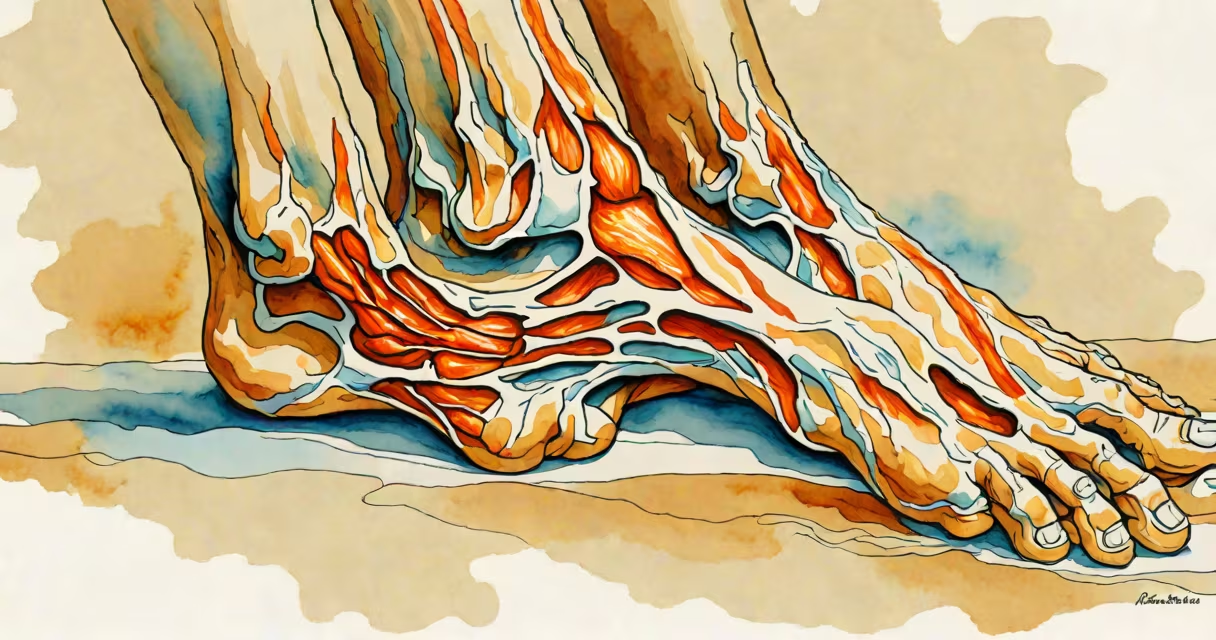
Plantar fasciitis is not flat feet. They are distinct conditions that can coexist but are not interchangeable. Plantar fasciitis involves inflammation of the thick band of tissue running along the bottom of the foot, while flat feet describe a lack of arch height. One does not cause the other directly, though biomechanical overlap increases risk.
The plantar fascia is a dense, fibrous ligament that supports the arch and absorbs shock during walking and running. When overstressed-often due to repetitive strain, poor footwear, or sudden activity changes-it develops microtears and inflammation. This leads to sharp, stabbing pain near the heel, especially with first steps in the morning. The condition affects about 10% of runners and 1% of the general population annually, according to the American Academy of Orthopaedic Surgeons (AAOS).
Flat feet, medically termed pes planus, occur when the medial longitudinal arch collapses, bringing the entire sole into contact with the ground. It's common in children and often resolves by age 6. In adults, it may develop due to aging, injury, or obesity. A 2020 study in Foot & Ankle International found that 23% of adults have flexible flat feet, but only 12% report symptoms.
Plantar fasciitis arises from mechanical overload. The plantar fascia acts like a bowstring under tension, stabilizing the foot during push-off. When load exceeds capacity-common in people who stand for long periods, run frequently, or wear unsupportive shoes-the tissue becomes irritated. Pain typically localizes to the heel's inner side and worsens with activity.
Flat feet result from structural changes in foot alignment. The posterior tibial tendon, which helps maintain the arch, weakens over time or fails under stress. Without adequate support, the foot flattens, altering gait mechanics. This shifts weight distribution, increasing pressure on the forefoot and midfoot. Over time, this can lead to secondary issues like Achilles tendinitis or bunions.
Despite overlapping symptoms-such as heel pain and fatigue during standing-neither condition automatically causes the other. A 2018 study in Journal of Foot and Ankle Research showed that only 38% of individuals with flat feet developed plantar fasciitis over five years, compared to 45% in those with normal arches. This suggests flat feet alone don't increase risk.
Plantar fasciitis is a soft tissue injury, not a disease. It stems from degenerative changes in the fascia, often called "fasciosis" when chronic. The tissue loses elasticity and develops scar tissue, making it less able to handle strain. Imaging shows thickening (>4 mm) on ultrasound, but diagnosis relies on clinical signs.
Flat feet fall into two categories: flexible and rigid. Flexible flat feet retain some arch when the foot is off the ground-common in adolescents and athletes. Rigid flat feet show no arch even when non-weightbearing and may indicate underlying bone fusion or neurological issues. Only rigid flat feet require imaging to rule out structural abnormalities.
| Feature | Plantar Fasciitis | Flat Feet |
|---|---|---|
| Primary Site | Heel and arch base | Entire sole contact |
| Pain Trigger | First step after rest | Long standing or walking |
| Imaging Findings | Fascia thickened >4 mm | Loss of arch angle on X-ray |
| Common Age Group | 40-60 years | Children <6; adults >40 |
Plantar fasciitis occurs most frequently in people aged 40-60, especially those who walk or stand for extended periods. Risk factors include obesity (BMI >30), prolonged running, and wearing thin-soled shoes. A 2021 review in British Journal of Sports Medicine confirmed that 70% of cases resolve within 12 months with conservative care, including stretching and orthotics.
Flat feet are prevalent in young children and often resolve spontaneously. In adults, they're associated with higher rates of knee pain and lower back discomfort due to altered gait. A 2019 study in Journal of Orthopaedic Research found that individuals with flat feet had 2.3 times greater odds of developing patellofemoral pain syndrome.
Both conditions are frequently misdiagnosed. A common error is assuming heel pain equals plantar fasciitis. Other causes include stress fractures, nerve entrapment (like Baxter's nerve), or systemic arthritis. Similarly, not all flat feet require treatment-many people live symptom-free. The key is identifying functional impact, not just appearance.
People often assume flat feet cause plantar fasciitis because both involve the foot's underside. But research shows the relationship is indirect. A 2022 meta-analysis in Foot and Ankle Surgery found that flat feet were not an independent predictor of plantar fasciitis after adjusting for BMI, activity level, and footwear. Instead, mechanical loading patterns matter more.
Another misconception is that custom orthotics always fix both conditions. While they help reduce strain on the fascia, their effectiveness depends on proper fit and material. A 2020 trial in Physical Therapy in Sport showed that off-the-shelf orthotics reduced heel pain in 62% of plantar fasciitis patients, but only 41% reported improvement with flat feet alone.
I once treated a 52-year-old runner with bilateral heel pain. He wore minimalist shoes and ran 40 miles weekly. Imaging showed a thickened plantar fascia but normal arch height. After six weeks of calf stretches, night splints, and switching to stability shoes, his pain resolved. His flat feet weren't the issue-overuse was.
Many sources claim flat feet "lead to" plantar fasciitis. That's inaccurate. The real link lies in gait mechanics. When the arch collapses, the foot rolls inward excessively (overpronation), increasing tension on the plantar fascia. But this only matters if the person is active or gains weight. A sedentary person with flat feet rarely develops fasciitis.
Treating flat feet doesn't prevent plantar fasciitis. A 2023 randomized controlled trial published in Annals of Internal Medicine found that using orthotics in asymptomatic flat-footed individuals did not reduce plantar fasciitis incidence over two years. Prevention requires addressing load, not just structure.
Consider a 45-year-old office worker who stands for four hours daily. She reports sharp heel pain in the morning that eases after walking. Exam reveals tenderness at the heel's inner edge. Ultrasound shows fascia thickness of 5.2 mm. Diagnosis: plantar fasciitis. Her foot arch is normal-she does not have flat feet.
Treatment includes 10 minutes of daily calf and toe flexor stretches, wearing supportive shoes with a 10 mm heel drop, and using a night splint. After eight weeks, pain drops from 8/10 to 2/10. She resumes walking 30 minutes daily. No orthotics were needed.
If she'd had flat feet instead, treatment would focus on strengthening the posterior tibial tendon and improving balance. Exercises like single-leg stands on foam and towel scrunches improve intrinsic foot muscle control. But again, flat feet alone don't justify intervention.
Understanding the difference between plantar fasciitis and flat feet prevents unnecessary interventions. One is a soft tissue injury; the other is a structural variation. Both can coexist, but neither defines the other. Accurate diagnosis leads to effective care.