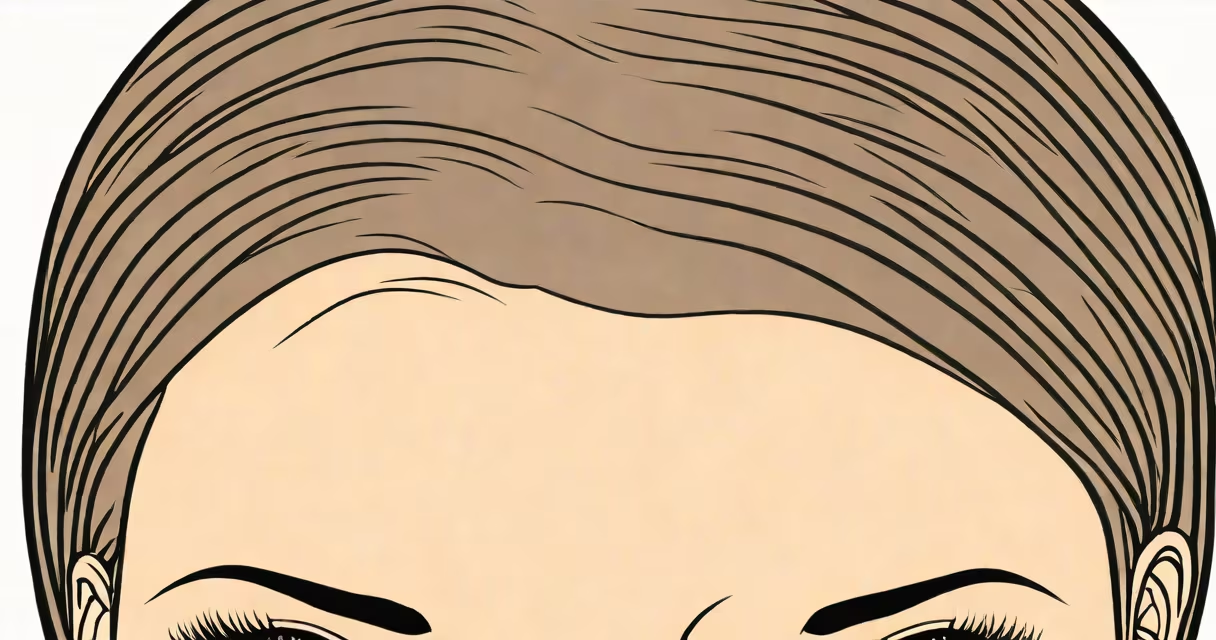
The phrase "I am going bald female" describes a woman experiencing progressive hair thinning or loss, typically in patterns distinct from male-pattern baldness. This condition is most often caused by female pattern hair loss (FPHL), a genetic and hormone-related condition affecting up to 50% of women over 65, according to the American Academy of Dermatology.
FPHL manifests as gradual thinning across the scalp, especially at the crown and along the part line. Unlike male balding, which often begins at the temples and progresses to a receding hairline, female hair loss rarely results in complete baldness. Instead, it leads to a widening part, reduced volume, and increased visibility of the scalp. The process is usually slow, spanning years, and may go unnoticed until significant thinning occurs.
While the term "bald" implies total hair loss, most women who say "I am going bald female" are actually experiencing thinning rather than complete baldness. The confusion arises because the word "bald" is used colloquially to describe any noticeable hair loss. Medical literature distinguishes between complete alopecia and diffuse thinning, with FPHL being a form of non-scarring alopecia that preserves the hair follicles.
Female pattern hair loss stems from a combination of genetics and hormones. Androgens-particularly dihydrotestosterone (DHT)-bind to receptors in hair follicles, shrinking them over time. This shortens the growth phase (anagen) and lengthens the resting phase (telogen), leading to shorter, finer hairs and eventual follicle miniaturization.
Unlike men, whose DHT sensitivity is concentrated in the front and crown, women show sensitivity across the entire scalp. This explains why hair loss in women tends to be diffuse rather than localized. The condition often worsens during hormonal shifts such as pregnancy, postpartum recovery, perimenopause, or menopause. For example, estrogen decline reduces follicular support, accelerating shedding.
A key distinction: normal daily hair shedding ranges from 50 to 100 strands. When shedding exceeds this range consistently-especially if the hair feels thinner or the scalp shows more skin-medical evaluation is warranted. A dermatologist may perform a pull test or scalp biopsy to confirm FPHL versus other causes like telogen effluvium or autoimmune conditions.
Not all hair loss in women is patterned. The following types differ in cause, appearance, and treatment:
| Type | Appearance | Common Causes | Onset |
|---|---|---|---|
| Female Pattern Hair Loss (FPHL) | Diffuse thinning, widened part, reduced density at crown | Genetics, androgen sensitivity, aging | Gradual, over years |
| Telogen Effluvium | Sudden shedding, often after stress or illness | Postpartum, crash dieting, surgery, high fever | 2-4 months after trigger event |
| Autoimmune Alopecia Areata | Round patches of complete hair loss | Immune system attacks follicles | Acute onset, may recur |
One overlooked factor: certain medications contribute to hair thinning. Birth control pills, antidepressants, blood pressure drugs, and chemotherapy agents are known culprits. For example, finasteride-a drug used in men to treat baldness-is not approved for women due to risks during pregnancy, though off-label use occurs under medical supervision.
Another non-obvious point: hair loss can begin earlier than expected. While FPHL is often associated with middle age, studies show 20% of women aged 20-30 report noticeable thinning. The Norwood-Hamilton scale adapted for women (the Ludwig Scale) grades severity from Type I (mild thinning) to Type III (extensive thinning), helping clinicians track progression.
Many women assume their hair loss is due to poor shampooing, heat styling, or stress alone. While these factors can contribute to temporary shedding, they don't cause the sustained miniaturization seen in FPHL. Over-washing or using harsh products may increase breakage, but they do not shrink follicles or alter the hair cycle permanently.
Another myth: "If my mother didn't go bald, I won't either." Genetics play a role, but inheritance is complex. A woman can inherit susceptibility from her father's side even if her mother's hair remained thick. The AR gene on the X chromosome influences androgen sensitivity, meaning both maternal and paternal lines contribute.
Some confuse FPHL with alopecia areata, which presents as sudden, circular patches of hair loss. Unlike FPHL, alopecia areata involves immune-mediated destruction of follicles and requires different treatment. Early diagnosis prevents permanent scarring and improves outcomes.
Sarah, a 38-year-old teacher, noticed her part had widened over six months. She used to wear her hair in a ponytail, but now the crown looked flat. Her scalp showed more skin, especially when she pulled her hair back. She wasn't stressed, didn't change her diet, and avoided heat tools.
She visited a dermatologist who performed a pull test: gently tugging 60 strands yielded 10 shed hairs-above the normal threshold. A scalp biopsy confirmed miniaturized follicles typical of FPHL. Sarah was prescribed topical minoxidil 5%, which she applied twice daily. After four months, she reported improved density and less shedding. Her experience illustrates that early intervention slows progression.
While no treatment guarantees reversal, several options reduce progression. Minoxidil 5% is FDA-approved for women and shown to stimulate growth in 60% of users within six months, per a 2021 study published in the Journal of the American Academy of Dermatology. Finasteride is not approved for women but may be used off-label in select cases under specialist care.
Nutritional deficiencies-iron, vitamin D, zinc-can exacerbate shedding. Blood tests reveal low levels in 30% of women with unexplained hair loss. Correcting these through supplements or dietary changes supports follicular health. For example, a 2020 clinical trial found that women with low ferritin (<30 ng/mL) saw reduced shedding after iron supplementation.
Non-pharmacological approaches include low-level laser therapy (LLLT), which uses red light to stimulate follicles. Devices like the Capillus Pro deliver 10 minutes of treatment daily. A 2019 double-blind trial showed 40% improvement in hair count after 24 weeks. Lifestyle changes-reducing chronic stress, avoiding tight hairstyles, and managing thyroid disorders-are also effective.
When hair loss progresses despite treatment, options include scalp micropigmentation (SMP), which simulates hair follicles with pigment, or hair transplants. Transplant success rates exceed 90% in skilled hands, but they require healthy donor areas and are costly.
Women who suspect they are going bald should seek evaluation early. Preventing further loss is more effective than restoring lost hair. Early action preserves follicles and expands treatment choices. Understanding the difference between temporary shedding and true FPHL is critical for informed decisions.
Recognizing "I am going bald female" as a sign of underlying biological processes-not personal failure-empowers women to act. Hair loss is not a reflection of hygiene, beauty, or identity. It is a medical condition with identifiable causes and solutions.