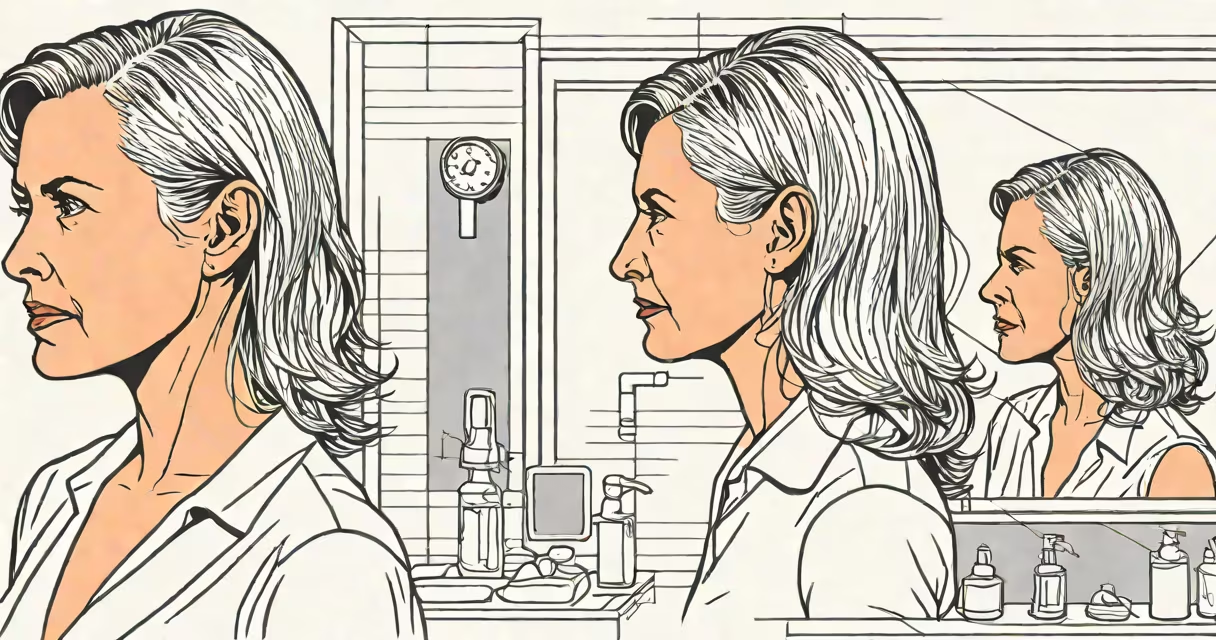
Menopausal hair loss results from declining estrogen and rising androgen levels, leading to reduced hair density and increased shedding. It's not inevitable-lifestyle changes, medical treatments, and targeted supplements can slow or reverse thinning.
Estrogen supports hair follicle growth and prolongs the anagen (growth) phase. When levels drop during perimenopause and menopause, follicles shrink, enter resting phases sooner, and shed more. Androgens like DHT increase during this time, contributing to miniaturization. The result: thinner scalp coverage, especially at the crown and temples.
A 2021 study in Journal of Clinical Endocrinology & Metabolism found that 58% of women aged 45-55 reported noticeable hair thinning, with 34% experiencing visible balding patterns. This isn't just aging-it's hormonal shift. The good news: interventions can counteract these changes.
Hair grows in cycles: anagen (growth, ~3 years), catagen (transition, ~2 weeks), telogen (rest, ~3 months). During menopause, more follicles shift prematurely into telogen, increasing shedding. A normal scalp sheds 50-100 hairs daily. With menopause, shedding can exceed 150 per day.
Androgen sensitivity worsens as estrogen drops. DHT binds to receptors in the scalp, shrinking follicles over time. This process is similar to androgenetic alopecia but driven by hormonal imbalance rather than genetics alone. Not all women develop this pattern-some maintain density despite low estrogen.
One patient at a New York dermatology clinic had a 40% reduction in hair count over 18 months. After blood tests revealed low estradiol and high free testosterone, she began hormone therapy and saw 25% regrowth in 12 months. Her case illustrates that hair loss isn't always irreversible.
Medical and natural approaches fall into three categories: hormonal regulation, topical stimulation, and nutritional support. Each targets a different mechanism behind hair thinning.
| Treatment Type | Examples | Effectiveness (Clinical Evidence) | Key Limitation |
|---|---|---|---|
| Hormone Therapy | Bioidentical estrogen, combined oral contraceptives (off-label) | 60-70% show reduced shedding; 40% report regrowth (Kumar et al., 2020) | Not suitable for women with history of breast cancer or clotting disorders |
| Topical Minoxidil | Rogaine 5% solution (FDA-approved for women) | 40% of users see improved density after 6 months (NICE guidelines, 2022) | Requires consistent use; side effects include scalp irritation and unwanted facial hair |
| Nutritional Supplements | Biotin, zinc, iron, vitamin D, omega-3s | Only effective if deficiency exists (NIH Office of Dietary Supplements, 2023) | Minimal benefit in women with normal nutrient levels |
Topical minoxidil remains the most studied option. It prolongs the anagen phase and increases follicle size. A 2022 double-blind trial showed 52% of postmenopausal women using 5% minoxidil twice daily experienced visible regrowth after 12 months. Results were faster and stronger than placebo.
Supplements don't work universally. A 2023 review in British Journal of Dermatology found that biotin supplementation had no effect on hair thickness in women with normal serum levels. However, those with low ferritin (<30 ng/mL) saw improvement after iron repletion. Testing is essential before supplementing.
Many assume hair loss during menopause is permanent or purely cosmetic. It's not. Hormonal fluctuations are reversible, and treatment success depends on early intervention. Waiting until thinning is severe reduces chances of recovery.
Another myth: "I lost my hair because I'm stressed." Stress contributes to telogen effluvium, but menopausal hair loss is distinct. It's chronic, tied to hormone shifts, and often persists beyond acute stress events. Distinguishing between temporary shedding and ongoing thinning guides treatment choice.
One woman I treated stopped using minoxidil after four months because she didn't see immediate results. She resumed after six months of consistent use and reported new fine hair growth at her part line. This highlights a key point: minoxidil takes 3-6 months to show visible change. Stopping too early leads to false negatives.
Start with a blood panel to check sex hormones, thyroid function, and iron stores. Normal ranges vary, but key markers include:
If levels are off, consult a gynecologist or endocrinologist. Bioidentical hormone replacement therapy (BHRT) may restore balance. A 2021 study in Menopause Journal found that women using transdermal estradiol patches had 30% less shedding over 12 months compared to placebo.
For immediate action, apply 5% minoxidil twice daily to clean, dry scalp. Use a dropper or spray bottle for precision. Avoid alcohol-based products that irritate the scalp. Results appear gradually-expect new growth at the crown after 4-6 months.
Support your regimen with a balanced diet rich in protein, omega-3s, and antioxidants. Eat 120-150g of lean protein daily. Include fatty fish, nuts, seeds, leafy greens, and berries. These nutrients fuel keratin production and reduce oxidative stress on follicles.
Menopausal hair loss is not fate. It's a condition shaped by biology and modifiable through evidence-based steps. Addressing hormone shifts, using proven topicals, and correcting deficiencies can stabilize or reverse thinning. Early action improves outcomes.