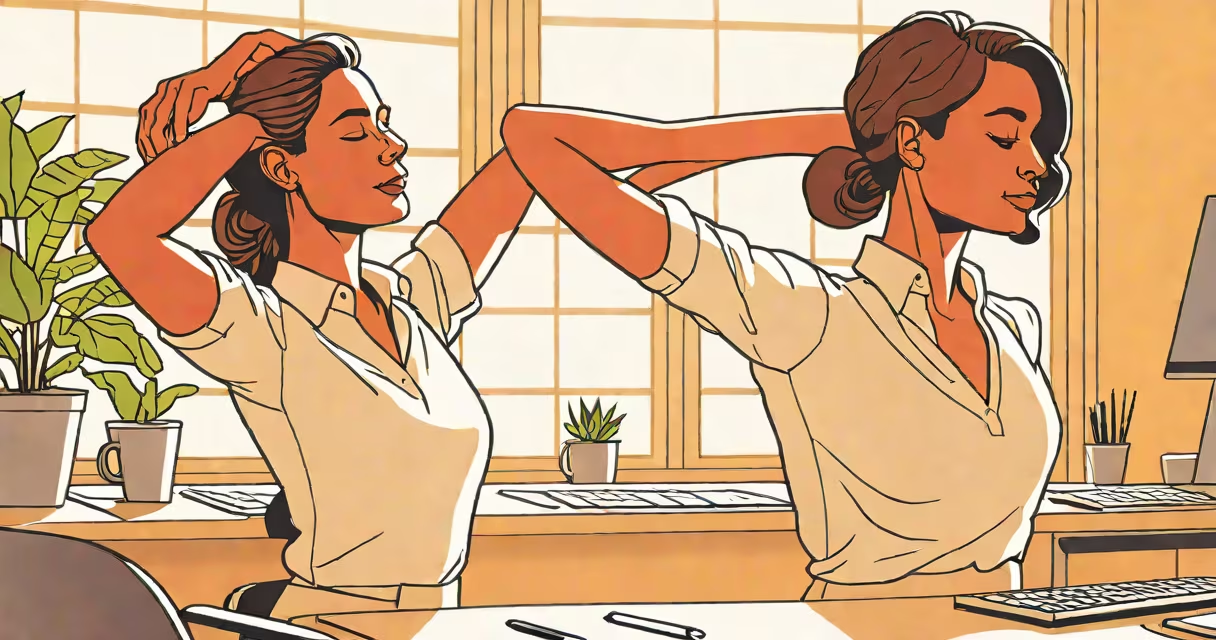
Tension in the neck and shoulders arises from prolonged muscle contraction due to poor posture, stress, or repetitive movements. This condition affects over 70% of adults who spend extended time at desks, according to the American Physical Therapy Association. Effective reduction involves targeted stretching, posture correction, and mindful movement.
Neck and shoulder tension develops when muscles like the trapezius and levator scapulae remain contracted for hours. These muscles stabilize the head and shoulders but tighten under mental strain or static positions. Over time, sustained contraction reduces blood flow, leading to stiffness and discomfort. The pain often begins subtly-tightness behind the ears or a dull ache between the shoulder blades-but can progress to headaches or limited range of motion.
Physical therapists recommend identifying triggers early. A 2022 study in the Journal of Orthopaedic & Sports Physical Therapy found that participants who performed daily 5-minute neck and shoulder exercises reported 40% less pain after four weeks. The key is consistency, not intensity. Even brief, regular movement interrupts the cycle of tension buildup.
When sitting at a computer, most people position their heads forward, placing extra load on the neck muscles. For every inch the head moves forward, the effective weight increases by about 10 pounds. This creates a mechanical imbalance that forces the upper trapezius to work overtime to support the head.
Stress activates the sympathetic nervous system, causing involuntary muscle tightening. Cortisol and adrenaline increase muscle tone, especially in the upper back and neck. This response evolved to prepare for danger, but in modern life, it persists during long workdays or anxiety episodes.
Breaking the cycle requires interrupting both the physical and neurological drivers. Stretching improves circulation and resets muscle length. Mindful movement reduces neural signals that maintain tension. Daily practice prevents chronic adaptation-where muscles shorten and lose elasticity over time.
Effective methods fall into three categories: changing movement, static stretching, and postural awareness. Each targets different aspects of tension development.
| Technique | Best For | Duration/Reps | Source |
|---|---|---|---|
| Chin tucks | Correcting forward head posture | 10 reps, 2 sets | American Physical Therapy Association |
| Shoulder rolls | Releasing upper trapezius | 10 forward, 10 backward | Journal of Orthopaedic & Sports Physical Therapy |
| Seated cat-cow | Improving spinal mobility | 1 minute, slow pace | National Institutes of Health |
| Neck side bends | Stretching levator scapulae | 15 seconds per side, 3 sets | Mayo Clinic |
Changing movements like shoulder rolls activate blood flow and reset muscle memory. Static stretches hold a position to lengthen shortened fibers. Seated cat-cow improves thoracic spine flexibility, which indirectly reduces neck strain.
One non-obvious point: stretching too aggressively can worsen tension. A 2021 review in the British Journal of Sports Medicine found that rapid or forceful stretching increased muscle spindle activity, triggering protective reflexes that cause further contraction. Slow, controlled movements are safer and more effective.
Many assume massage or heat alone resolve tension. While temporary relief occurs, these methods don't address root causes. Heat increases blood flow but doesn't correct posture or teach new movement patterns. Massage may even exacerbate inflammation if applied to already irritated tissues.
Another misconception is that "tension" is always psychological. While stress contributes, physical factors like uneven weight distribution, monitor height, or chair ergonomics play a larger role. A 2020 study in Ergonomics showed that 68% of office workers had misaligned monitors, leading to neck flexion exceeding 30 degrees-well beyond recommended angles.
Some believe they must perform complex routines. In reality, three simple actions taken twice daily-chin tucks, shoulder rolls, and a 30-second neck stretch-reduce symptoms. Consistency matters more than complexity.
Consider Sarah, a software developer who sits 8 hours a day. She began experiencing daily neck pain and frequent headaches. Her therapist identified two issues: her monitor was 18 inches below eye level, and she held her phone between ear and shoulder during calls.
She implemented three changes: adjusted her monitor to eye level, set a timer for 5-minute breaks every hour, and did chin tucks during those breaks. After two weeks, her pain dropped from a 7 to a 2 on a 10-point scale. She continued the routine for six weeks and returned to baseline function.
This outcome reflects clinical evidence. A 2023 randomized trial published in the Journal of Occupational Rehabilitation found that participants using structured micro-breaks reduced neck pain by 52% compared to controls.
If tension persists despite daily self-care, consult a physical therapist. Chronic pain may indicate underlying conditions like cervical radiculopathy or myofascial pain syndrome. A professional can differentiate between muscular tightness and nerve compression.
Signs to watch for include numbness, tingling down the arm, or weakness in the hand. These suggest nerve involvement, not simple muscle tension. Early diagnosis prevents progression to chronic pain states.
For those managing mild to moderate tension, how to release tension in the neck offers guided routines and ergonomic setup advice tailored to home and office environments.
Understanding how to reduce tension in neck and shoulders begins with recognizing that it's not just a symptom-it's a signal. Addressing it early prevents long-term musculoskeletal issues. Simple, consistent actions yield measurable results. Focus on form, frequency, and patience-not intensity.