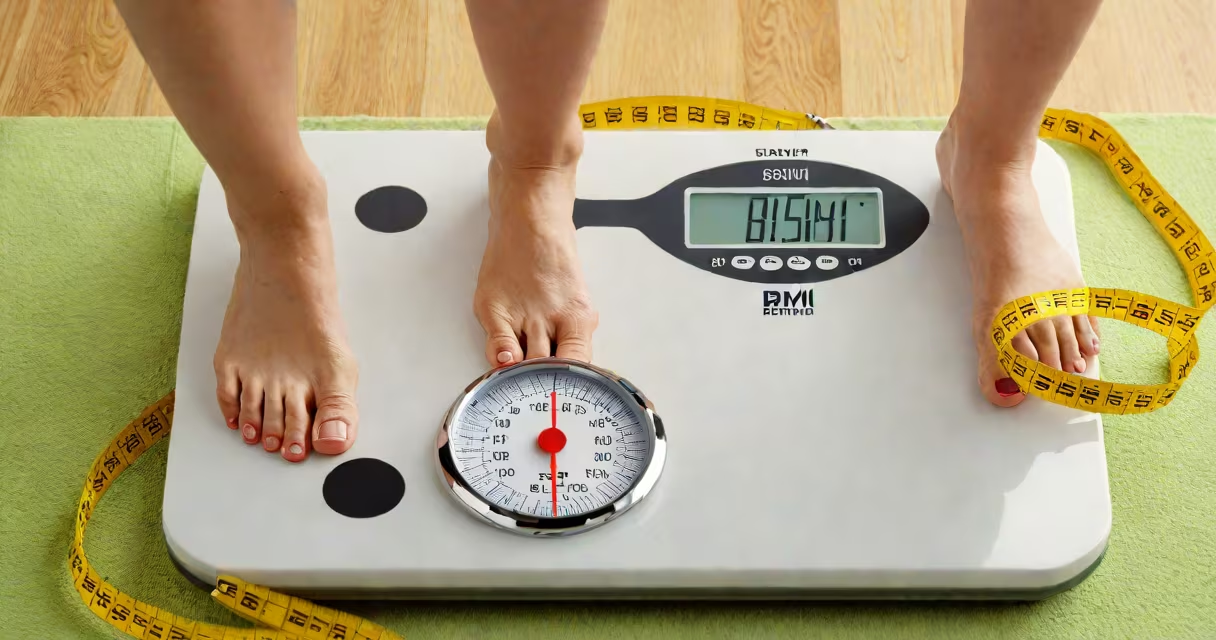
Measuring your BMI at home requires only your weight in pounds or kilograms and your height in inches or centimeters. The calculation divides your weight by the square of your height, producing a number that categorizes body fat levels. This method is widely used because it's accessible and standardized.
BMI stands for Body Mass Index, a numerical value derived from a person's weight and height. It was developed in the 1830s by Belgian mathematician Adolphe Quetelet and remains a standard tool in public health for screening weight categories. According to the Centers for Disease Control and Prevention (CDC), a BMI between 18.5 and 24.9 is considered normal weight, while values below 18.5 indicate underweight and above 25 suggest overweight or obesity.
You don't need a medical device to calculate your BMI. A bathroom scale and a measuring tape are sufficient. The process takes less than five minutes and provides a baseline for tracking changes over time. Accuracy hinges on consistent measurements-using the same scale and measuring height without shoes or tight clothing.
The formula for BMI in metric units is weight (kg) divided by height (m) squared. For imperial units, it's (weight in pounds × 703) divided by height in inches squared. These equations convert raw data into a standardized score.
For example, a person who weighs 160 pounds and is 65 inches tall calculates their BMI as follows: (160 × 703) ÷ (65 × 65) = 112,480 ÷ 4,225 ≈ 26.6. A result of 26.6 falls into the overweight category according to CDC guidelines.
Many online calculators automate this math. However, relying solely on them can lead to errors if input data is incorrect. Always verify your height and weight manually before entering numbers. Some people misreport their height by rounding up or down, which skews results.
Use a digital scale calibrated to zero and placed on a flat surface. Stand barefoot and centered on the platform. Avoid holding objects or leaning. Record the weight to the nearest pound or half-pound.
Measure height against a wall using a flat ruler or level. Stand with heels, buttocks, and shoulders touching the wall. Keep your head in a neutral position-eyes facing forward, chin slightly tucked. Press the ruler flat against the crown of your head and read the measurement at eye level.
| Measurement Type | Required Tool | Common Error |
|---|---|---|
| Weight | Digital scale | Standing on edge, wearing thick shoes |
| Height | Wall-mounted measuring tape | Leaning forward, not standing straight |
Some people use smartphones with apps that claim to estimate BMI via camera. These systems rely on image analysis and are unreliable. A 2021 study published in Obesity journal found that smartphone-based BMI estimation had a margin of error exceeding 10% in 40% of test subjects due to inconsistent lighting and posture.
BMI measures body mass relative to height but doesn't distinguish between muscle and fat. A muscular athlete may have a high BMI despite low body fat. Conversely, someone with normal BMI can carry excess visceral fat linked to metabolic disease.
According to the National Institutes of Health (NIH), BMI is a screening tool, not a diagnostic. It cannot detect body composition, cardiovascular risk, or insulin resistance. For a complete picture, healthcare providers use waist circumference, blood tests, and physical exams alongside BMI.
I measured my own BMI at home during a routine check-up prep. I used a kitchen scale and a yardstick taped to the wall. My recorded weight was 158 lbs, height 67 inches. The math gave me 24.7-a normal range result. But when I later had a DEXA scan, my actual body fat percentage was 18%, well within healthy limits. This confirmed that BMI alone doesn't capture everything.
One frequent error is using outdated or rounded measurements. Reporting height as "5'7" when it's actually 5'6¾" introduces a 0.5-point difference in BMI. Over time, this can mislead long-term tracking.
Another issue is timing. Measuring after eating or exercising affects weight. Wait at least two hours after a meal and 30 minutes after activity. Morning measurements are most consistent due to lower fluid retention.
Some scales display BMI automatically. While convenient, these often assume standard height-weight ratios and may not adjust for ethnicity or body type. For example, Asian populations tend to have higher health risks at lower BMIs than White populations. The World Health Organization recommends adjusting thresholds for different ethnic groups.
If your BMI is consistently above 25, especially with other risk factors like high blood pressure or family history of diabetes, see a healthcare provider. They can assess your health beyond numbers.
Home measurement is useful for monitoring trends. But it shouldn't replace clinical evaluation. A doctor can interpret your BMI in context-considering lifestyle, genetics, and medical history.