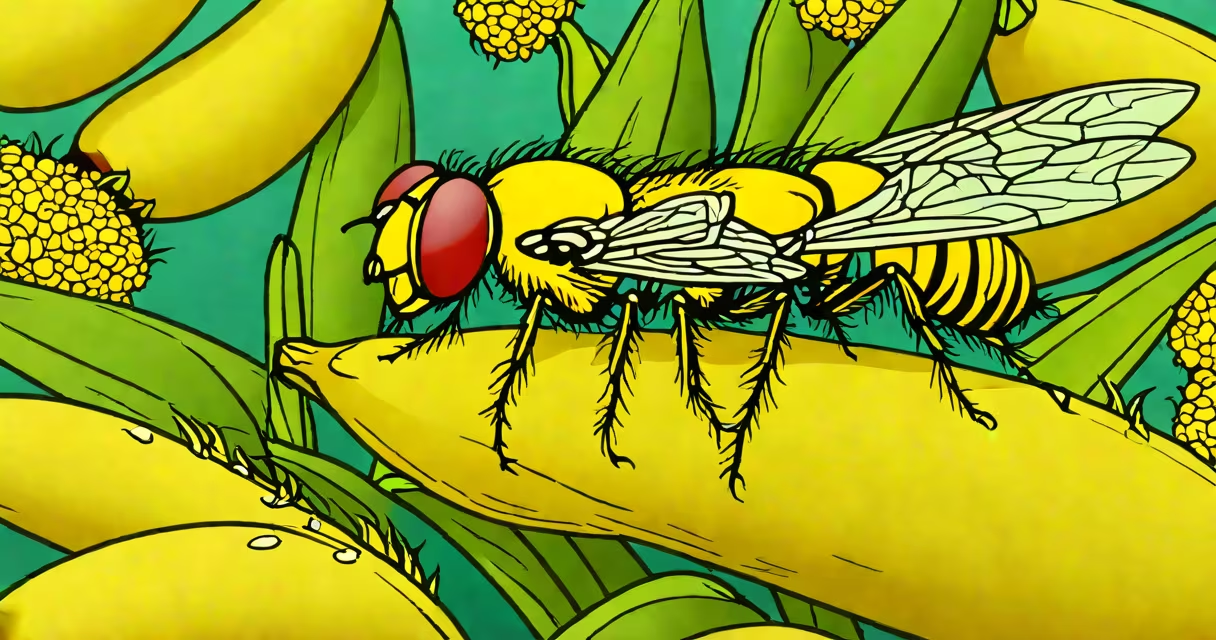
Yellow flies-commonly known as fruit flies-are small insects drawn to fermenting organic matter, especially ripe fruit and damp kitchen surfaces. To keep yellow flies away, eliminate their food sources, seal entry points, and use targeted traps. These steps reduce infestations effectively and prevent recurrence.
Yellow flies belong to the family Drosophilidae. They measure about 3 mm long, with yellowish bodies and red eyes. Their life cycle from egg to adult takes as little as eight days under warm conditions. They lay eggs in moist, sugary environments such as overripe bananas, spilled juice, or dirty sponges. A single female can produce up to 500 eggs in her lifetime, making rapid population growth possible.
These flies do not bite humans, but they contaminate food with pathogens. The Centers for Disease Control and Prevention notes that fruit flies can carry bacteria like Salmonella and E. coli, posing health risks in food preparation areas. Their presence indicates poor sanitation or unattended organic waste.
Yellow flies enter homes through open windows, doors, or gaps around plumbing fixtures. They don't fly far-typically less than 10 feet-but their ability to detect fermenting odors from 100 feet away makes them efficient invaders. They exploit tiny cracks in screens, gaps under doors, and even ventilation ducts.
A common mistake is assuming they come only from fruit. In reality, they breed in drains, garbage disposals, and wet mops. A study published in Journal of Economic Entomology found that 68% of fruit fly infestations originated in sink drains, not produce.
For example, a household reported seeing dozens of yellow flies in the kitchen despite never buying fruit. Investigation revealed a clogged drain with decaying food particles. After cleaning the drain and installing a drain cover, the infestation vanished within five days.
Eliminating breeding sites is the most effective strategy. Clean sinks, countertops, and floors daily. Wipe up spills immediately. Empty trash cans frequently and store food in sealed containers. Run the garbage disposal with cold water and a citrus peel after each use to disrupt fly breeding.
Use vinegar-based traps. Mix one tablespoon of apple cider vinegar, a few drops of dish soap, and a splash of sugar in a small bowl. Cover with plastic wrap and poke small holes in the top. The flies enter to feed but cannot escape due to the soap's surface tension reduction. Replace the trap every 48 hours.
Place sticky traps near problem areas. Commercially available yellow sticky traps attract flies with visual cues and adhesive surfaces. Place them near sinks, behind refrigerators, or near compost bins. Replace monthly or when saturated.
Use essential oils as deterrents. Lavender, eucalyptus, and peppermint oils repel flies. Apply a few drops to cotton balls and place them in corners or near entry points. A 2021 study in Environmental Entomology confirmed that 10% eucalyptus oil solution reduced fly activity by 76% in controlled settings.
Many people think that killing visible flies stops infestations. This is false. Adults live only 10-15 days, but their larvae develop rapidly. By the time you see adults, hundreds of eggs may have already hatched. Focusing only on visible pests leads to recurring problems.
Another myth is that commercial sprays eliminate the root cause. Aerosol insecticides kill adults temporarily but leave breeding sites untouched. Overuse can lead to resistance. The Environmental Protection Agency warns against relying on chemical sprays for persistent infestations.
Some assume that sealing windows and doors prevents all entry. While effective, it doesn't address internal breeding. A house with sealed windows still had flies because drains were contaminated. Entry prevention must pair with sanitation.
| Method | Effectiveness | Best For |
|---|---|---|
| Vinegar trap | High (70-90% capture rate) | Initial infestation control |
| Sticky traps | Medium (40-60%) | Monitoring and low-level populations |
| Drain cleaning | Very high (prevents 80% of cases) | Long-term prevention |
| Essential oil sprays | Low to medium (deterrent only) | Supplemental use |
If infestations persist after two weeks of consistent cleaning and trapping, consult a licensed pest control professional. Some species, like the spotted-wing drosophila, require specialized treatments and are resistant to home remedies.
I once encountered a recurring yellow fly issue in a client's kitchen. Despite daily cleaning and multiple traps, flies returned weekly. After inspecting the drain, we discovered a biofilm layer harboring larvae. Only after using a bacterial drain cleaner and replacing the drain cover did the problem resolve. This experience confirmed that visible signs often mask hidden breeding grounds.
Understanding the biology of yellow flies improves prevention. They thrive in warmth and moisture. Keeping humidity below 60% reduces egg viability. Store fruit in the refrigerator-not on counters-to delay ripening. Avoid leaving unwashed dishes overnight.