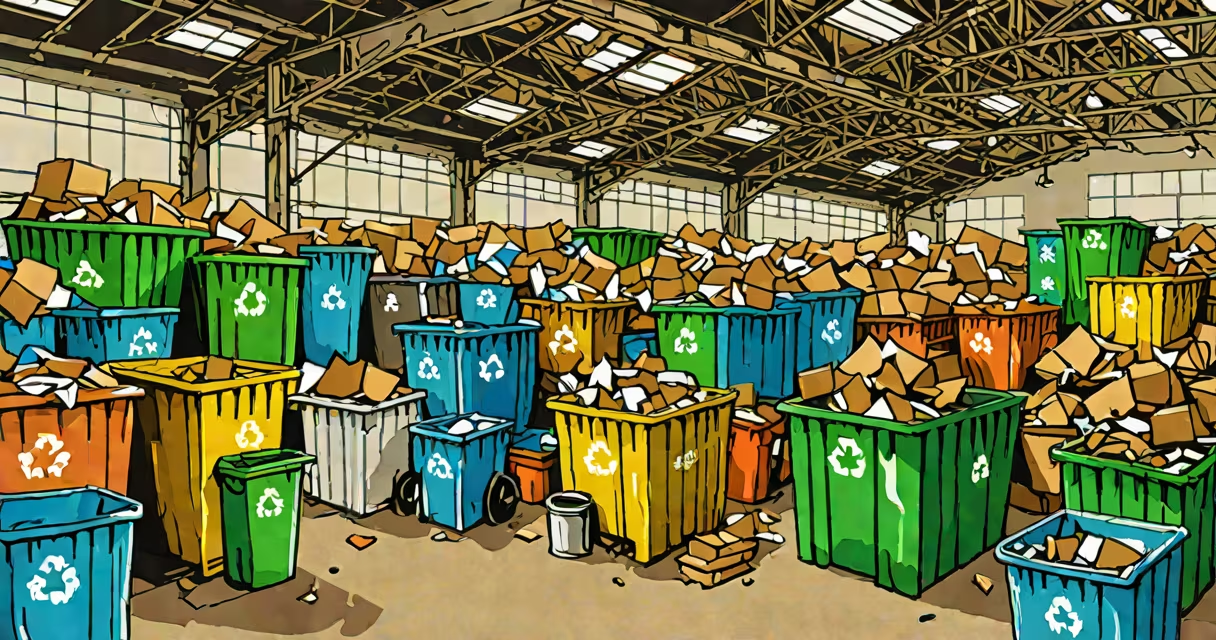
Recycling reduces pollution by keeping waste out of landfills and incinerators, preventing toxic leachate, methane emissions, and air pollutants. It conserves raw materials, cuts energy use in manufacturing, and lowers greenhouse gas emissions compared to producing goods from virgin resources.
When trash ends up in landfills, organic waste decomposes anaerobically and releases methane-a greenhouse gas 25 times more potent than carbon dioxide over 100 years. Incineration burns waste, releasing dioxins, heavy metals, and particulate matter into the atmosphere. Recycling sidesteps both processes. Instead of discarding aluminum cans, plastic bottles, or paper, these materials are cleaned, sorted, and reprocessed into new products. This reuse cycle reduces the need to extract, refine, and transport raw materials-each step that generates pollution.
The U.S. Environmental Protection Agency (EPA) estimates that recycling one ton of paper saves 17 trees, 7,000 gallons of water, and 4,100 kilowatt-hours of electricity. These savings translate to reduced air and water pollution. For example, recycling aluminum uses 95% less energy than mining and refining bauxite ore. That energy saving equates to avoiding about 1.5 tons of CO₂ per ton of recycled aluminum-equivalent to removing 16 passenger vehicles from the road annually.
Recycling begins with collection. Municipal programs gather recyclables through curbside bins or drop-off centers. Materials are then transported to Material Recovery Facilities (MRFs), where automated systems sort paper, cardboard, plastics, glass, and metals using optical scanners, magnets, and air classifiers.
After sorting, materials are compressed into bales and shipped to manufacturers. Aluminum cans go to smelters; paper becomes pulp for new sheets; PET plastic bottles are melted and spun into fibers for textiles. Each stage avoids the pollution associated with primary production. For instance, melting recycled PET requires 70% less energy than making it from crude oil.
A 2022 study by the National Institute of Standards and Technology (NIST) found that recycling steel reduces energy consumption by 60% and cuts CO₂ emissions by 58% compared to producing steel from iron ore. The same study showed that recycling copper saves 85% of the energy required in mining and refining.
Different materials offer varying pollution reductions when recycled. The table below compares key recyclables based on energy saved, emissions avoided, and resource conservation.
| Material | Energy Saved vs. Virgin Production (%) | CO₂ Emissions Avoided per Ton (kg) | Water Saved per Ton (gallons) |
|---|---|---|---|
| Aluminum | 95% | 1,500 | 1,000 |
| Steel | 60% | 1,000 | 1,200 |
| Paper | 40% | 600 | 7,000 |
| Plastic (PET) | 70% | 400 | 1,500 |
These figures show that recycling aluminum delivers the highest pollution reduction. However, paper recycling still prevents significant deforestation and water use. Even modest recycling rates make a measurable difference. For example, recycling just 10% of U.S. household waste could reduce annual CO₂ emissions by 20 million metric tons-equal to taking 4.5 million cars off the road.
Many people assume that recycling alone solves pollution problems. But contamination in recycling streams undermines the entire system. A 2021 report from the Environmental Research & Education Foundation found that 25% of recyclable loads were rejected due to food residue, non-recyclable plastics, or mixed materials. Contaminated batches often end up in landfills anyway.
Another myth is that all plastics are recyclable. Only seven resin codes (1-7) are recognized by the American Society for Testing and Materials (ASTM). Codes 3 (PVC), 6 (PS), and 7 (mixed/resin unknown) are rarely accepted by municipal programs. Plastics labeled #3 and #6 often degrade during processing and are downcycled into lower-quality products-or discarded.
I once watched a city's recycling program fail after a single contaminated batch of mixed plastics caused a shutdown at a local MRF. Workers had to manually sort 20 tons of material because a resident had placed a plastic bag in the blue bin. This incident highlighted how individual choices ripple through the system. Proper sorting isn't optional-it's essential to prevent pollution from bypassing recycling entirely.
Urban areas benefit most from recycling infrastructure. Cities like San Francisco and Seattle have achieved over 80% landfill diversion rates through mandatory composting and recycling laws. In San Francisco, recycling and composting together avoid 1.2 million tons of CO₂ annually-equivalent to removing 250,000 cars from the road.
Industrial zones also see major gains. In Germany, the dual system for packaging waste (Der Grüne Punkt) helps 68% of packaging is recycled. This system mandates producers to finance and manage collection, reducing litter and illegal dumping. As a result, German cities report 40% fewer airborne particulates near waste sites compared to countries without such systems.
Even small communities can achieve results. The town of Ashland, Oregon, launched a zero-waste initiative in 2018. By expanding curbside recycling and hosting monthly repair fairs, they diverted 72% of waste from landfills by 2023. Air quality monitoring showed a 15% drop in volatile organic compounds (VOCs) near the local transfer station.
In 2020, the city of Austin, Texas, introduced a pilot program to recycle electronic waste (e-waste). They partnered with certified recyclers to collect old computers, phones, and printers from residents. Over 12 months, the program collected 120 tons of e-waste.
Of that, 85% was processed into reusable components. Copper wiring was recovered and sent to smelters. Plastic casings were shredded and turned into pellets for injection molding. Lead and mercury from circuit boards were safely contained and treated.
The environmental impact was clear: the program prevented 240 tons of CO₂ emissions, avoided 15,000 gallons of toxic runoff from leaching into soil, and conserved enough copper to manufacture 10,000 new electric motors. These outcomes demonstrate how targeted recycling initiatives directly reduce pollution at scale.
Understanding how recycling can reduce pollution reveals that it's not just about reusing bottles or cans. It's about breaking the cycle of extraction, processing, and disposal that pollutes air, water, and soil. When materials are reused, fewer resources are mined, less fuel is burned, and fewer toxins escape into ecosystems.
For more on minimizing human-made light emissions and their ecological effects, explore how reducing artificial light pollution supports natural cycles.