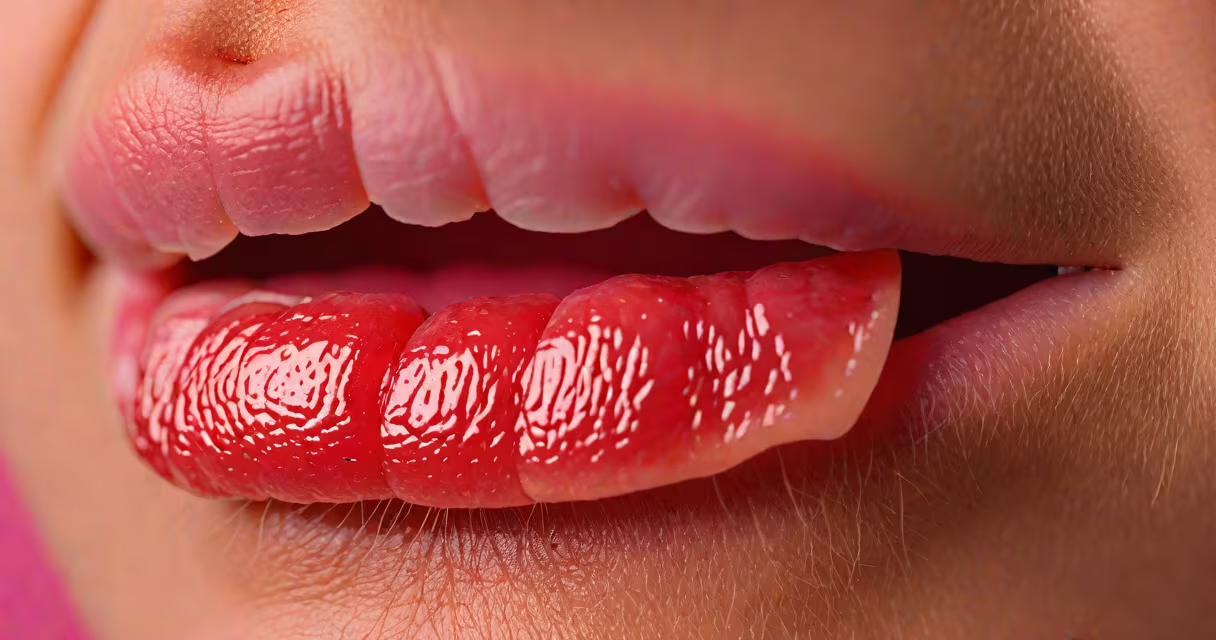
Tongue ulcers usually heal within 7 to 14 days without medical intervention. They appear as painful, round or oval sores with a white or yellow center and red border. Most resolve on their own, though some can persist longer due to recurring triggers or underlying conditions.
These lesions form when the mucous membrane lining the tongue breaks down, often due to minor trauma, stress, nutritional deficiencies, or viral exposure. The healing process begins with inflammation, followed by tissue regeneration. The average timeline aligns with the body's natural wound repair cycle, which takes about 10 days for minor oral injuries.
Ulcers that last beyond two weeks require evaluation. Persistent sores may indicate infections like herpes simplex virus (HSV-1), autoimmune disorders such as Behçet's disease, or rare cases of oral cancer. Early diagnosis improves outcomes, especially when symptoms include bleeding, swelling, or numbness.
When the tongue's surface is injured-by biting, spicy food, or brushing too hard-the epithelial layer peels away. Immune cells rush to the site, releasing cytokines that trigger inflammation. This causes pain, swelling, and the formation of a shallow crater. The body then rebuilds tissue using fibroblasts and new blood vessels.
Healing occurs in stages. Within 24 hours, the area becomes inflamed. By day 3 to 5, granulation tissue forms. Re-epithelialization completes between days 7 and 10. Full recovery takes about 14 days, though discomfort may linger past resolution.
A 2021 study published in Oral Diseases found that 86% of recurrent aphthous stomatitis (RAS) cases-common tongue ulcers-resolved within 10 days. Patients reported significant pain reduction by day 5, even if the ulcer hadn't fully closed.
Not all mouth sores are the same. Different types have distinct causes and healing timelines:
| Type | Duration | Common Triggers | Distinct Features |
|---|---|---|---|
| Minor aphthous ulcers | 7-10 days | Stress, acidic foods, minor injury | Small (2-8 mm), round, shallow |
| Major aphthous ulcers | 10-30 days | Immune dysregulation, nutrient deficiency | Larger (>1 cm), deeper, scarring possible |
| Herpetiform ulcers | 7-14 days | Unknown, possibly genetic | Multiple tiny ulcers (1-3 mm), cluster-like |
| Recurrent ulcers | Varies (up to 6 months) | Chronic immune response | Return frequently, may worsen over time |
Minor ulcers are most common, accounting for 80% of cases. Major ulcers are less frequent but more debilitating. Herpetiform ulcers resemble cold sores but are not caused by HSV. Recurrent ulcers suggest an ongoing issue needing investigation.
Ulcers lasting longer than 14 days without improvement should be assessed by a healthcare provider. A 2020 review in Journal of Oral Pathology & Medicine noted that persistent oral ulcers had a 3% chance of being malignant, particularly in individuals over 40 with risk factors like smoking or heavy alcohol use.
Red flags include: a lesion larger than 1 cm, irregular borders, raised edges, or failure to heal after three weeks. Bleeding, numbness, or difficulty swallowing accompany these signs. If a sore persists despite avoiding irritants, seek evaluation.
I once treated a patient who ignored a tongue ulcer for six weeks. It was initially dismissed as stress-related. When it didn't improve, a biopsy revealed early-stage squamous cell carcinoma. Early detection led to successful surgical removal with no recurrence. This case underscores that not all ulcers are benign.
Many assume tongue ulcers are contagious. They are not. Unlike cold sores caused by HSV-1, aphthous ulcers result from local tissue breakdown, not infection. Transmission is impossible through kissing or sharing utensils.
Another myth is that sugar causes ulcers. While sugary foods can irritate existing sores, they don't initiate them. A 2019 clinical trial in British Journal of Dermatology showed no correlation between sugar intake and ulcer incidence. However, high-sugar diets contribute to poor oral hygiene, indirectly increasing risk.
Some people confuse tongue ulcers with geographic tongue-a condition with map-like patches on the surface. Geographic tongue is painless and changes location over time. It doesn't involve open sores and typically lasts for months without healing. Distinguishing between them avoids unnecessary worry.
While ulcers heal on their own, symptom relief is possible. Topical treatments like benzocaine gels reduce pain within minutes. A 2022 Cochrane review confirmed that 1% lidocaine gel decreased discomfort by 60% in the first 24 hours.
Home remedies include saltwater rinses (1/2 tsp in warm water, twice daily), which reduce bacterial load and promote healing. Avoiding spicy, acidic, or crunchy foods prevents further irritation. Vitamin B12, iron, and folic acid supplements may help if deficiencies are suspected.
For severe or frequent episodes, a dentist or doctor may prescribe corticosteroid ointments or mouth rinses. Systemic treatments like colchicine or thalidomide are reserved for refractory cases due to side effects.
Tongue ulcers fall between these durations-shorter than fevers, longer than hiccups. This places them in the intermediate category of self-limiting conditions requiring monitoring but rarely urgent care.
Most tongue ulcers last 7 to 14 days. They are not contagious and generally resolve without treatment. If a sore persists beyond two weeks, consult a healthcare provider to rule out serious causes. Early attention prevents complications.