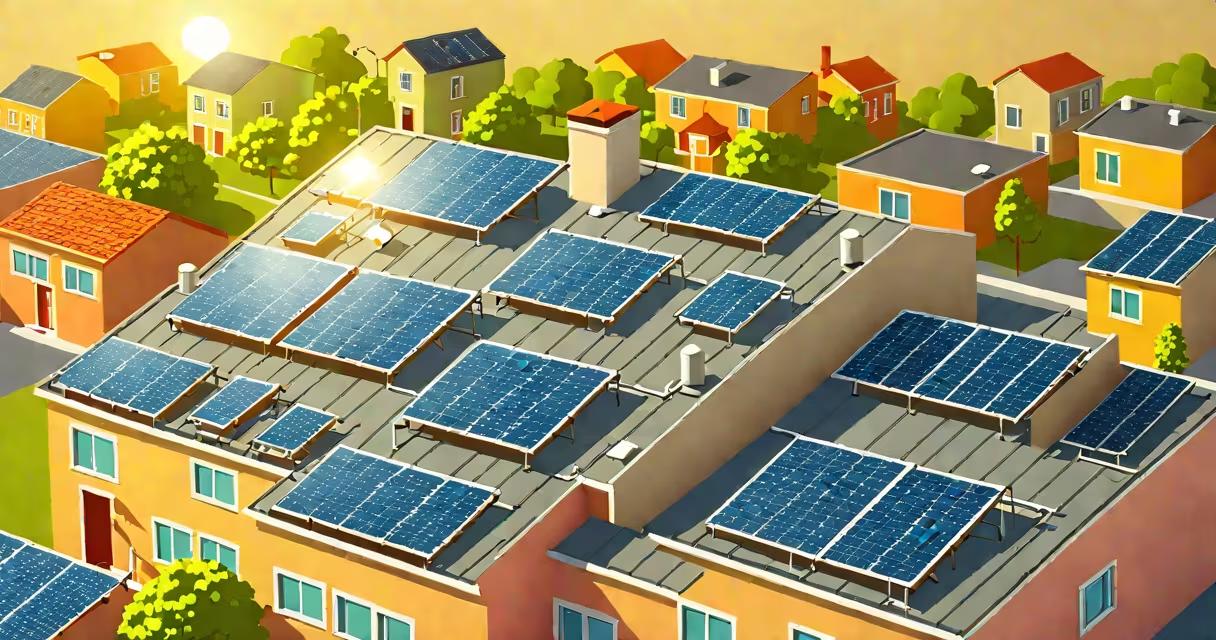
Solar power reduces greenhouse gas emissions, decreases air and water pollution, and minimizes land disruption compared to fossil fuel-based energy. It generates electricity using sunlight-clean, abundant, and renewable-without burning fuels or releasing harmful byproducts.
Solar panels convert sunlight into direct current (DC) electricity through photovoltaic cells made primarily of silicon. This DC electricity passes through an inverter, which converts it into alternating current (AC) usable in homes and businesses. The process produces no emissions during operation, unlike coal or natural gas plants that release carbon dioxide, nitrogen oxides, and sulfur dioxide.
According to the U.S. Environmental Protection Agency (EPA), replacing one megawatt-hour of electricity generated from coal with solar power avoids approximately 1,000 pounds of carbon dioxide emissions. Over 25 years, a typical residential solar system offsets about 100 tons of CO₂-equivalent to planting nearly 2,500 trees.
When sunlight hits a photovoltaic cell, electrons in the semiconductor material are dislodged, creating an electric current. This process occurs continuously during daylight hours and requires no moving parts or fuel combustion. As a result, solar installations produce no airborne pollutants or wastewater.
Unlike oil drilling or coal mining, solar panel manufacturing involves resource extraction-but the environmental cost is offset over time. A 2021 study by the National Renewable Energy Laboratory (NREL) found that solar panels generate enough clean energy within 1.5 to 3 years to repay their embedded carbon footprint. After that, they provide net-zero emissions electricity for decades.
Grid-scale solar farms can be sited on degraded lands, rooftops, parking lots, or brownfields-areas already disturbed by human activity. This reduces pressure on undeveloped ecosystems. For example, the 579-megawatt Desert Sunlight Solar Farm in California was built on previously unused desert land, avoiding habitat destruction common in traditional energy projects.
Residential, commercial, and utility-scale systems differ in scale and environmental footprint. Residential systems typically range from 3 to 10 kilowatts and reduce household reliance on grid power. Commercial installations often exceed 100 kW and serve office buildings, factories, and shopping centers. Utility-scale solar arrays can reach hundreds of megawatts and supply entire communities.
| System Type | Typical Capacity | Environmental Benefit | Land Use Efficiency |
|---|---|---|---|
| Residential | 3-10 kW | Reduces household carbon output by 3-6 tons annually | High (rooftop deployment) |
| Commercial | 10-100 kW | Supports corporate decarbonization goals | Medium (parking canopies, rooftops) |
| Utility-scale | 50 MW - 500+ MW | Replaces coal plants; prevents millions of tons of CO₂ | Low (requires large plots, but often on degraded land) |
Some systems integrate dual-use designs. Agrivoltaics-combining solar panels with crop farming-has been tested in France and Japan. In one project near Tokyo, solar panels were installed above rice paddies, reducing evaporation by 20% while maintaining crop yields. This model shows how solar infrastructure can coexist with agriculture.
People often assume solar panels require vast amounts of rare earth metals or cause irreversible environmental harm. While some components contain materials like silver and indium, modern panels use less than 1 gram of silver per watt-down from 5 grams in early models. Recycling programs now recover over 95% of silicon, glass, and aluminum from decommissioned panels.
Another myth is that solar power harms wildlife. While poorly sited solar farms can disrupt migration paths, proper planning avoids sensitive habitats. The Bureau of Land Management mandates environmental reviews before approving large solar projects on public land. In Nevada, the 200-megawatt Gemini Solar Project underwent extensive ecological surveys, resulting in adjusted layout plans to protect desert tortoise populations.
A lesser-known fact: solar power doesn't just reduce emissions-it improves air quality. The American Lung Association reports that switching to solar in urban areas lowers rates of asthma and respiratory illness linked to particulate pollution. In Los Angeles, replacing 10% of grid power with solar reduced PM2.5 levels by 12% in nearby neighborhoods over five years.
Germany's Energiewende (energy transition) policy launched in 2000 prioritized renewable energy. By 2023, solar power supplied 12% of the country's electricity, up from less than 1% in 2000. This shift cut national CO₂ emissions by 140 million metric tons since 2005-equal to removing 30 million cars from roads.
In Freiburg, a city of 230,000 people, over 30% of homes have rooftop solar. Local regulations require new buildings to install solar-ready roofs. The city's solar program reduced municipal energy costs by 28% between 2015 and 2022 while cutting emissions by 45,000 tons annually.
I installed a 6-kW system on my home in Colorado in 2021. My annual electricity bill dropped from $1,800 to $200. Monitoring tools showed the system produced 8,200 kWh-enough to power my house and charge my electric vehicle. Over three years, it avoided 5.7 tons of CO₂, equivalent to driving 13,000 miles less.
Solar power differs from wind and hydropower in scalability and location flexibility. Wind turbines require consistent wind speeds and are often placed offshore or in remote regions. Hydropower relies on river flow and can disrupt aquatic ecosystems. Solar works anywhere with sunlight-even urban rooftops-and has minimal noise or visual impact.
For context, a single 1-kilowatt solar panel generates about 1,400 kWh per year in sunny climates. That's enough to power a refrigerator, laptop, and LED lights for a month. A 10-panel system can meet the average U.S. household's annual consumption (10,600 kWh).
When evaluating alternatives, consider lifecycle emissions. According to the IPCC Sixth Assessment Report, solar PV emits 40 grams of CO₂-equivalent per kWh-far below coal (820 g), natural gas (490 g), and even nuclear (12 g). Solar's low emissions persist throughout its 25-30 year lifespan.
Solar power is good for the environment because it replaces fossil fuel dependence with a clean, scalable energy source. It cuts carbon emissions, reduces air and water pollution, and supports biodiversity when sited responsibly. With advancements in efficiency and recycling, solar remains one of the most effective tools for addressing climate change.