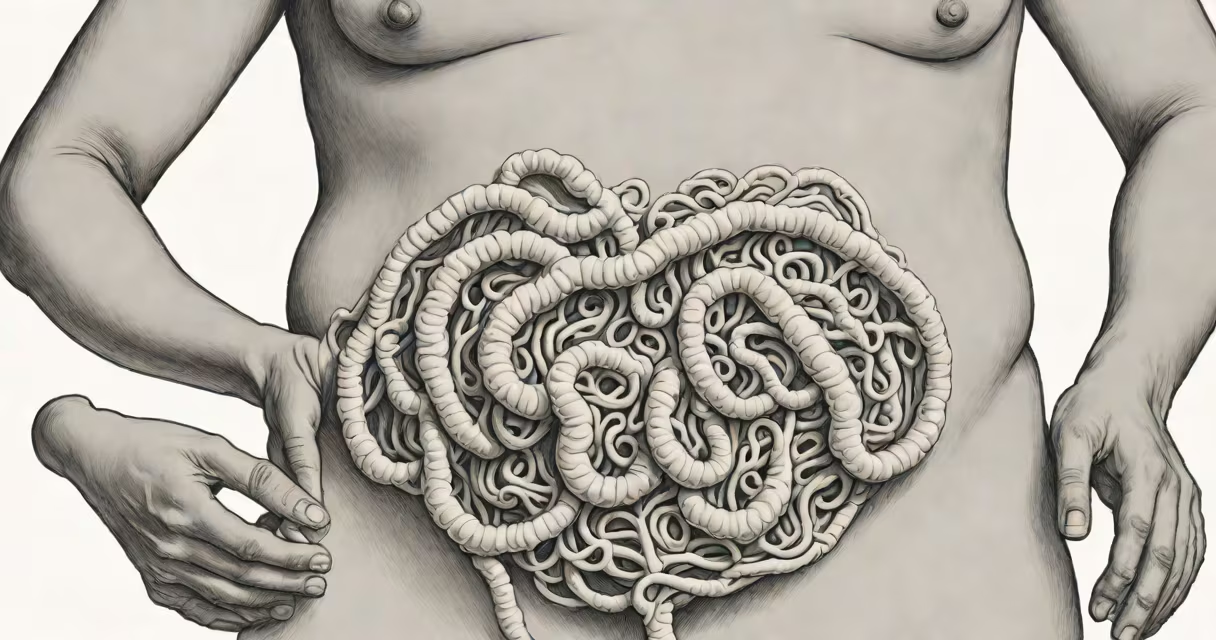
Trapped gas occurs when air or gas produced during digestion accumulates in the digestive tract and cannot move through the intestines or exit via the rectum or mouth. This buildup leads to bloating, pressure, cramping, and sometimes sharp pain. The condition arises from swallowed air, bacterial fermentation of undigested food, or impaired gas transit due to muscle dysfunction.
Gas forms in two primary ways: swallowing air while eating, drinking, or chewing gum, and through bacterial activity in the large intestine. When food moves slowly through the small intestine, undigested carbohydrates reach the colon, where bacteria break them down and release gases like hydrogen, methane, and carbon dioxide. These gases accumulate when they aren't expelled efficiently.
Normal digestion produces about 10 to 20 liters of gas daily, but most people pass 500 to 1,500 milliliters of gas through flatus each day. When gas production exceeds expulsion capacity, symptoms arise. Factors like diet, gut motility, and anatomical structure influence whether gas becomes trapped.
Trapped gas begins when gas enters the gastrointestinal system and fails to exit. Swallowed air accounts for up to 25% of gas volume. Eating quickly, talking while eating, or using straws increases air intake. This air travels down the esophagus and into the stomach, where it may be belched or move into the intestines.
In the large intestine, bacteria ferment indigestible fibers, such as those in beans, onions, and cruciferous vegetables. Fermentation releases gases that diffuse into the intestinal wall and enter the lumen. Normally, these gases travel through the colon and exit via the anus. But when transit slows or muscles don't contract properly, gas pools in one area.
Research shows that individuals with irritable bowel syndrome (IBS) have altered gut motility and higher sensitivity to gas. A 2021 study published in Gastroenterology found that 70% of IBS patients reported increased bloating during episodes of trapped gas, even with normal gas volumes. This indicates that perception and movement matter as much as quantity.
Trapped gas results from mechanical, dietary, or physiological factors. The table below outlines major contributors:
| Type | Common Triggers | Example |
|---|---|---|
| Swallowed Air | Eating too fast, chewing gum, drinking carbonated beverages | Drinking soda through a straw increases air intake by 30% |
| Dietary Fermentation | Beans, lentils, broccoli, dairy, artificial sweeteners | Fructose in fruit juice causes gas in lactose-intolerant individuals |
| Impaired Transit | IBS, constipation, pelvic floor dysfunction | Slow colonic transit delays gas movement by 6-12 hours |
| Structural Issues | Diverticulosis, adhesions, strictures | Scar tissue from prior surgery can trap gas in pockets |
Some causes are under-recognized. For example, chronic constipation traps gas in the distal colon, leading to prolonged bloating. A 2020 review in The American Journal of Gastroenterology noted that 40% of patients with recurrent trapped gas had delayed colonic transit, not just dietary triggers.
Another overlooked factor is posture. Lying flat after eating slows gas movement. A 2019 clinical trial showed that lying supine after meals increased bloating duration by 45% compared to sitting upright. Gravity aids gas movement; when horizontal, gas pools in the upper colon.
Trapped gas often feels localized. Pressure in the lower abdomen suggests gas in the sigmoid colon. Upper abdominal bloating points to gas in the cecum or ascending colon. Back pain, especially between the shoulder blades, can result from gas pressing on nerves near the diaphragm.
Many assume gas always exits via the rectum. But gas can migrate upward into the stomach or even into the chest cavity. A 2022 case report in BMJ Case Reports described a patient with persistent chest pain from gas trapped in the retrogastric space, mimicking cardiac issues. The diagnosis was confirmed via CT scan showing a 3 cm gas pocket behind the stomach.
Some confuse trapped gas with food intolerance. While both cause bloating, food intolerances involve enzyme deficiencies (like lactase or sucrase), whereas trapped gas stems from physical obstruction or delayed transit. Symptoms from food intolerance typically appear 30 minutes to 2 hours after eating. Trapped gas may persist for hours or days.
Consider a 34-year-old office worker who eats a sandwich with white bread, cheese, and a side of beans. He drinks a cold soda through a straw and chews gum during his lunch break. Afterward, he sits at his desk and scrolls on his phone.
By 3 PM, he feels bloated and notices tightness in his lower abdomen. He tries to pass gas but feels no relief. By 5 PM, the discomfort radiates to his lower back. His doctor later confirms that the combination of high-fiber food, carbonated drink, and poor posture slowed gas movement, causing pooling in the descending colon.
He improves after switching to low-FODMAP foods, avoiding straws, and standing during breaks. This case illustrates how multiple factors converge to trap gas, not just one isolated trigger.
Managing trapped gas involves adjusting behavior and diet. Avoiding carbonated drinks, chewing slowly, and reducing intake of high-FODMAP foods (like garlic, onions, wheat) reduces gas formation. Probiotics containing *Lactobacillus* and *Bifidobacterium* strains have shown modest benefit in reducing bloating, according to a 2023 meta-analysis in Nutrients.
Physical movement helps. Walking for 10 minutes after meals improves colonic motility and speeds gas clearance. A 2021 study found that participants who walked post-meal passed gas 28% faster than sedentary ones.
Understanding how you get trapped gas reveals that it's not just about what you eat, but how you eat, move, and position your body. Addressing all three reduces symptoms effectively.