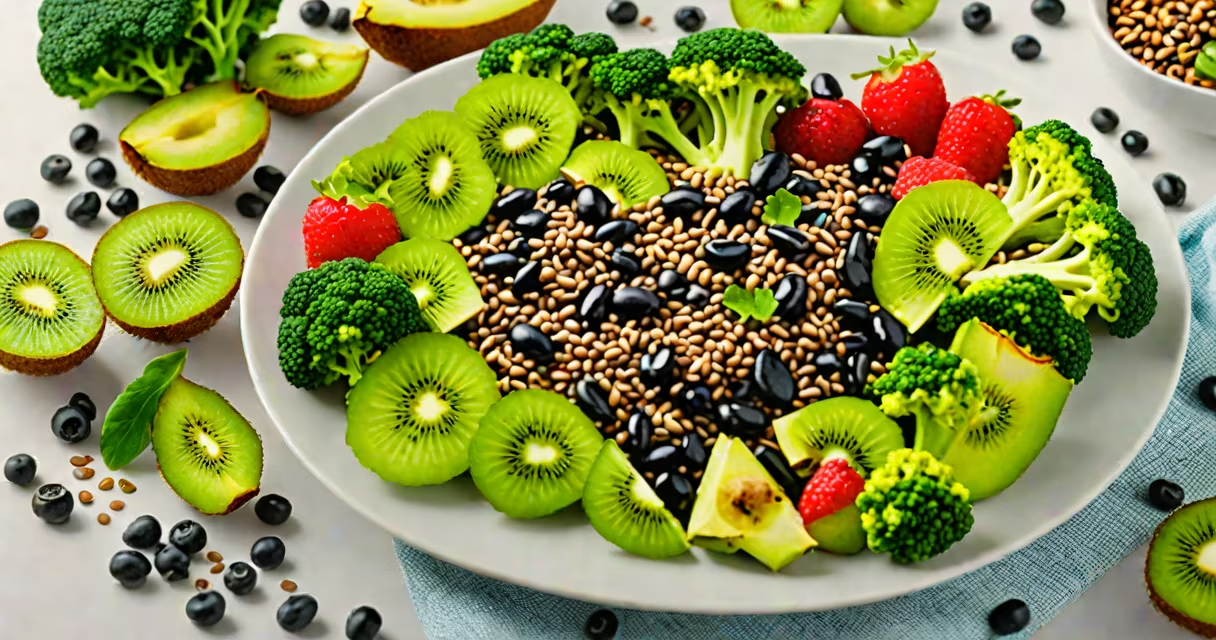
Fiber foods to help you poop are plant-based whole foods rich in indigestible carbohydrates that add bulk to stool and stimulate intestinal contractions. They include both soluble and insoluble fiber types, which work together to regulate bowel movements and prevent constipation.
Soluble fiber dissolves in water to form a gel-like substance that softens stool. Insoluble fiber adds bulk and speeds passage through the colon. A balanced intake of both supports regularity. The National Institutes of Health recommends 25 grams daily for women and 38 grams for men, yet most Americans consume only 15 grams.
Consuming adequate fiber reduces straining during defecation and lowers risk of diverticulosis. A 2021 review in Frontiers in Nutrition found that increasing dietary fiber intake improved bowel movement frequency by 28% in adults with functional constipation. This effect is measurable within 2-4 weeks of consistent intake.
When you eat fiber-rich foods, they pass through the stomach undigested and enter the large intestine. There, gut bacteria ferment soluble fiber, producing short-chain fatty acids like butyrate. These nourish colon cells and improve motility. Insoluble fiber acts like a sponge, absorbing water and swelling to increase stool volume.
As stool expands, it triggers peristalsis-the wave-like muscle contractions that move waste toward the rectum. Without sufficient fiber, stool becomes hard and compacted, making elimination difficult. This leads to infrequent bowel movements, bloating, and discomfort.
A study published in The American Journal of Clinical Nutrition tracked 120 adults over six weeks. Those who increased their intake of whole grains, legumes, and vegetables reported a 50% reduction in straining and a 35% improvement in stool consistency compared to controls.
Not all fiber foods have the same impact. Soluble fiber is most effective for softening stool; insoluble fiber speeds transit time. The best results come from combining both types.
| Fiber Type | Best Sources | Effect on Bowel Movement |
|---|---|---|
| Insoluble | Whole wheat bran, oats, kale, almonds | Increases stool bulk and reduces transit time by 12-24 hours |
| Soluble | Oats, chia seeds, apples, black beans | Softens stool and improves ease of passage |
| Both | Artichokes, pears, lentils, sweet potatoes | Optimal balance for regularity and comfort |
Chia seeds provide 10 grams of fiber per ounce (28g), mostly soluble. A 2019 clinical trial showed participants consuming 2 tablespoons daily had better bowel function than those on placebo. Kiwi contains actinidin, a proteolytic enzyme that enhances colonic motility independently of fiber content.
Black beans deliver 15 grams of fiber per cup (cooked). Their combination of soluble and insoluble fiber makes them ideal for promoting regularity. A single cup provides nearly half the recommended daily intake for women.
Many people assume all fiber supplements are equal. They're not. Psyllium husk, a common supplement, is high in soluble fiber and effective for softening stool. But it requires ample fluid-without 8 ounces of water per dose, it can worsen constipation by forming a dense mass.
Another mistake is relying solely on processed "high-fiber" cereals. Many contain added isolated fibers like inulin or maltodextrin, which may cause gas and bloating without offering the same benefits as whole food sources. Whole foods provide additional nutrients such as potassium, magnesium, and antioxidants that support gut health.
Some believe fiber causes bloating and gas. While initial adjustment is normal, persistent symptoms suggest too-rapid increases. The body needs time to adapt. A gradual increase-adding 5 grams per week-minimizes discomfort. One participant in a 2020 pilot study reported reduced bloating after switching from processed bars to whole fruits and vegetables.
Consider a sample day using fiber foods to help you poop:
Total: 52 grams of fiber-well above the recommended daily amount. This level supports frequent, soft bowel movements without straining.
Adding 8 cups of water throughout the day prevents dryness and ensures fiber functions properly. Without hydration, even high-fiber intake can lead to impaction.
If bowel movements remain infrequent despite consistent fiber intake, consult a healthcare provider. Persistent constipation may indicate underlying conditions such as hypothyroidism, irritable bowel syndrome (IBS), or medication side effects.
After adjusting your diet, track changes in stool frequency and consistency using the Bristol Stool Scale. If Type 1 or 2 persists for more than two weeks, seek evaluation. Early intervention prevents complications like hemorrhoids or fecal impaction.
Consistency beats intensity. Daily intake of diverse fiber foods to help you poop is more effective than occasional high-dose regimens. The goal is not just to move your bowels-but to do so comfortably, predictably, and without strain.