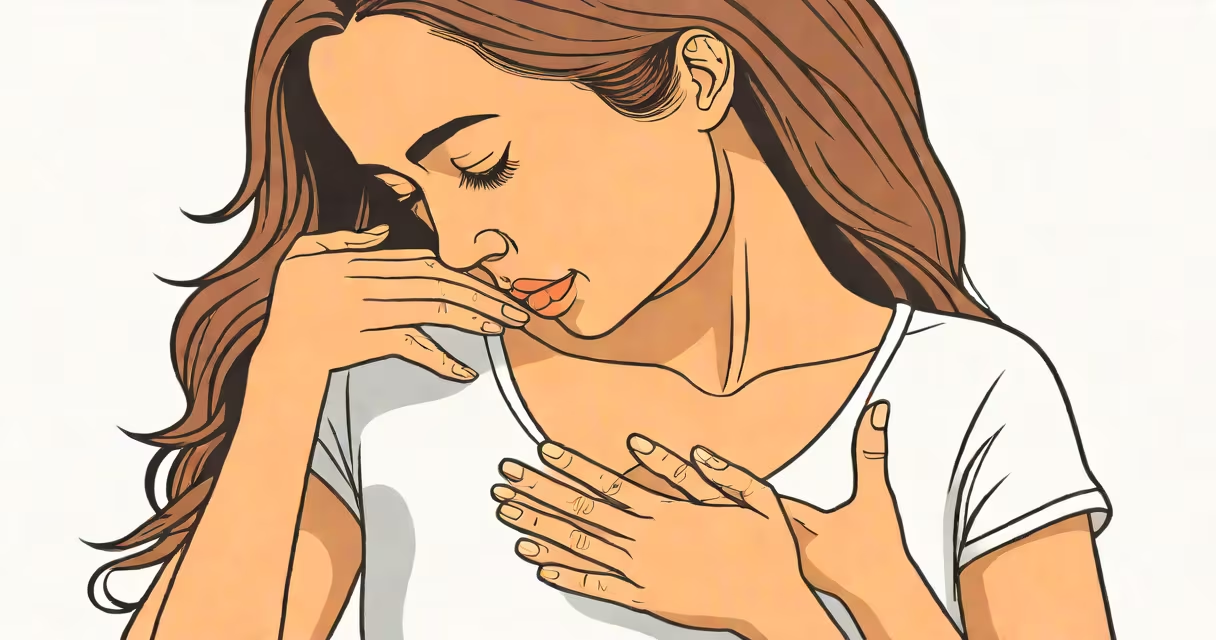
Chest tightness when breathing in deeply is a sensation of pressure, constriction, or discomfort in the chest that occurs during inhalation. It may feel like a band tightening around the torso or a sudden loss of air. This symptom can stem from lung, heart, or nervous system conditions and requires evaluation to rule out serious causes.
Deep breathing activates the diaphragm and expands the rib cage, increasing volume in the thoracic cavity. When the lungs fill with air, normal expansion causes mild stretching of tissues. But in certain conditions, this movement triggers pain or tightness due to inflammation, muscle spasm, or nerve irritation. The sensation often worsens with rapid or forceful inhalation and may persist between breaths.
Common triggers include asthma, panic attacks, costochondritis (inflammation of rib cartilage), and pulmonary embolism. Less frequently, it indicates cardiac ischemia or esophageal reflux. The location and timing of the tightness help distinguish among them. For example, left-sided pressure during exertion suggests cardiac origin, while bilateral tightness with wheezing points to airway disease.
During a deep breath, the diaphragm contracts downward, creating negative pressure that draws air into the lungs. The intercostal muscles between the ribs contract to expand the ribcage. This coordinated effort increases intrathoracic volume and lowers internal pressure. In healthy individuals, this process is nearly imperceptible.
When pathology exists, the system encounters resistance or sensitivity. In obstructive lung diseases like COPD or asthma, airway narrowing causes turbulent airflow and increased work of breathing. The effort required to inhale deeply leads to muscle fatigue and perceived tightness. In anxiety-related episodes, hyperventilation alters blood CO₂ levels, causing vasoconstriction and muscle tension, including in the chest wall.
A 2021 study published in Respiratory Medicine found that 62% of patients reporting chest tightness during deep breathing had underlying airway hyperresponsiveness, even without a prior diagnosis of asthma. This highlights that the symptom can precede clinical diagnosis by months.
Conditions causing chest tightness during deep inhalation fall into three categories: pulmonary, cardiac, and neuromuscular. Each presents distinct patterns.
| Type | Key Features | Typical Triggers | Associated Conditions |
|---|---|---|---|
| Pulmonary | Bilateral tightness, often with cough or wheeze | Exercise, cold air, allergens | Asthma, COPD, pulmonary embolism |
| Cardiac | Left-sided pressure, radiates to arm or jaw | Physical exertion, stress | Angina, myocardial infarction |
| Neuromuscular | Localized tenderness, reproducible with touch | Repetitive motion, trauma | Costochondritis, nerve compression |
Costochondritis, for example, involves inflammation of the cartilage connecting ribs to the sternum. Palpating the area near the breastbone often reproduces the tightness. A 2019 review in Journal of Pain Research reported that 15% of emergency department visits for chest pain were due to musculoskeletal causes, with costochondritis being the most common.
Anxiety-induced tightness differs in timing. It typically begins suddenly during periods of stress and resolves with controlled breathing. The sensation often feels "inside" rather than "around" the chest. Unlike physical causes, it rarely worsens with activity and may improve with distraction techniques.
One patient, a 34-year-old woman with no history of lung disease, reported tightness when taking deep breaths during yoga. She described a sharp, localized pain under her left ribcage that worsened with inhalation. After imaging, she was diagnosed with costochondritis triggered by repetitive upper-body movements. Treatment included NSAIDs and rest. Her symptoms resolved within two weeks.
Another case involved a 58-year-old man who experienced tightness during deep breaths while climbing stairs. He had a history of smoking and hypertension. His symptoms progressed to include shortness of breath and dizziness. An ECG revealed ST-segment elevation, leading to a diagnosis of acute coronary syndrome. He underwent angioplasty and recovered fully.
These cases illustrate that context matters. The presence of risk factors such as smoking, age over 45, or family history of heart disease increases concern for cardiac causes. Conversely, tightness that appears during emotional distress and improves with mindfulness techniques leans toward psychological origins.
Chest tightness when breathing in deeply is often mistaken for heart attack symptoms. However, cardiac pain typically occurs at rest or with minimal exertion and may radiate to the neck, jaw, or left arm. It is usually constant, not tied to specific breathing phases.
Esophageal reflux can mimic the sensation. Acid rising into the esophagus irritates nerves near the diaphragm, causing a burning or squeezing feeling during deep breaths. A 2020 study in Alimentary Pharmacology & Therapeutics found that 37% of patients with non-cardiac chest pain had gastroesophageal reflux disease (GERD) as the underlying cause.
I once observed a patient in a primary care clinic describe tightness upon deep inhalation. She was a 42-year-old teacher with no chronic illness. Her vitals were stable. On exam, she winced when I pressed lightly over her second left rib. Ultrasound confirmed inflammation of the costochondral junction. She responded well to ibuprofen and avoided activities that strained her upper body. The episode lasted six days.
This case underscores that not all chest tightness is life-threatening. But because symptoms overlap across systems, accurate assessment is essential. Self-diagnosis risks delaying treatment for serious conditions.
Seek immediate medical attention if tightness occurs with:
For persistent or recurring tightness, consult a healthcare provider. Evaluation may include spirometry, ECG, chest X-ray, or blood tests. Early diagnosis improves outcomes, especially in conditions like pulmonary embolism, which has a mortality rate of 10% if untreated.
Recognizing the difference between benign and serious causes ensures timely intervention. If you experience this symptom, do not ignore it. Get evaluated.