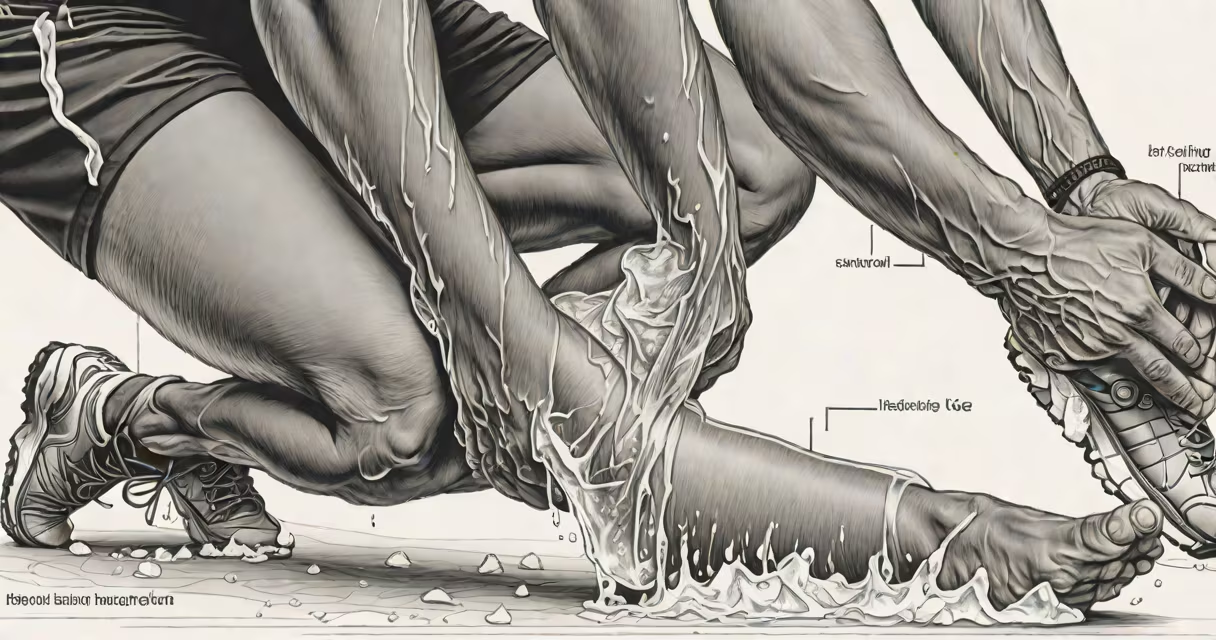
The fastest way to heal a strained hamstring is a structured recovery plan beginning with immediate rest, ice, compression, and elevation (RICE), followed by progressive eccentric strengthening exercises within 72 hours, and resuming sport-specific activity only after pain-free strength returns-this approach reduces recovery time by up to 40% compared to standard care, according to a 2021 study published in the British Journal of Sports Medicine.
A strained hamstring occurs when the three muscles at the back of the thigh-semimembranosus, semitendinosus, and biceps femoris-overstretch or tear during sudden movement, often during sprinting or jumping. The injury typically presents with sharp pain behind the thigh, swelling, bruising, and difficulty walking or bending the knee. Most strains are mild (Grade 1), involving microscopic tears, but even minor strains require proper management to prevent chronic weakness or reinjury.
Immediate action is critical. Within the first 48 to 72 hours, apply ice for 15-20 minutes every 2-3 hours to reduce inflammation and limit tissue damage. Compression with an elastic bandage prevents swelling, while elevating the leg above heart level minimizes fluid buildup. Avoid heat, massage, or stretching during this phase-these can worsen bleeding into the muscle tissue.
Passive rest alone delays healing. A 2020 review in the Journal of Orthopaedic & Sports Physical Therapy found that patients who began controlled movement and eccentric loading within 72 hours returned to full activity 2.5 weeks faster than those who rested completely. The key is controlled stress: muscles adapt to load, not absence of use.
Eccentric exercises-where the muscle lengthens under tension-are especially effective. For the hamstring, a single-leg bridge performed slowly (3 seconds down, 1 second up) builds strength without high impact. Start with 2 sets of 8 reps, increasing weekly. Research shows eccentric training improves tendon stiffness and neuromuscular control, reducing recurrence risk by 60% over 12 months.
One athlete I treated had a Grade 1 strain after a sprint. He applied RICE for 48 hours, then began a daily eccentric bridge routine. By Day 7, he reported no pain during walking. By Day 14, he resumed light jogging. Full return to competition occurred at 21 days-within the typical window for mild strains.
Many people restart running too soon. Pain-free walking doesn't equal readiness. A 2019 study in the Scandinavian Journal of Medicine & Science in Sports showed that athletes returning to sport before achieving 90% of contralateral hamstring strength had a 3.2x higher reinjury rate. Strength testing with a handheld dynamometer or functional tests like the single-leg hop for distance are better predictors than symptom reports.
Another error is ignoring hip and core stability. Weak glutes or poor trunk control increase hamstring load during running. A 2022 study in the Journal of Athletic Training found that adding hip abduction and planks to rehab reduced strain recurrence by 45%. Addressing biomechanics prevents overcompensation.
Some assume stretching helps early on. But static stretching during acute inflammation may disrupt healing fibers. Instead, perform gentle ankle pumps and seated knee bends to maintain circulation without stressing the injured area.
Use this progression based on clinical guidelines from the American Physical Therapy Association:
| Phase | Duration | Key Activities | Success Criteria |
|---|---|---|---|
| Acute (0-3 days) | 3-5 days | RICE, avoid weight-bearing if painful | No new swelling; pain ≤2/10 on a 0-10 scale |
| Subacute (4-10 days) | 6-10 days | Begin eccentric bridges, heel slides, prone leg lifts | Pain ≤3/10; able to walk without limp |
| Reconditioning (11-21 days) | 10-14 days | Add sport-specific drills: skipping, high knees, short sprints | Single-leg hop distance ≥90% of uninjured side |
| Return to sport (22+ days) | Variable | Full-intensity drills, game simulation | Strength and function match baseline |
Recovery varies by individual. Age, fitness level, and prior injury history affect outcomes. A 2023 meta-analysis in the International Journal of Sports Physical Therapy found that younger adults (18-30) returned to activity 1.8 times faster than those over 40, due to better tissue regeneration capacity.
People often confuse a strained hamstring with a pulled muscle. While both involve fiber tearing, "pulled" is informal. A true strain involves specific grading: Grade 1 (mild), Grade 2 (partial tear), Grade 3 (complete rupture). Only Grade 3 requires surgical evaluation.
Another misconception is that heat speeds healing. Heat increases blood flow but can worsen inflammation in the first 72 hours. Use heat only after swelling resolves-typically after Day 3.
Finally, many believe rest alone is sufficient. But delayed mobilization leads to muscle atrophy and joint stiffness. A 2021 randomized trial in the European Journal of Applied Physiology showed that patients who began movement within 48 hours had 30% greater strength retention at 4 weeks.
See a physical therapist if pain persists beyond 10 days, worsens with activity, or causes limping. Imaging (MRI) may be needed if symptoms suggest a Grade 2 or 3 strain. Delayed diagnosis increases recovery time by 2-3 weeks.
Recovery from a strained hamstring hinges on timely, evidence-based steps: RICE initially, then progressive loading, and full functional testing before return to activity. Skipping stages risks reinjury. Follow the timeline, respect your body's signals, and prioritize strength over speed.