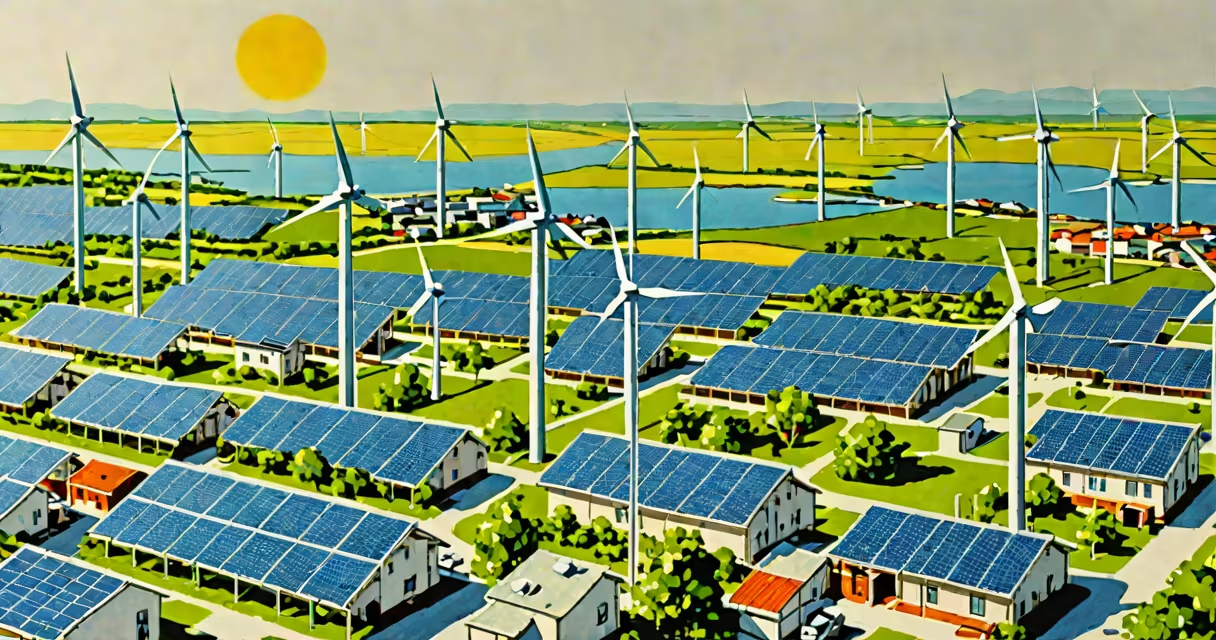
Electricity generation is the process of converting primary energy sources-such as coal, natural gas, uranium, sunlight, or wind-into electrical energy through mechanical or chemical means. This transformation occurs in power plants using turbines, generators, or electrochemical reactions, delivering electricity to homes, industries, and infrastructure via transmission networks.
At its core, electricity generation relies on electromagnetic induction: when a conductor moves through a magnetic field, electrons flow, creating an electric current. This principle powers nearly all large-scale generation systems. The energy source heats water to produce steam, spins a turbine, which turns a generator's rotor inside a magnetic field-producing alternating current (AC).
Global electricity demand exceeds 26,000 terawatt-hours annually, according to the International Energy Agency (IEA). Most of this output still comes from fossil fuels, though renewables now supply over 30% of global electricity, with wind and solar growing fastest. The U.S. Energy Information Administration (EIA) reports that in 2023, about 60% of U.S. electricity came from fossil fuels, 20% from nuclear, and 20% from renewables.
Electricity generation begins with energy input-either thermal, kinetic, or photonic. Thermal sources like coal or natural gas burn fuel to heat water into high-pressure steam. This steam forces blades on a turbine to spin. The turbine connects to a generator shaft, rotating coils of wire within a magnetic field. As the coils move, they induce an electric current in the wires.
Renewables use different inputs. Wind turbines capture kinetic energy from air movement. The wind turns blades attached to a shaft, spinning a generator. Solar photovoltaic (PV) cells convert sunlight directly into electricity through the photoelectric effect-where photons knock electrons loose in semiconductor materials like silicon.
Nuclear power uses controlled fission. Uranium atoms split in a reactor core, releasing intense heat. That heat boils water to create steam, driving turbines. Unlike combustion-based systems, nuclear plants don't emit carbon dioxide during operation, though they do produce long-lived radioactive waste.
Power plants fall into distinct categories based on their energy source and method of conversion:
| Type | Energy Source | Conversion Method | Global Share (2023) |
|---|---|---|---|
| Fossil Fuel | Coal, natural gas | Thermal → steam turbine → generator | 60% |
| Nuclear | Uranium-235 | Thermal → steam turbine → generator | 10% |
| Hydroelectric | Flowing water | Kinetic → turbine → generator | 15% |
| Wind | Wind | Kinetic → turbine → generator | 7% |
| Solar PV | Sunlight | Photons → electron release in semiconductors | 5% |
Each system has trade-offs. Fossil plants offer dispatchable power-available on demand-but emit CO₂. Wind and solar are clean and abundant but intermittent, requiring storage or backup. Hydroelectric provides stable baseload power but depends on geography and seasonal rainfall.
Many assume electricity is "created" from nothing. That's false. Electricity is always converted from another form of energy. The law of conservation of energy applies: energy cannot be created or destroyed, only transformed. A power plant doesn't generate energy-it transforms it.
Another misconception is that solar panels work at night. They don't. Photovoltaic cells require photons. At night, solar farms produce zero electricity unless paired with battery storage. The U.S. Department of Energy confirms that solar capacity factors average 15-25%, meaning they operate at peak output only part of the day.
A less obvious point: not all electricity generation is centralized. Distributed generation-like rooftop solar or small wind turbines-feeds power directly into local grids. These systems reduce transmission losses and increase resilience. In Germany, over 40% of solar installations are owned by households or cooperatives, showing how decentralization changes ownership models.
Palo Verde, located in Arizona, is the largest nuclear power plant in the United States. It operates three reactors, each capable of producing 1,100 megawatts (MW) of continuous power. Together, they generate about 30,000 gigawatt-hours annually-enough to power over 3 million homes.
The plant uses pressurized water reactors. Water circulates through the reactor core, absorbing heat from fission. That heated water then flows through a steam generator, transferring heat to a secondary loop. The secondary loop produces steam to drive turbines connected to generators. The entire process runs continuously for 18-month cycles between refueling outages.
Despite its scale, Palo Verde emits no carbon dioxide during operation. According to the Nuclear Energy Institute, nuclear plants avoid approximately 470 million metric tons of CO₂ emissions annually in the U.S.-equivalent to removing 100 million cars from roads.
Electricity generation underpins modern life. Without it, hospitals couldn't run ventilators, data centers wouldn't function, and cities would lose lighting and heating. The World Bank estimates that 750 million people globally still lack access to electricity, primarily in sub-Saharan Africa and South Asia.
Grid reliability depends on balancing supply and demand. When millions turn on lights at evening peak hours, utilities must ramp up generation instantly. This requires flexible sources-natural gas plants, hydro reservoirs, or battery storage-to compensate for variable renewables.
Climate policy drives shifts in generation mix. The Paris Agreement aims to limit warming to 1.5°C. To meet this, the IEA projects that global clean energy capacity must triple by 2050. That includes scaling up offshore wind, expanding solar farms, and building new nuclear facilities.
Electricity generation is often confused with distribution. Generation refers to the creation of electrical power. Distribution involves moving that power from power plants to consumers through transmission lines and substations.
For example, a wind farm in Texas generates electricity. That power travels over high-voltage transmission lines to load centers in Dallas or Houston. Local utility companies step down voltage and deliver it to homes. The generation happens at the source; the distribution happens afterward.
Even when a home uses solar panels, the system still feeds into the grid. Excess power goes to the network; when sun isn't shining, the home draws from the grid. This interconnection enables net metering, where users receive credit for surplus generation.
I once installed a 5-kilowatt solar range on my roof. During summer days, it produced 20 kilowatt-hours daily-enough to cover half my household's usage. On cloudy days, it dropped to 5 kWh. The system fed excess power into the grid, earning me credits. Over a year, I used 8,000 kWh from the grid and generated 7,200 kWh myself-resulting in a net bill of $120, not $0. The utility tracks both directions.