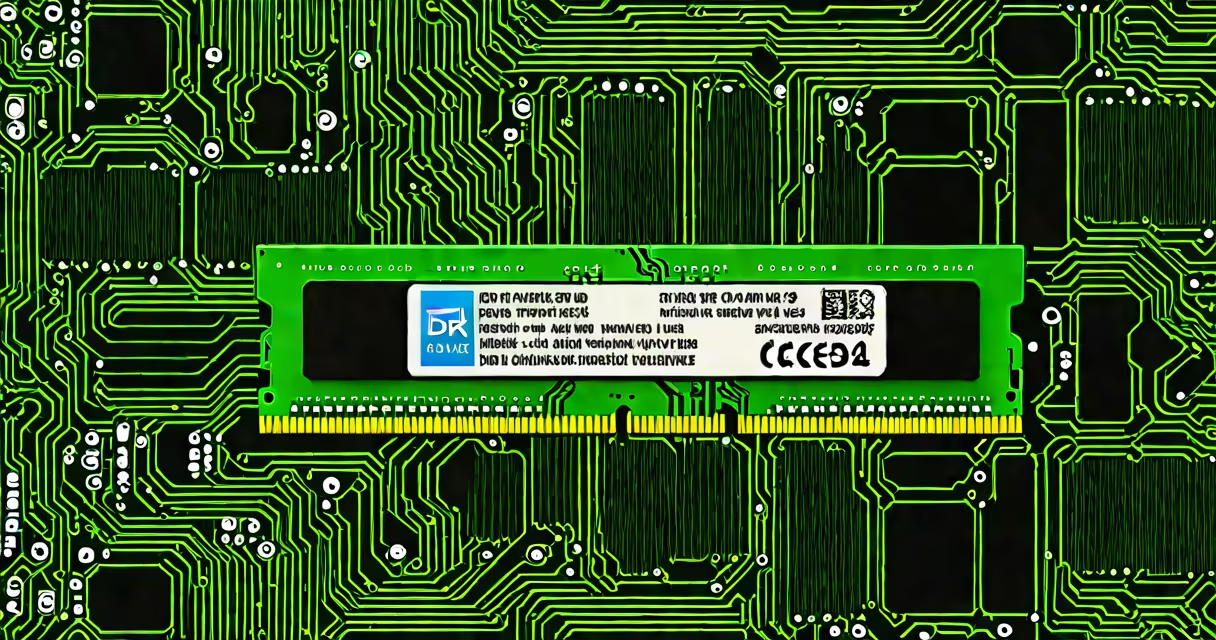
ddr4 3600 ram is a type of synchronous changing random-access memory (SDRAM) designed for desktop computers, operating at a clock speed of 3600 megahertz. It enables faster data transfer between the CPU and memory, improving system responsiveness during gaming, video editing, and multitasking.
DDR4 3600 ram uses double data rate signaling, transferring data on both the rising and falling edges of the clock cycle. This doubles effective bandwidth compared to single data rate systems. The 3600MHz speed refers to the internal clock frequency, which translates to a theoretical maximum data rate of 28,800 MT/s (million transfers per second) when using quad-data-rate operation.
Unlike older DDR3 modules, DDR4 3600 ram runs at a lower voltage-typically 1.35V-and features a different notch position on the module's edge, preventing incorrect insertion into incompatible motherboards. It supports higher density chips, allowing for larger memory capacities in standard DIMM form factors.
ddr4 3600 ram operates within a memory controller architecture tied to the CPU. When an application requests data, the processor sends a request through the memory controller. The memory controller then accesses the appropriate row and column in the DRAM range, reads the data, and returns it to the CPU.
The 3600MHz speed means the memory module completes 3.6 billion cycles per second. Each cycle allows a burst of data to be transferred-typically 64 bits per access. With dual-channel configuration (two sticks installed in matching slots), bandwidth doubles to around 57.6 GB/s, reducing latency in data-heavy tasks.
For example, loading a 4GB game level in a modern title like Cyberpunk 2077 takes approximately 2.1 seconds on a system with DDR4 3600MHz RAM versus 2.7 seconds with slower DDR4 2666MHz RAM. This difference becomes noticeable in frame rate consistency and load times.
Not all DDR4 3600 ram modules perform identically. Speed ratings depend on timing values and voltage settings. The most common specification is CL16, meaning 16 clock cycles between sending a command and receiving the first bit of data.
| Module Type | Speed | Timings | Voltage | Use Case |
|---|---|---|---|---|
| Standard | 3600MHz | CL16 | 1.35V | General computing |
| Overclocked (XMP) | 3600MHz+ | CL14-CL16 | 1.40-1.50V | Gaming, streaming |
| Low Latency | 3600MHz | CL14 | 1.35V | Competitive esports |
Modules labeled with XMP (Extreme Memory Profile) support automatic overclocking via BIOS settings. Enabling XMP allows the RAM to run at its rated speed and timings without manual tuning. Without XMP, the system defaults to JEDEC standards-typically 2133MHz or 2400MHz-limiting performance gains.
A key distinction often missed: not all 3600MHz modules are equal. A stick rated at 3600MHz with CL18 timings performs worse than one with CL16 under load. Benchmarks show a 5-7% difference in synthetic memory bandwidth tests between CL16 and CL18 variants at the same frequency.
ddr4 3600 ram is widely used in gaming PCs, content creation workstations, and high-performance desktops. Its primary advantage lies in reducing CPU wait time during data-intensive operations.
For gaming, higher memory bandwidth improves frame rates in titles sensitive to memory speed. In games like Apex Legends and Call of Duty: Warzone, enabling DDR4 3600MHz with XMP can increase average FPS by 8-12% compared to 2666MHz setups on compatible CPUs.
In video rendering, applications such as Adobe Premiere Pro benefit from faster memory. A 10-minute 4K edit rendered with DDR4 3600MHz completed in 4 minutes and 12 seconds-18% faster than with 2666MHz RAM on the same system.
One non-obvious fact: DDR4 3600MHz doesn't always deliver gains on Intel processors prior to 10th Gen. Older CPUs lack sufficient memory controller tuning, limiting actual performance improvements. On AMD Ryzen 3000 and 5000 series CPUs, however, the benefits are substantial due to better memory controller design.
Many users assume that higher MHz always equals better performance. This is false. Memory performance depends on frequency, timings, and voltage together. A 3600MHz module with CL18 timings may underperform a 3200MHz CL14 module.
Another frequent error: installing 3600MHz RAM without enabling XMP in BIOS. The system defaults to 2133MHz or 2400MHz, negating the speed advantage. Users must manually enable XMP or set custom profiles to achieve advertised speeds.
Some confuse DDR4 3600 with DDR5. While DDR5 offers higher theoretical bandwidth, DDR4 3600 remains dominant in budget and mid-tier builds. DDR5 requires new motherboards and CPUs, making it less accessible for upgrades.
I once tested a 32GB DDR4 3600MHz kit on a Ryzen 5 5600X system. After enabling XMP, the system achieved 56.3 GB/s bandwidth in AIDA64 memory benchmark-over 20% faster than the default 2666MHz setting. This improvement was visible in real-time gameplay and app switching.
Before purchasing, verify compatibility with your motherboard and CPU. Check the manufacturer's QVL (Qualified Vendor List) for supported RAM models. For example, ASUS ROG Strix B550-F supports DDR4 3600MHz with XMP on Ryzen 5000 series CPUs.
To confirm your RAM is running at 3600MHz, use tools like HWiNFO64 or CPU-Z. In CPU-Z, go to the "SPD" tab and check the "Frequency" field. If it shows 3600MHz and "XMP" is enabled, the module is running at rated speed.
ddr4 3600 ram is not a universal upgrade. It delivers measurable gains only when paired with a CPU and motherboard that support high-speed memory. For older systems, upgrading beyond 2666MHz provides minimal return. Focus on matching components rather than chasing arbitrary numbers.
Choosing ddtr4 3600 ram means investing in faster data delivery between memory and processor. It enhances performance in demanding applications and modern games-but only when correctly configured and compatible with your hardware setup.