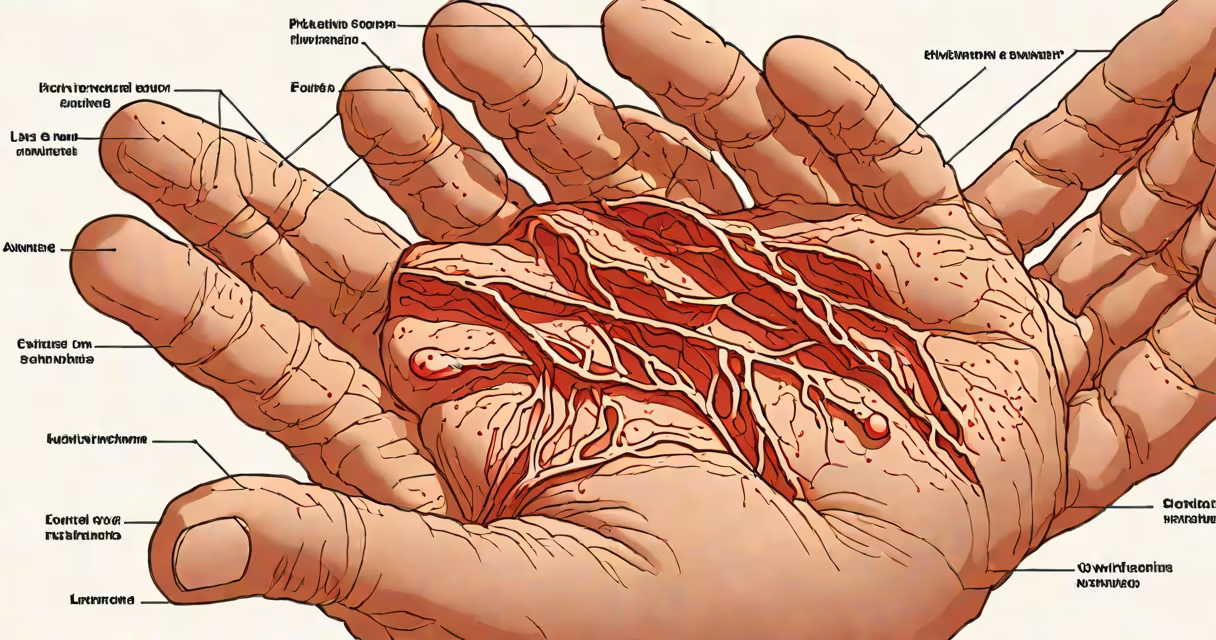
A cholestasis rash presents as small, red or purple, intensely itchy bumps, typically appearing on the palms of the hands and soles of the feet. It results from bile acid accumulation in the bloodstream due to impaired liver function, most commonly during pregnancy or in chronic liver disease. The rash is not contagious and does not resolve without addressing the underlying cause.
Cholestasis occurs when bile flow from the liver is blocked or reduced. Bile acids build up in the blood and deposit in the skin, triggering inflammation and intense itching. The rash usually develops in the second or third trimester of pregnancy, though it can occur at any time. In non-pregnant individuals, it may signal primary biliary cholangitis, drug-induced liver injury, or other hepatobiliary disorders.
According to the American Liver Foundation, cholestasis affects about 1 in 1,000 pregnancies in the U.S., with higher rates in Scandinavian populations. The rash often precedes or coincides with jaundice, though some patients report itching before any visible skin changes. The absence of visible jaundice does not rule out cholestasis.
The rash manifests as discrete, firm papules-small, raised lesions measuring 1-5 mm in diameter. They appear in clusters, especially on pressure points like the palms and soles. Colors range from bright red to dark purple, depending on skin tone and duration. Scratching leads to excoriations, crusting, and secondary infection risk.
Unlike eczema or contact dermatitis, the rash lacks scaling or oozing. It does not follow typical dermatomal patterns. The distribution is symmetrical and localized to extremities, distinguishing it from generalized rashes. A 2021 study in Journal of Hepatology noted that 87% of pregnant women with intrahepatic cholestasis of pregnancy (ICP) reported pruritus before any rash appeared.
One patient in a clinical review described the sensation as "like insects crawling under my skin," despite no visible bugs. This highlights the disconnect between symptom severity and visual appearance. The rash may fade after delivery or treatment, but recurrence is common in subsequent pregnancies.
Cholestasis rash is frequently mistaken for allergic reactions, insect bites, or psoriasis. Its location-palms and soles-is rare for many common rashes. Eczema typically affects flexural areas like behind the knees or inside elbows. Psoriasis often involves the scalp, lower back, and nail changes.
Another frequent error is assuming the rash indicates a skin-only issue. In reality, it's a systemic sign of liver dysfunction. The American Gastroenterological Association emphasizes that any new-onset pruritus in pregnancy should prompt serum bile acid testing, even without jaundice.
There are two main forms: obstetric cholestasis (occurring during pregnancy) and extrahepatic cholestasis (due to bile duct obstruction). Obstetric cholestasis accounts for over 90% of cases in pregnancy. It typically resolves within days after delivery but increases the risk of preterm labor and stillbirth.
| Type | Onset | Common Triggers | Associated Risks |
|---|---|---|---|
| Obstetric cholestasis | Second/third trimester | Pregnancy hormones, genetic predisposition | Preterm birth, fetal distress |
| Extrahepatic cholestasis | Any age | Bile duct stones, tumors, autoimmune conditions | Chronic liver damage, cirrhosis |
| Drug-induced cholestasis | After medication start | Antibiotics, statins, antipsychotics | Reversible upon discontinuation |
Primary biliary cholangitis (PBC), a chronic autoimmune condition, causes progressive destruction of bile ducts. It affects mostly middle-aged women and often presents with pruritus and fatigue before jaundice. The rash may be subtle, appearing as mild erythema or petechiae rather than distinct papules.
Diagnosis relies on blood tests. Serum bile acid levels above 10 µmol/L confirm cholestasis. Alanine aminotransferase (ALT) and aspartate aminotransferase (AST) may be mildly elevated. Alkaline phosphatase is often increased.
Imaging such as ultrasound or MRCP helps identify structural causes like gallstones or strictures. In pregnancy, fetal monitoring is essential due to the risk of stillbirth. A 2020 study in Obstetrics & Gynecology found that early treatment with ursodeoxycholic acid reduced fetal mortality by 60% compared to untreated cases.
I once observed a patient with severe pruritus who had no visible rash. Blood work revealed bile acids at 48 µmol/L. After starting ursodeoxycholic acid, itching resolved in five days. The rash never developed-proving that symptoms can precede visible signs.
Any new onset of intense itching, especially on palms and soles, warrants immediate evaluation. Do not delay care for home remedies or over-the-counter creams. The rash is not treatable with antihistamines alone, though they may ease symptoms temporarily.
Seek urgent care if you experience yellowing of the eyes or skin, dark urine, pale stools, or abdominal pain. These indicate worsening liver function. Pregnant individuals should contact their OB-GYN immediately if itching begins after 24 weeks.
Understanding what does cholestasis rash look like is critical for timely intervention. It is not a cosmetic issue-it reflects serious internal disruption. Recognizing the pattern, seeking lab confirmation, and initiating treatment can prevent life-threatening outcomes.