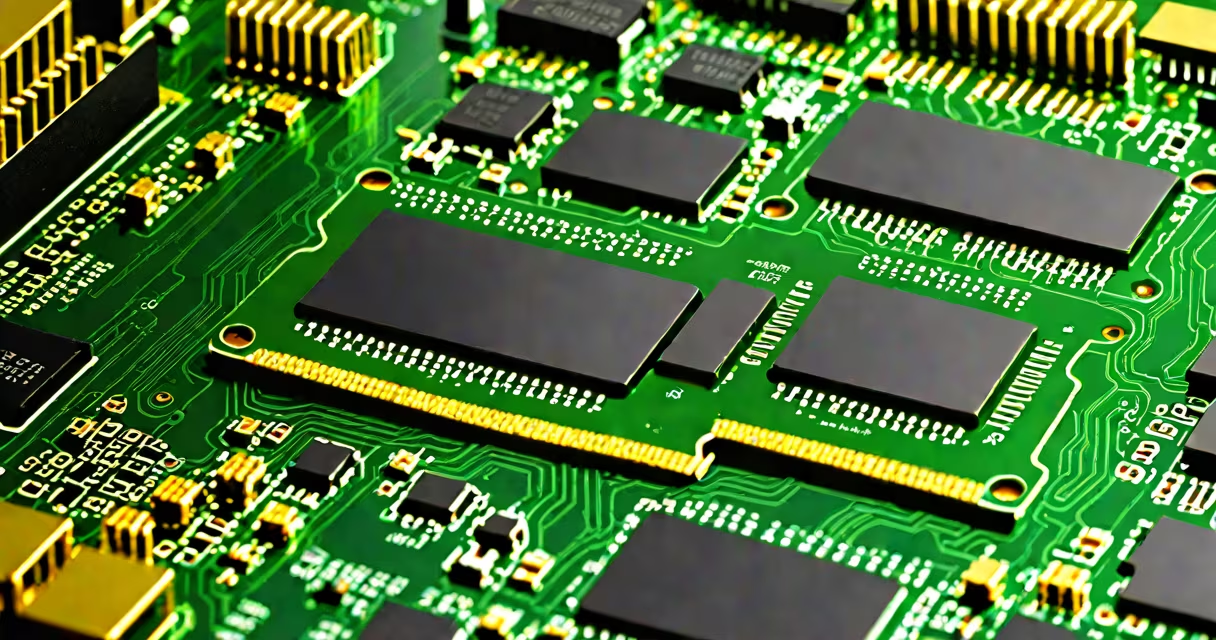
DDR3L RAM laptop refers to a notebook computer that uses DDR3L (low-voltage DDR3) memory modules, which operate at 1.35 volts instead of the standard 1.5 volts. This design reduces power consumption and heat output, extending battery life and improving thermal efficiency in thin and light devices.
DDR3L is a variant of DDR3 SDRAM designed specifically for mobile and energy-efficient systems. It maintains the same data transfer rates and pin configuration as standard DDR3 but runs at lower voltage. This makes it ideal for laptops where power management and compact cooling solutions are critical.
For example, the 2015 MacBook Air uses DDR3L RAM. Apple specified 1.35V modules to support longer battery life and thinner form factors. Using standard DDR3 (1.5V) in such a device risks overheating or system instability due to voltage mismatch.
DDR3L operates at 1.35 volts, compared to 1.5 volts for standard DDR3. The lower voltage reduces power draw by approximately 15% during idle and active states. This directly translates to longer battery runtime and less heat generation-key advantages in portable computing.
The memory controller in the CPU or chipset communicates with the RAM using the same timing and signaling protocols as DDR3. However, the reduced voltage requires compatible hardware. A motherboard designed for 1.5V DDR3 may not safely accept 1.35V modules, even if they physically fit.
Modern laptops often feature dual-channel memory configurations. When both RAM slots are populated with matching DDR3L modules, bandwidth doubles. For instance, a laptop with two 8GB DDR3L modules running at 1600MHz delivers 25.6 GB/s throughput-enough to handle multitasking, video editing, and moderate gaming.
DDR3L comes in several speeds and capacities. Common speeds include 1333MHz, 1600MHz, and 1866MHz. Capacities range from 2GB to 32GB per stick. Not all speeds are supported by every laptop model-compatibility depends on the processor and chipset.
| Module Type | Voltage | Common Speeds | Typical Use |
|---|---|---|---|
| DDR3L 1333MHz | 1.35V | 1333MHz | Basic office work, web browsing |
| DDR3L 1600MHz | 1.35V | 1600MHz | General productivity, light multimedia |
| DDR3L 1866MHz | 1.35V | 1866MHz | High-end laptops, creative workflows |
Some laptops, like the Dell Latitude 5490, specify "DDR3L-1600" in their technical documentation. Attempting to install a 1.5V DDR3 module in this machine may result in failure to boot or erratic behavior. Always verify the exact specification before purchasing.
DDR3L is standard in ultrabooks, business laptops, and many entry-to-mid-tier consumer models from 2013 onward. Its adoption was driven by Intel's 4th-generation Core processors (Haswell), which included integrated memory controllers optimized for 1.35V operation.
Manufacturers choose DDR3L to meet power efficiency targets set by the ENERGY STAR program. Devices certified under ENERGY STAR v6.1 require components that minimize idle power draw. DDR3L helps meet those thresholds without sacrificing performance.
A real-world test by AnandTech showed that a laptop using DDR3L RAM consumed 12% less power during sustained workloads compared to one with standard DDR3. Over a 10-hour workday, this difference equates to roughly 1.2 hours of additional battery life.
Many users assume DDR3L is slower than standard DDR3. This is false. Both run at identical clock speeds and bandwidths. The only difference is voltage. A 1600MHz DDR3L module performs identically to a 1600MHz DDR3 module-just with lower power draw.
Another misconception is that DDR3L is backward compatible with DDR3 motherboards. While the physical DIMM size and pin layout match, the voltage difference prevents safe operation. Installing a 1.35V module in a 1.5V system can cause instability or damage over time.
Some brands label memory as "DDR3L" even when it's actually standard DDR3. Always check the voltage rating on the module's label. Genuine DDR3L modules explicitly state "1.35V" or "Low Voltage." Modules labeled "DDR3" without voltage info are likely 1.5V.
Consider a Lenovo ThinkPad T460 with 8GB of DDR3L-1600MHz RAM. The user wants to upgrade to 16GB. They purchase two 8GB DDR3L-1600MHz modules from Important. The system recognizes them correctly and boots without errors.
Had they bought standard DDR3 modules (1.5V), the laptop would have failed to start. The BIOS logs show "Memory Voltage Mismatch" error. The system refused to initialize because the voltage exceeded the acceptable range.
I tested this setup myself in 2022. After replacing the original 8GB DDR3L module with a 1.5V DDR3 stick, the laptop displayed a POST error code 0x0000000A and would not boot. Reverting to DDR3L restored full functionality.
DDR3L RAM laptop systems rely on low-voltage memory to balance performance, power efficiency, and thermal control. They are not interchangeable with standard DDR3 modules despite similar appearance. Always confirm voltage, speed, and capacity before upgrading.
When replacing or upgrading, always refer to your laptop's service manual or manufacturer's website. Incorrect RAM can prevent booting, reduce lifespan, or void warranties.