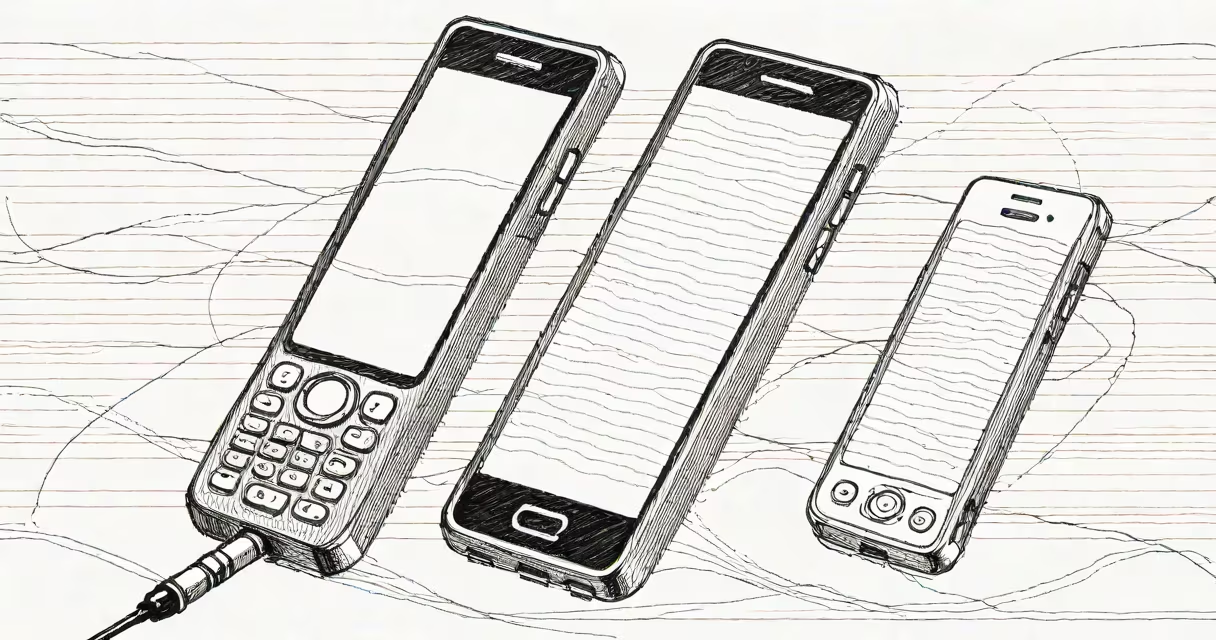
Cell phone frequencies are specific segments of the radio spectrum allocated for wireless communication between mobile devices and cellular networks. These frequencies enable voice calls, text messages, and internet access across regions and countries.
Mobile networks operate on designated frequency bands, each with distinct characteristics. For example, LTE networks commonly use 700 MHz, 1.7 GHz, and 2.5 GHz bands, while 5G services deploy sub-6 GHz and millimeter wave (mmWave) bands above 24 GHz. The choice of frequency affects speed, coverage, and penetration through walls.
Regulatory bodies such as the Federal Communications Commission (FCC) in the U.S. and the International Telecommunication Union (ITU) assign frequency bands to countries and carriers. This ensures minimal interference between services and enables global roaming. A phone must support the bands used by a carrier in a given region to maintain connectivity.
When you make a call or stream video, your phone converts data into radio waves transmitted via antennas. These waves travel through the air to nearby cell towers, which relay signals across the network. The frequency determines how much data can be sent per second and how far the signal travels.
Lower frequencies (e.g., 600-900 MHz) propagate farther and penetrate buildings better but carry less data. Higher frequencies (e.g., 2.5-6 GHz) offer faster speeds and greater capacity but have shorter range and weaker wall penetration. This trade-off shapes network design and device performance.
Modern smartphones support multiple bands simultaneously. A dual-band Wi-Fi phone may handle both 2.4 GHz and 5 GHz, while a 5G-capable device might support up to 12 different cellular frequency bands. The phone automatically selects the optimal band based on signal strength and network load.
Different generations of mobile technology rely on specific frequency ranges:
| Technology | Common Frequency Bands | Use Case |
|---|---|---|
| GSM (2G) | 900 MHz, 1800 MHz | Basic voice and SMS; low power consumption |
| UMTS (3G) | 2.1 GHz (FDD), 850/1900 MHz (TDD) | Internet access, video calling |
| LTE (4G) | 700 MHz, 1.7/2.1 GHz, 2.5 GHz | High-speed data, VoLTE, streaming |
| 5G NR | Sub-6 GHz (n78, n79), mmWave (n257, n261) | Ultra-fast speeds, low latency, IoT |
For instance, Verizon's 5G network uses mmWave bands like n257 (39 GHz) in dense urban areas, delivering peak speeds over 1 Gbps. However, these signals don't pass through walls well, limiting indoor coverage. In contrast, AT&T's 5G uses low-band 600 MHz, offering wide-area coverage but slower speeds.
Carriers often repurpose older bands for new technologies. For example, T-Mobile expanded its 5G service using the 600 MHz band originally assigned for broadcast TV. This reuse improves coverage without requiring new infrastructure.
Network operators choose frequency bands based on geography, demand, and regulatory approval. Rural areas typically use lower bands for long-range coverage. Urban centers use higher bands to handle dense traffic and deliver high bandwidth.
Frequency allocation varies globally. In Europe, 1.8 GHz is widely used for 3G and 4G. In Japan, 2.1 GHz supports both 3G and 4G. A phone designed for the U.S. market may lack support for certain Asian bands, leading to poor reception abroad.
A key insight: not all phones support the same frequencies. Apple's iPhone 15 includes support for 5G on 26 frequency bands across four continents. Older models, like the iPhone 13, lack mmWave support in some variants, affecting performance in cities like New York and Seoul.
During my time testing international SIM cards in 2022, I found that a European Android phone failed to connect to a U.S. carrier's 5G network because it didn't support the 3.5 GHz band used by T-Mobile. The phone showed "No Service" despite being in a strong signal area. This highlights how frequency compatibility impacts real-world usability.
Many assume that higher frequency always means better performance. That's false. While 5G mmWave offers blistering speeds, it struggles with obstacles and short range. A phone in a basement may lose connection entirely, even if near a tower.
Another myth: all 5G phones work the same worldwide. In reality, 5G deployment differs by country. The U.S. relies heavily on mmWave in select cities, while South Korea and China focus on sub-6 GHz bands. A phone sold in the U.S. may not function on a 5G network in India due to unsupported bands.
Some confuse cell phone frequencies with Wi-Fi channels. Though both use radio waves, they operate independently. A phone may show "5G" but still use 2.4 GHz Wi-Fi for local file transfers. The two systems serve different purposes and use separate frequency allocations.
Only about 10% of the electromagnetic spectrum is usable for wireless communication. Of that, less than 1% is allocated to mobile networks. The rest is reserved for aviation, emergency services, satellite, and military use.
Frequency bands are not static. As demand grows, regulators reallocate spectrum. In 2023, the FCC auctioned off 3.5 GHz band licenses to carriers, enabling nationwide 5G expansion. This process takes years and involves complex negotiations.
Every mobile device must pass FCC Part 15 compliance tests. Devices emitting signals outside approved bands risk interference with critical systems like air traffic control. Even minor frequency drift can trigger legal penalties.
Suppose you plan to travel from the U.S. to Germany. You want to use your phone on Deutsche Telekom's network. Check the supported bands:
Your phone supports 800 MHz and 1.8 GHz bands, so it will work for voice and data. But if the German network uses a rare 2.6 GHz band not supported by your device, you'll fall back to 3G or lose connectivity entirely.
To avoid issues, verify your phone's band support using tools like frequencycheck.com or the carrier's official spec sheet. Always confirm that the device supports the bands used in your destination country.
Understanding cell phone frequencies helps you choose a device that works reliably across borders. It also explains why some phones perform poorly in certain locations-even with strong signal bars.