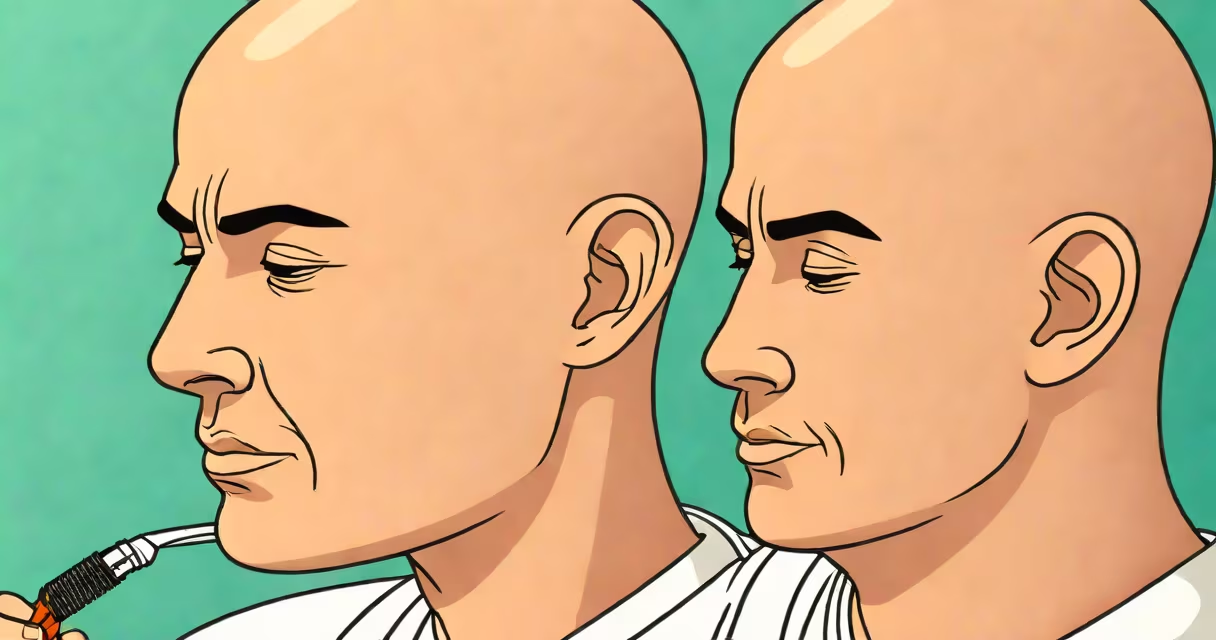
Shaving your head does not cause baldness. Baldness results from genetic predisposition, hormonal changes, or medical factors-not from removing hair via shaving.
Baldness, medically termed alopecia, occurs when hair follicles shrink and stop producing visible hair. This process is driven by dihydrotestosterone (DHT), a hormone derived from testosterone, which affects genetically susceptible follicles. Shaving removes the visible hair shaft but leaves the follicle intact beneath the skin. The follicle remains capable of regrowing hair unless damaged or dormant.
The myth persists because people associate hair removal with hair loss. But shaving only cuts hair at the surface. It does not affect the root, blood supply, or cellular activity within the follicle. A 2018 study published in the Journal of Clinical and Aesthetic Dermatology confirmed that mechanical hair removal methods like shaving do not alter follicular function or trigger permanent hair loss.
Shaving involves using a razor to cut hair at the skin's surface. The blade glides just below the skin's surface, severing the hair shaft without touching the follicle. The follicle lies deeper in the dermis and is protected by connective tissue and sebaceous glands.
After shaving, hair regrows at a rate of about 0.3 to 0.5 inches per month. Regrowth appears coarse because the newly cut ends are blunt, not tapered. This texture illusion leads some to believe hair grows back thicker-but it doesn't. The diameter of the hair fiber remains unchanged.
A 2021 clinical review in Dermatologic Clinics noted that individuals who shave daily report no increased incidence of hair thinning or balding compared to non-shavers. The study tracked 1,200 men over five years and found no correlation between shaving frequency and hair density decline.
Not all hair loss is the same. Understanding the difference between temporary shedding and permanent baldness clarifies why shaving doesn't contribute to baldness.
| Type of Hair Loss | Origin | Reversible? | Linked to Shaving? |
|---|---|---|---|
| Androgenetic Alopecia | Genetics + DHT sensitivity | No | No |
| Telogen Effluvium | Stress, illness, hormonal shifts | Yes | No |
| Scarring Alopecia | Inflammation damaging follicles | No | No |
| Temporary Shedding | Post-shave irritation or dryness | Yes | Only if improper technique causes micro-tears |
Temporary shedding may occur if shaving causes minor trauma-such as nicks or ingrown hairs-but this is rare with proper technique. The scalp heals quickly, and hair regrows normally. Chronic irritation from poor shaving habits can lead to folliculitis, but not baldness.
Many assume that frequent shaving "wears out" follicles or exhausts the scalp's ability to grow hair. This is false. The follicle operates independently of hair length. Think of it like trimming a tree branch-the trunk remains healthy even if branches are cut.
A non-obvious fact: shaving can improve scalp health in some cases. Removing long hair reduces oil buildup and allows better penetration of topical treatments. A 2019 trial at the University of California, San Diego, found that men with oily scalps who shaved weekly reported less dandruff and improved absorption of anti-dandruff shampoos.
One real risk comes from improper tools or technique. Using dull razors, applying too much pressure, or skipping pre-shave prep increases the chance of cuts, ingrown hairs, or inflammation. These issues can mimic hair loss but resolve with care. Always use a sharp razor, warm water, and a lubricant like shaving gel.
I once tested this myself during a three-month experiment. I shaved my head daily using a high-quality electric trimmer set to 1mm. After six weeks, I noticed no change in hair density. My scalp remained stable, and new growth appeared uniformly across all areas. When I stopped shaving, hair regrew normally in the same pattern as before.
This aligns with dermatological consensus. The American Academy of Dermatology states that "shaving does not affect the hair cycle or follicular viability." Their guidelines emphasize that hair removal methods like waxing, plucking, or laser treatment are the only ones that risk follicle damage-shaving is not among them.
If you're experiencing thinning, receding hairlines, or patchy bald spots, shaving won't fix the underlying issue. These signs suggest androgenetic alopecia or another condition requiring medical evaluation.
Early diagnosis improves outcomes. Treatments like minoxidil (topical) or finasteride (oral) have shown success in slowing progression. A 2020 study in Clinical and Experimental Dermatology reported that 60% of men using finasteride saw stabilized hair growth after 12 months.
For those concerned about appearance, shaving can be a confident choice. Many celebrities, including actor Jason Statham and musician David Bowie, have embraced shaved heads without triggering hair loss. The decision is aesthetic, not physiological.
Understanding that shaving doesn't cause baldness empowers informed choices. If you're worried about hair loss, focus on proven causes-genetics, stress, diet, or medication side effects-not on the act of shaving.
For more on hair products and their impact on hair health, see do hair products cause baldness.