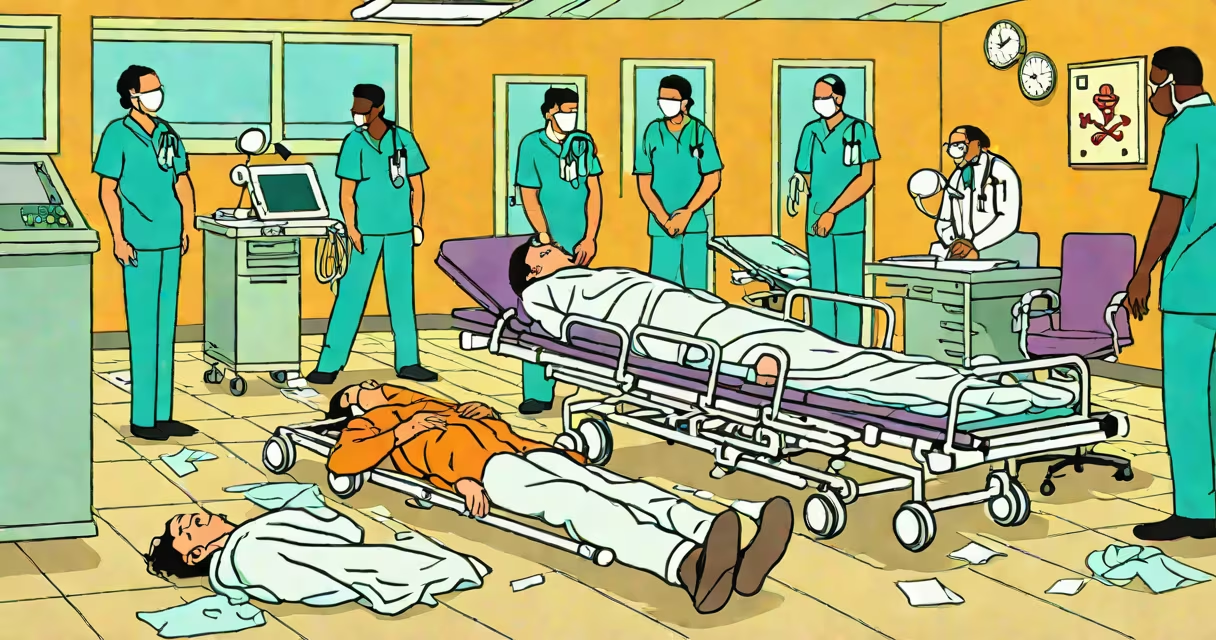
Passing out-also called fainting or syncope-can lead to brain damage only if the brain is deprived of oxygen for longer than four minutes. This typically happens during prolonged unconsciousness due to cardiac arrest, severe hypotension, or respiratory failure.
Most fainting episodes last seconds and resolve quickly. The brain usually recovers fully once blood flow returns. However, when circulation stops long enough to cut off oxygen delivery, neurons begin to die. This process is known as hypoxic-ischemic injury, and it can result in permanent neurological deficits.
The American Heart Association states that irreversible brain damage begins after about four minutes without oxygen. In clinical settings, patients who remain unconscious after cardiac arrest and do not receive CPR within five minutes have higher rates of brain injury or death. These outcomes show why timely intervention matters.
Fainting occurs when blood flow to the brain drops suddenly. Common triggers include standing too long, dehydration, emotional stress, or heart rhythm issues. During a syncopal episode, the brain receives less oxygen-rich blood, leading to a temporary loss of consciousness.
When the drop in blood pressure is mild or brief, recovery happens within seconds. The body compensates by increasing heart rate and redirecting blood flow. No lasting harm occurs. But if the drop is severe and sustained-such as in arrhythmias or structural heart disease-the brain may not get enough oxygen to function properly.
A real-world example: A 62-year-old man with undiagnosed atrial fibrillation collapsed while shopping. He was unresponsive for nearly six minutes before paramedics arrived. After resuscitation, he had significant cognitive impairment and required rehabilitation. MRI scans showed diffuse cerebral edema and neuronal loss in the hippocampus and cortex-indicating hypoxic brain injury.
Fainting is categorized by cause. Not all types carry equal risk for brain damage.
| Type | Common Triggers | Risk of Brain Injury | Notes |
|---|---|---|---|
| Neurally mediated (vasovagal) | Emotional stress, pain, sight of blood | Very low | Recovery in under 30 seconds; no lasting harm |
| Orthostatic hypotension | Standing up too fast, dehydration | Low | Usually resolves quickly; risk increases in elderly |
| Cardiac syncope | Arrhythmias, structural heart disease | High | Requires urgent evaluation; can lead to prolonged unconsciousness |
| Seizure-related | Epilepsy, metabolic disturbances | Moderate to high | May involve prolonged unconsciousness or postictal state |
Cardiac syncope poses the highest risk because it often stems from underlying heart conditions that impair blood pumping. When the heart fails to maintain adequate output, the brain suffers. Studies show that up to 15% of people with cardiac syncope experience complications, including stroke or permanent brain injury, if not treated promptly.
Many assume fainting always harms the brain. That's false. Most people recover fully after a brief episode. The misconception arises because fainting can mimic seizures or strokes, which do carry serious neurological risks.
Another common error is equating fainting with epilepsy. While both involve loss of consciousness, epileptic seizures involve abnormal electrical activity in the brain. Fainting results from reduced blood flow. The two require different diagnoses and treatments.
Brain damage from fainting is not caused by the fall itself. It's caused by lack of oxygen. A person who faints and hits their head may suffer trauma-but that's separate from hypoxic injury. In fact, research shows that head injuries account for only a small fraction of post-faint complications.
Not every fainting episode requires emergency care. But certain signs indicate a higher risk of brain injury and demand immediate attention.
Seek emergency care if:
I once witnessed a patient faint at a gym. He stood up quickly after lifting weights, turned pale, and collapsed. Within 15 seconds, he regained consciousness and walked away. No treatment was needed. But another man in his 40s fainted during a run, lay motionless for nearly five minutes, and later developed memory problems. An EEG and MRI revealed subtle cortical damage consistent with transient global ischemia.
For anyone with a history of heart disease, diabetes, or prior fainting episodes, evaluation by a cardiologist or neurologist is essential. Tests such as Holter monitoring, tilt-table testing, or brain imaging can identify hidden causes.
Preventing fainting involves managing triggers. Staying hydrated, avoiding sudden posture changes, and treating underlying conditions reduce risk. For those with recurrent syncope, medications like fludrocortisone or beta-blockers may be prescribed.
If brain damage does occur, recovery varies. Some patients regain function over weeks or months. Others face lasting challenges, such as difficulty concentrating, memory lapses, or mood disorders. Early rehabilitation-including physical therapy, cognitive training, and psychological support-improves outcomes.
Passing out rarely causes brain damage. But when it does, it's due to prolonged oxygen deprivation-not the act of losing consciousness. Understanding the difference between benign and dangerous fainting helps guide decisions about care and prevention.