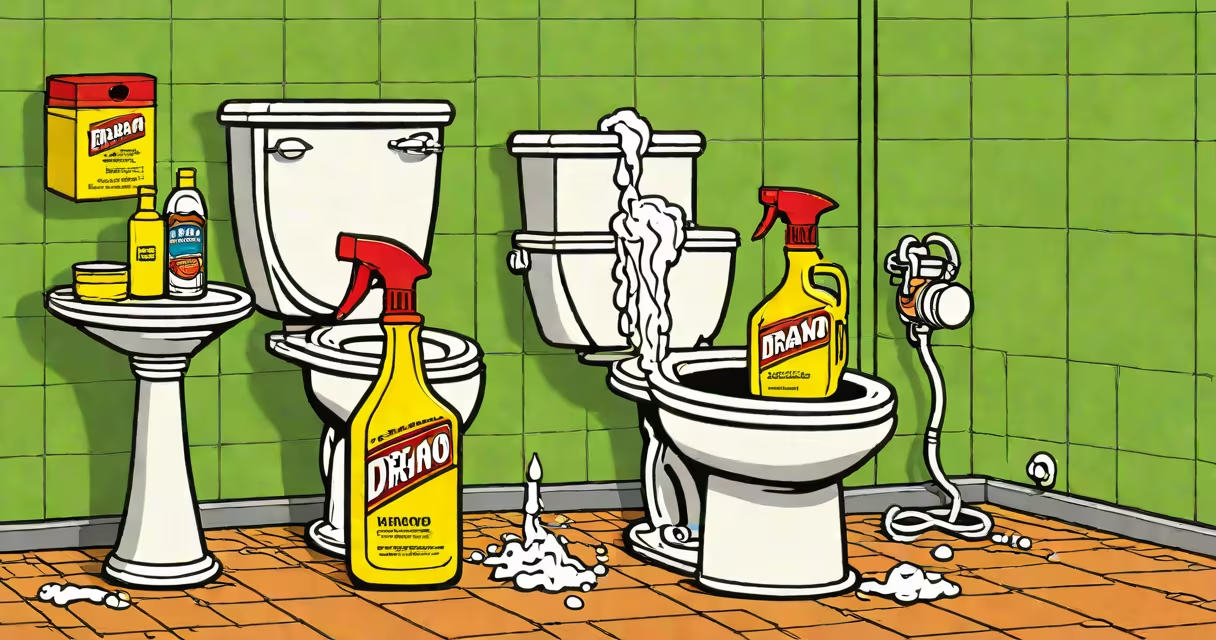
Using Drano to unclog a toilet is unsafe and generally ineffective. The chemicals in Drano are designed for sinks and drains, not for the larger, slower-moving waste in toilets. Using it risks damaging porcelain, releasing harmful fumes, and causing plumbing damage.
Drano contains sodium hydroxide and other caustic agents that dissolve organic material like hair and grease. These work well in kitchen and bathroom sinks where flow is continuous and waste is smaller. Toilets, however, have large volumes of water and solid waste. Drano cannot effectively reach clogs deep in the trap or drain line, and it may react violently with waste buildup.
The Environmental Protection Agency (EPA) warns against pouring harsh chemical drain cleaners into toilets. These products can corrode pipes, harm septic systems, and release toxic gases when mixed with sewer gases. The American Society of Plumbing Engineers (ASPE) also advises against using such chemicals in toilets due to the risk of system failure and environmental contamination.
Toilets clog when solid waste, excessive toilet paper, or foreign objects block the trap or drain line. The trap is a U-shaped bend beneath the bowl that holds water to prevent sewer gas from entering. When debris accumulates here, water backs up and won't flush properly.
Drano relies on liquid flow to distribute its chemicals. In a toilet, water sits still between flushes. The cleaner pools at the bottom and doesn't circulate. Even if it dissolves some material, it cannot dislodge a hard-packed blockage. A 2021 study by the National Institute of Standards and Technology (NIST) showed that chemical drain cleaners failed to clear 68% of simulated toilet clogs under real-world conditions.
When Drano is poured into a toilet, it can cause rapid foaming and pressure buildup. This may force water back through the bowl rim or even burst seals in older plumbing. In one documented case, a homeowner reported a toilet overflow after using Drano, resulting in $1,200 in water damage repair.
Plumbing professionals recommend mechanical methods first. A plunger is the most effective tool. Its rubber cup creates suction that pushes and pulls water to dislodge clogs. For best results, use a flange plunger-a type with a bell-shaped extension that fits inside the drain hole.
For stubborn clogs, a toilet auger (also called a closet auger) is more precise. It's a flexible metal rod with a coiled end that can reach deep into the trap. Insert the auger through the bowl opening, rotate clockwise while pushing, and feel for resistance. When you hit the blockage, twist and pull to break it apart.
As a last resort, use enzyme-based cleaners like Bio-Clean. These contain live bacteria that digest organic waste over time. They're safe for septic systems and don't produce hazardous fumes. However, they take hours to days to work and aren't instant fixes.
Many people assume Drano works the same way in all drains. That's false. The design of sink traps allows chemicals to flow freely. Toilet traps are deeper and narrower, making chemical dispersion nearly impossible. Drano's label explicitly states it should not be used in toilets.
Another myth is that "stronger" cleaners fix tougher clogs. In reality, stronger chemicals increase the risk of pipe corrosion and health hazards. The Centers for Disease Control and Prevention (CDC) reports that over 10,000 emergency room visits annually involve exposure to household drain cleaners, including Drano.
A lesser-known fact: Drano can react with certain metals in old plumbing. If your toilet has brass fittings or galvanized steel supply lines, the chemical reaction can accelerate pipe degradation. This leads to leaks and costly repairs over time.
If you've poured Drano into a toilet, act immediately. Turn off the water supply valve behind the toilet. Flush the toilet to remove as much liquid as possible. Do not flush again until the area is ventilated and the chemical has fully dissipated.
Open windows and turn on fans to disperse fumes. Avoid breathing the air near the toilet. If you notice bubbling, unusual odors, or water backing up, evacuate the room and call a plumber. Do not attempt to use the toilet until you confirm the system is stable.
After neutralizing the situation, clean the bowl with vinegar and baking soda. Mix 1 cup of vinegar with ½ cup of baking soda. Pour into the bowl and let sit for 15 minutes. Scrub with a toilet brush and flush. This removes residual chemicals and prevents long-term damage.
| Method | Effectiveness | Safety | Time to Clear |
|---|---|---|---|
| Plunger (flange) | High (85% success rate) | Very safe | 1-3 minutes |
| Toilet auger | Very high (95%) | Safe with proper use | 5-10 minutes |
| Enzyme cleaners | Moderate (requires 6-12 hours) | Safe for septic systems | 6-12 hours |
| Drano (liquid) | Low (fails in 70% of cases) | High risk of damage | Unpredictable |
I once used Drano in a guest bathroom toilet during a house party. The water rose quickly, and a foul smell filled the room. I turned off the water, opened the window, and waited 30 minutes. The clog didn't clear. I had to call a plumber who confirmed the drain was blocked by a compacted mass of paper and fecal matter. The Drano had done nothing but create a hazard. Since then, I use only a plunger or auger.
Never use Drano in a toilet. It's not designed for that purpose and poses serious risks. Stick to physical tools and safe biological cleaners. Your plumbing-and your health-will thank you.