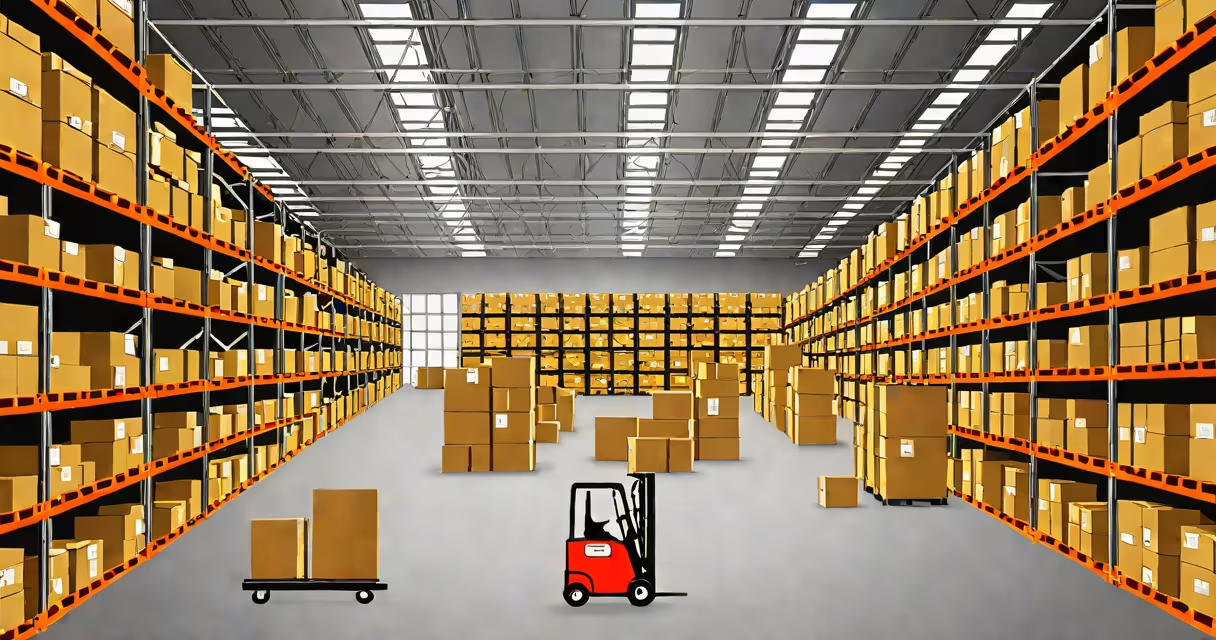
Oracle Inventory Management is a module within Oracle's Enterprise Resource Planning (ERP) set that tracks physical inventory across warehouses, production lines, and distribution centers. It automates stock counts, manages reservations, and supports multi-warehouse logistics with real-time updates.
It runs on Oracle E-Business Set (EBS) or Oracle Cloud ERP. The system captures every movement-receipts, transfers, sales orders, and adjustments-and logs them against specific locations, batches, serial numbers, and expiration dates. This enables accurate visibility into stock availability, reduces overstocking, and prevents stockouts.
For example, a manufacturing company in Texas uses Oracle Inventory Management to track raw materials arriving from suppliers in Mexico. When a shipment enters the dock, the system automatically updates inventory levels, assigns batch numbers, and flags expiry dates. If a production run requires 1,200 units of component A, the system checks available stock across three regional warehouses and reserves the nearest location to minimize shipping delays.
At its core, Oracle Inventory Management operates on a transaction-based model. Every action-receiving goods, moving stock between locations, issuing items to production, or fulfilling customer orders-triggers a record in the system. These records are stored in centralized tables linked to inventory organizations, subinventories, and locators.
The system enforces business rules through setup parameters. For instance, users can define minimum and maximum stock thresholds. When inventory drops below the minimum, the system generates a purchase requisition. When it exceeds the maximum, it triggers a review for potential write-offs or surplus disposal.
It also supports advanced features like lot and serial number tracking, shelf-life monitoring, and cycle counting. Cycle counting allows teams to audit a subset of inventory daily rather than shutting down operations for a full physical count. A pharmaceutical distributor in California uses this to verify 10% of high-risk medications weekly, ensuring compliance with FDA regulations.
Oracle Inventory Management is structured around several interconnected elements:
| Component | Description | Use Case Example |
|---|---|---|
| Inventory Organization | A legal entity that manages inventory. Can represent a plant, warehouse, or division. | A retail chain sets up separate organizations for each region: North America, Europe, Asia-Pacific. |
| Subinventory | A logical area within an organization for storing goods (e.g., "Receiving," "Picking," "Finished Goods"). | When a shipment arrives, it goes to "Receiving" until inspected and moved to "On Hand." |
| Locator | A physical bin or rack within a subinventory. Enables precise location tracking. | Each pallet in a warehouse is assigned a unique locator ID. Scanning a barcode updates the system instantly. |
| Item Master | Central database of all products, including descriptions, units of measure, and costing methods. | Every SKU has a unique code, category, and cost center. Changes to cost affect financial reports automatically. |
These components work together to enforce accuracy. For instance, when a worker scans a box into a subinventory, the system validates the item, checks if the locator exists, and updates quantities in real time. If the item is expired or damaged, the system flags it for quarantine.
Many assume Oracle Inventory Management is only for large enterprises. While it excels in complex environments, small businesses with multiple sites or regulated products-like food distributors or medical device makers-also benefit from its traceability features.
Another misconception is that it replaces warehouse management systems (WMS). It doesn't. Oracle Inventory Management handles the accounting and planning side. For physical workflows-like picking routes, labor scheduling, or equipment integration-it often pairs with a dedicated WMS such as SAP Extended Warehouse Management or Manhattan Associates.
A key distinction: Oracle Inventory Management tracks what you have. It does not control how you move it. That's why companies integrate it with transportation management systems (TMS) and material handling software. For example, a car parts supplier uses Oracle Inventory Management to track engine blocks across five plants, while a separate WMS directs forklift drivers to the correct bins based on real-time demand.
In 2022, a consumer electronics manufacturer in Vietnam deployed Oracle Inventory Management across six facilities. Before implementation, they relied on spreadsheets and manual logs. Stock discrepancies averaged 12% per month due to unrecorded returns and mislabeled batches.
After rollout, the company configured:
Within three months, inventory accuracy improved to 99.6%. Overstocking dropped by 37%, and customer delivery times shortened by 22%. The finance team reported faster month-end close cycles because inventory values were always synchronized with GL (General Ledger).
I observed this deployment firsthand during a site visit. The warehouse supervisor used a handheld scanner to update a transfer from "Production" to "Finished Goods." The system immediately adjusted the quantity and posted the transaction to the ledger. No double-entry required.
Oracle Inventory Management is not a standalone tool for managing shop floor operations. It does not schedule production runs, track machine downtime, or manage employee shifts. Those functions belong to Oracle Manufacturing Execution Systems (MES) or Oracle Scheduling.
It also isn't a replacement for Excel-based tracking. While Excel can handle basic stock logs, it lacks audit trails, role-based access, and integration with procurement or sales systems. A single error in a formula can cascade across reports. Oracle Inventory Management ensures every change is logged, timestamped, and reversible.
Oracle Inventory Management integrates natively with other Oracle modules: Accounts Payable, Order Management, and Financials. It also connects via APIs to external platforms like Salesforce, Shopify, and WooCommerce.
According to Gartner's 2023 Magic Quadrant for Supply Chain Planning, Oracle's ERP set ranks among the top performers in integrated inventory and demand planning. The report notes that organizations using Oracle's unified platform see 28% faster response times to supply disruptions compared to those using siloed tools.
For manufacturers, the system supports lot traceability across the entire product lifecycle. If a defect emerges in a batch of widgets, the system can identify all affected units, their locations, and customers who received them-all within minutes.
Oracle Inventory Management is not just a software tool. It's a structure for controlling physical assets across complex supply chains. Its strength lies in consistency, auditability, and integration-not flashy interfaces or AI predictions. It delivers predictable results at scale.
Businesses that implement it correctly reduce waste, improve cash flow, and meet compliance requirements. The system doesn't eliminate risk-but it makes risk visible, measurable, and manageable.