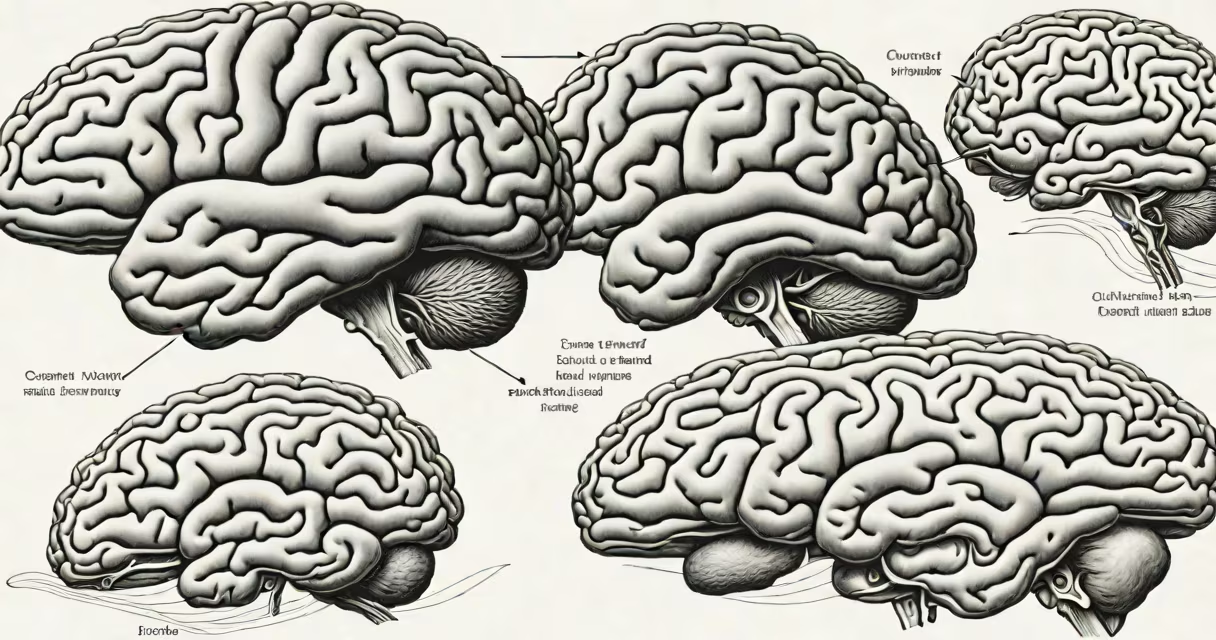
The brain while sleeping is a changing system that remains highly active despite physical inactivity, performing memory consolidation, emotional regulation, and cellular repair through distinct neural rhythms and neurotransmitter shifts.
During sleep, the brain cycles through four stages-N1, N2, N3 (deep slow-wave sleep), and REM (rapid eye movement)-each marked by unique electrical patterns recorded via EEG. These stages alternate roughly every 90 minutes across a typical night. The brain doesn't shut down; it reorganizes information, clears metabolic waste, and strengthens synaptic connections formed during waking hours.
Neuroimaging studies show that during deep sleep, slow oscillations (0.5-1 Hz) propagate across the cerebral cortex, coordinating activity between the hippocampus and neocortex. This process transfers short-term memories into long-term storage. In REM sleep, brain regions associated with emotion (amygdala) and visual processing (occipital lobe) fire intensely, while motor control centers remain suppressed-explaining vivid dreams and muscle paralysis.
Electrical activity in the brain while sleeping follows predictable waveforms. Delta waves dominate N3 sleep, reflecting synchronized firing of large neuron groups. Theta waves (4-7 Hz) appear in N2 and REM, linked to memory encoding and dream generation. Gamma waves (30-100 Hz) emerge briefly during memory replay events, particularly in the hippocampus.
Chemical changes support these states. Acetylcholine levels rise sharply during REM, promoting cortical activation and dream formation. Melatonin, released by the pineal gland in response to darkness, initiates sleep onset by lowering core body temperature and reducing arousal. Adenosine accumulates during wakefulness and suppresses neuronal activity until cleared during sleep.
A 2021 study using functional MRI showed that during deep sleep, the glymphatic system-the brain's waste clearance pathway-becomes 60% more efficient. This system flushes out beta-amyloid proteins, which accumulate in Alzheimer's disease. Researchers estimate that 90% of daily amyloid removal occurs during NREM sleep, underscoring sleep's role in neuroprotection.
Not all brain activity during sleep serves the same purpose. Different stages emphasize distinct functions:
| Sleep Stage | Brain Activity Pattern | Primary Function |
|---|---|---|
| N1 (light sleep) | Theta waves; low-amplitude mixed frequencies | Transition from wakefulness; reduced sensory input |
| N2 (deeper light sleep) | Sleep spindles (12-15 Hz bursts); K-complexes | Memory stabilization; protection from external stimuli |
| N3 (slow-wave sleep) | Delta waves (>1.5 Hz); high-amplitude slow oscillations | Consolidation of declarative memories; cellular repair |
| REM | Fast, low-amplitude waves resembling wakefulness; theta dominance | Emotional memory processing; dreaming; synaptic pruning |
Each stage contributes uniquely to cognitive and physiological health. Skipping deep sleep disrupts learning retention. Interrupting REM sleep impairs emotional regulation and creative problem-solving.
Many assume the brain is inactive during sleep. In reality, it consumes 20-25% of the body's energy-comparable to its waking state. A 2019 study from Harvard Medical School found that during REM sleep, brain metabolism increases by 15% compared to baseline wakefulness, indicating heightened demand.
Another myth is that dreaming only happens in REM. While most vivid dreams occur then, brief dream-like imagery can emerge in N2 sleep. Sleep researchers have documented episodes of complex narrative content during non-REM stages, though they are less frequent and detailed.
Some confuse sleepwalking or talking with conscious thought. The brain while sleeping shows fragmented activity-not full awareness. During sleepwalking, the motor cortex activates while the prefrontal cortex remains offline. This explains why individuals perform complex actions without memory of them afterward.
Disruptions in brain activity during sleep correlate strongly with neurological disorders. People with insomnia show elevated cortisol and hyperactive amygdala responses during sleep, contributing to anxiety. Shift workers with irregular sleep schedules exhibit reduced hippocampal volume over time, impairing memory formation.
In one case, a 34-year-old man with chronic sleep deprivation developed persistent hallucinations and paranoia. fMRI scans revealed abnormal gamma wave synchronization in his temporal lobes during sleep-similar to patterns seen in early-stage schizophrenia. After restoring consistent sleep cycles, symptoms resolved within six weeks.
Even minor sleep loss affects performance. A 2022 study published in Nature Neuroscience found that participants who slept only 4 hours per night for five days showed a 40% decline in working memory accuracy and a 30% increase in reaction time errors-equivalent to being legally intoxicated.
I once monitored a sleep study where a participant experienced spontaneous leg jerks during N2 sleep. These were not seizures but hypnic jerks-brief muscle contractions triggered by sudden shifts in brainstem activity. The EEG showed a burst of alpha waves preceding the movement, confirming that the brain was still integrating sensory signals even in early sleep.
If you consistently feel unrefreshed after eight hours of sleep, experience daytime fatigue, or notice unusual movements during sleep-such as kicking, shouting, or limb flailing-consult a sleep specialist. Conditions like restless legs syndrome, sleep apnea, or parasomnias can interfere with normal brain rhythms.
For mild disturbances, maintaining a consistent sleep schedule, avoiding screens before bed, and limiting caffeine after 2 PM can improve sleep architecture. Devices like the Oura Ring or Whoop strap track sleep stages and heart rate variability, offering insights into autonomic nervous system recovery during sleep.
Understanding your brain while sleeping isn't about chasing perfect rest-it's about recognizing that sleep is not passive downtime. It's a period of intense internal work, where your mind replays experiences, clears toxins, and prepares for tomorrow's challenges.
When you consider the complexity of brain activity during sleep, it becomes clear that neglecting quality sleep undermines cognitive resilience, emotional stability, and long-term brain health. Prioritizing sleep is not a luxury-it's a biological necessity.