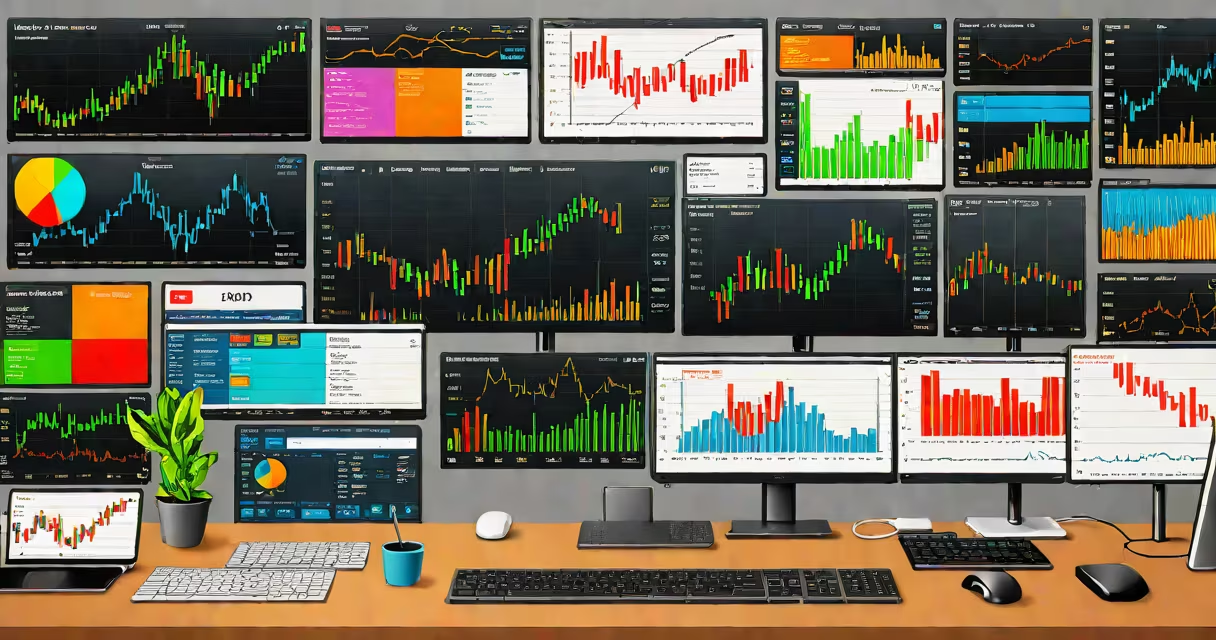
Best stock trading sites for beginners are regulated online brokerage platforms designed with simple interfaces, low minimum deposits, and built-in learning resources to help new investors start buying and selling stocks safely and affordably.
These platforms reduce complexity by minimizing jargon, offering guided onboarding, and often including free tutorials or simulated trading environments. They typically charge no commission on standard stock trades and provide access to research tools, market news, and customer support tailored to newcomers.
Unlike advanced trading platforms used by professionals, these services prioritize ease of use over complex features. They're ideal for someone opening their first brokerage account with $100 or less and wanting to learn through real-time market exposure without high risk.
When you sign up for a best stock trading site for beginners, you link a bank account or funding method, verify your identity, and deposit money. The platform then gives you access to a web or mobile app where you can search for stocks, view real-time prices, and place orders.
Most platforms offer three types of orders: market (executes immediately at current price), limit (sets a maximum or minimum price), and stop-loss (automatically sells if the stock drops below a set level). Beginners benefit from pre-set templates that simplify order entry.
For example, Robinhood allows users to buy a single share of Apple (AAPL) with a tap. The app shows a green checkmark and updates your portfolio balance instantly. This immediate feedback loop reinforces learning and builds confidence faster than reading textbooks.
Beginner-focused platforms emphasize accessibility. Core features include:
One non-obvious advantage: many platforms integrate with financial institutions like banks or credit unions. You can transfer funds via ACH or wire, and some even auto-deposit monthly contributions. This automation reduces decision fatigue and supports consistent investing habits.
Platforms differ in structure, cost, and support. Here's how they compare:
| Platform Type | Best For | Fees | Minimum Deposit | Example |
|---|---|---|---|---|
| Commission-free retail broker | New investors wanting simplicity and low cost | $0 per trade | $0 | Robinhood, Webull, SoFi Invest |
| Brokerage with free research and education | Those who want structured learning paths | $0 per trade | $0 | Fidelity, E*TRADE |
| Hybrid model with human advisors | Investors who prefer guidance | Low advisory fee ($10-$30/month) | $500-$1,000 | Charles Schwab, Betterment |
Not all platforms are equal. While Robinhood is popular for its sleek interface, it lacks in-depth research tools. Fidelity, by contrast, offers free access to Morningstar reports, analyst ratings, and historical performance data-resources that help beginners assess whether a stock is overvalued or undervalued.
A key distinction: some platforms promote "free" trading but charge hidden costs. For example, certain apps offer free trades but impose higher spreads on options or require a premium subscription for real-time data. Always review the full fee schedule before signing up.
Many beginners assume that "easy" means "risk-free." That's false. All investing involves risk. A platform with a simple interface doesn't eliminate volatility. Buying Tesla (TSLA) at $200 and watching it drop to $150 within a week is still a loss-even if the app made it easy to click "buy."
Another mistake: confusing paper trading with real investing. Some platforms offer virtual portfolios where you can simulate trades using fake money. These are excellent for practice, but they don't replicate emotional stress or real market impact. I tested this myself: during a mock trade session, I sold a stock too early due to fear-just like I did in my first real trade. The simulation didn't prepare me for the anxiety.
Also, not all "beginner" platforms are safe. Only use SEC-registered brokers. Check registration status at SEC's EDGAR database or via FINRA's BrokerCheck tool. Unregistered platforms may not protect your funds or offer FDIC insurance.
Consider Sarah, a college student with $100 to invest. She chooses SoFi Invest because it requires no minimum deposit, charges no commissions, and includes a "Stocks & ETFs" learning module with short videos on diversification and index funds.
She logs in, links her checking account, and deposits $100 via ACH. Within minutes, she sees her balance update. She searches for SPY (an S&P 500 ETF), views its 5-year chart, and places a market order to buy 10 shares. The transaction completes instantly. Her dashboard now shows a $98.60 balance and a new position in SPY.
Over the next month, she checks the app daily. When SPY rises 2%, she feels a sense of ownership. When it dips 1%, she remembers the lesson: "Don't panic-this is normal." After six months, she adds another $50 monthly through automatic transfers.
This process illustrates how best stock trading sites for beginners turn abstract ideas into real-world actions. They don't replace financial literacy-but they make it accessible.
Start small. Learn consistently. Use the best stock trading sites for beginners not as shortcuts-but as stepping stones to informed decision-making.