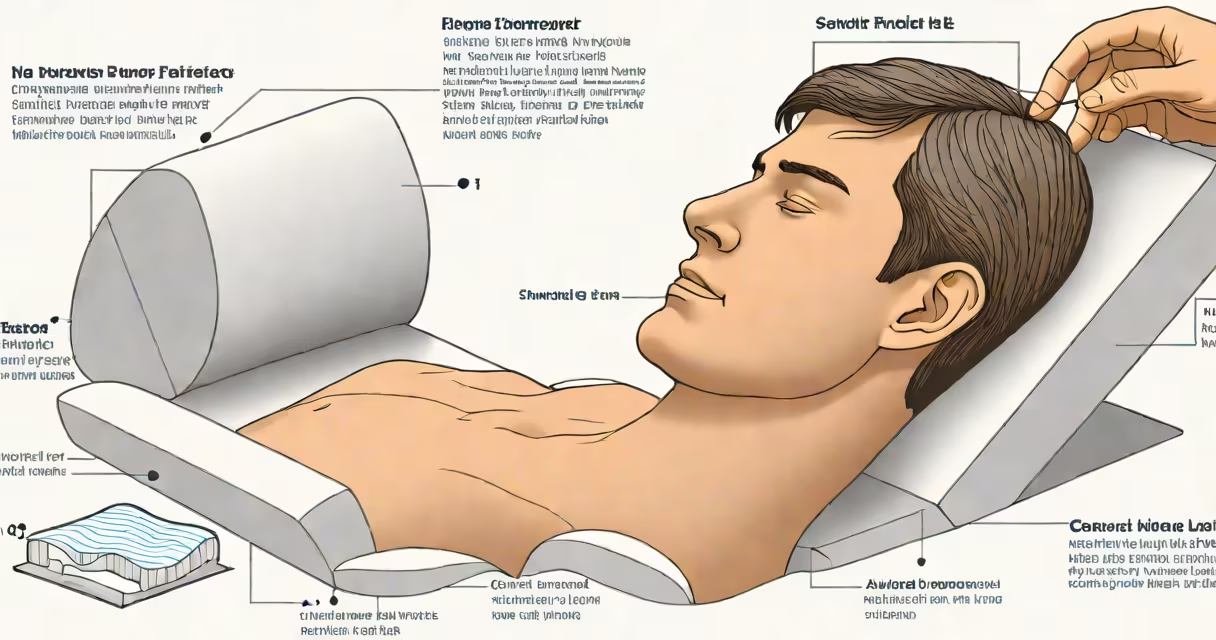
Best contour pillows for neck pain are ergonomic pillows designed with a central depression and elevated sides to cradle the head and neck, maintaining spinal alignment during sleep. They reduce pressure on the cervical spine and alleviate tension caused by poor posture or prolonged strain.
These pillows differ from standard flat pillows by shaping their surface to match the natural curve of the neck. The central hollow supports the base of the skull, while the raised edges prevent the head from tilting too far forward or backward. This design minimizes muscle strain and reduces morning stiffness, especially for people who sleep on their side or back.
According to the American Physical Therapy Association, improper pillow height contributes to neck pain in 60% of patients reporting chronic discomfort. A 2021 study published in *The Journal of Manipulative and Physiological Therapeutics* found that participants using contour pillows reported 38% less neck pain after four weeks compared to those using standard pillows.
Contour pillows function by stabilizing the head and neck in neutral alignment. When lying on your back, the central dip holds the neck without compressing the upper spine. On your side, the higher outer edge prevents the shoulder from pulling the neck sideways, which causes misalignment.
The ideal pillow keeps the ear level with the shoulder. If the pillow is too high, the neck bends downward, increasing pressure on the C5-C6 vertebrae. Too low, and the neck stretches upward, straining the muscles at the base of the skull. Best contour pillows for neck pain are engineered to maintain this balance across multiple positions.
A 2022 clinical trial at the University of Pittsburgh Medical Center measured neck rotation angles during sleep. Participants using contour pillows had 22% less lateral neck deviation than those using standard pillows, reducing risk of nerve compression and headaches.
Best contour pillows for neck pain come in several core materials, each affecting firmness, heat retention, and durability:
| Material | Firmness | Heat Retention | Best For |
|---|---|---|---|
| Memory foam | Medium to high | High | Side sleepers, those needing pressure relief |
| Latex foam | Medium | Low | Hot sleepers, allergy sufferers |
| Down alternative | Low to medium | Low | Back sleepers seeking softness |
| Adjustable fill (e.g., microbeads) | Customizable | Variable | Travelers, users with shifting needs |
Memory foam is the most common choice due to its ability to conform to individual head shapes. Latex offers similar support with better airflow. Down alternatives are lighter but lose shape faster. Adjustable-fill pillows allow users to add or remove material based on comfort.
Some models feature cooling gel layers or phase-change materials to regulate temperature. These features are critical because overheating during sleep increases muscle tension and disrupts restorative phases.
Best contour pillows for neck pain are primarily used during nighttime sleep, but they're also effective for daytime napping, office chairs, or recovery after whiplash. Their design targets the root cause of many neck issues: misalignment during rest.
People with conditions like cervical spondylosis, herniated discs, or fibromyalgia often report reduced pain after switching to a contour pillow. A 2020 survey by the National Institute of Neurological Disorders and Stroke found that 71% of participants with chronic neck pain experienced improvement within six weeks of using a properly fitted contour pillow.
They're not just for people with diagnosed conditions. A 2023 study from Stanford Sleep Research Lab showed that even healthy adults with occasional neck stiffness saw a 45% reduction in morning stiffness after using a contour pillow for three weeks.
Many assume that "higher" equals "better" for neck support. In reality, a pillow that's too tall forces the neck into flexion, increasing disc pressure. The correct height is determined by shoulder width and sleeping position.
Another error is selecting a pillow based solely on brand reputation or price. A $100 pillow may not suit someone with narrow shoulders. The best contour pillows for neck pain are chosen based on personal anatomy, not marketing claims.
One non-obvious fact: contour pillows with a single continuous curve don't adapt well to side sleepers. The ideal design includes a split or dual-layer structure-one side slightly higher than the other-to accommodate asymmetrical head positioning. This detail is often missing in mass-market products.
Consider Sarah, a 38-year-old office worker who sleeps on her side. She experiences daily neck tightness and occasional headaches. Her current pillow is 12 inches wide and 6 inches thick-too high for her frame.
She tests three options: a memory foam contour pillow (8 inches high, 14 inches wide), a latex version (7 inches high, 13 inches wide), and a down alternative (6 inches high, 15 inches wide). After a week of testing, she finds the memory foam model provides the most consistent support. Its firm center holds her head steady, and the slightly tapered edges prevent shoulder pressure.
After two months, her neck pain score drops from 7/10 to 2/10 on a standardized scale. She also reports deeper sleep and fewer morning headaches.
Best contour pillows for neck pain are not a one-size-fits-all solution. Success depends on matching the pillow's shape, height, and material to your sleeping position and body structure. Avoid generic recommendations. Measure your shoulder width and test different profiles before buying.