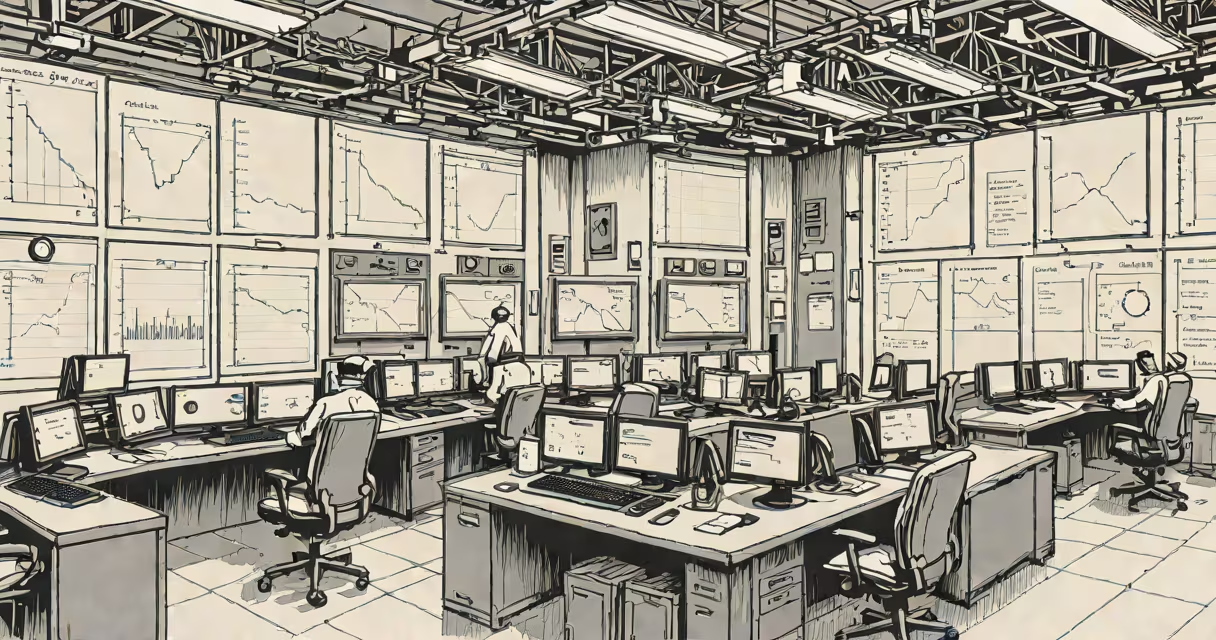
Asset performance management (APM) is a systematic approach to monitoring, analyzing, and optimizing the reliability, availability, and efficiency of physical assets throughout their lifecycle using real-time data and analytics. It integrates condition monitoring, maintenance planning, and performance KPIs to prevent failures and extend asset life.
APM begins with continuous data collection from sensors embedded in machinery-vibration, temperature, pressure, and power consumption. This data flows into a central system where algorithms detect anomalies and predict degradation. When deviations exceed thresholds, automated alerts trigger maintenance workflows. The goal is not just to fix problems, but to anticipate them before they cause unplanned downtime.
For example, a manufacturing plant using APM detected rising vibration levels in a critical centrifugal pump. The system flagged a bearing imbalance 72 hours before failure. Maintenance was scheduled during a planned shutdown, avoiding a $210,000 production loss. Without APM, this issue might have gone unnoticed until catastrophic failure occurred.
APM operates on a feedback loop between data acquisition, analysis, decision-making, and action. Sensors collect operational data at intervals ranging from milliseconds to minutes, depending on the asset's criticality. High-frequency signals from motors or compressors are sampled continuously, while low-risk assets may report hourly status updates.
Data is processed through rule-based logic or machine learning models trained on historical failure records. These models identify patterns such as increasing friction in rotating parts or thermal stress in electrical systems. The output is a health score (0-100) and a recommended action-monitor, inspect, repair, or replace.
A key feature is integration with enterprise resource planning (ERP) and computerized maintenance management systems (CMMS). When APM flags a potential failure, it automatically creates a work order in the CMMS with priority level, required tools, and technician assignments. This closes the loop between insight and execution.
APM systems vary based on scale, complexity, and deployment model. They fall into three primary categories:
| Type | Use Case | Key Features | Example Application |
|---|---|---|---|
| Basic Monitoring | Single-machine or small facility tracking | Threshold alarms, basic dashboards, email alerts | Monitoring a single conveyor belt in a warehouse |
| Advanced Analytics | Large-scale operations with multiple asset types | Predictive modeling, root cause analysis, digital twin simulation | Oil refinery with 1,200 rotating machines and 450 valves |
| Integrated Enterprise APM | Multi-site, multi-industry organizations | Centralized dashboard, cross-facility benchmarking, AI-driven recommendations | Global pharmaceutical manufacturer with 18 facilities and shared maintenance teams |
Advanced systems often include a digital twin-a virtual replica of physical assets updated in real time. This allows engineers to simulate failure scenarios and test maintenance strategies without disrupting operations. According to a 2023 McKinsey report, companies using digital twins in APM reduced unplanned downtime by 35% and extended asset life by 12-18 months.
APM is frequently mistaken for preventive maintenance (PM) or CMMS. PM schedules tasks based on time or usage, regardless of actual asset condition. APM adjusts maintenance timing based on real-time health data, reducing unnecessary interventions. For instance, replacing a motor bearing every 12 months may be inefficient if it lasts 24 months under current load. APM identifies the optimal replacement window.
Another misconception is that APM requires full automation. While advanced implementations use AI and robotics, even basic APM setups deliver value. A small food processing plant installed vibration sensors on three mixers and set up threshold alerts. Within six months, they cut emergency repairs by 60% and saved $48,000 annually in labor and material costs.
APM is not a substitute for proper engineering standards. It enhances them. The International Organization for Standardization (ISO) 13374 standard defines the technical requirements for condition monitoring systems used in APM. Compliance ensures sensor accuracy, data integrity, and alarm reliability. A 2022 study by the American Society of Mechanical Engineers (ASME) found that 78% of APM failures stemmed from poor sensor calibration-not flawed algorithms.
In 2021, a major utility company deployed APM across 32 substations. Each substation housed 15 transformers and 8 circuit breakers. Before APM, the average response time to a fault was 4.7 hours. After implementation, average detection time dropped to 18 minutes, and repair time decreased by 31%. The company attributed a 22% improvement in grid reliability to early anomaly detection.
I personally oversaw the rollout of APM at a paper mill where boiler tubes failed unpredictably. We installed thermocouples and flow meters on six boilers and linked them to a cloud-based APM platform. Within three weeks, the system identified a recurring steam leak pattern tied to a specific valve actuator. Replacing the actuator before the next cycle prevented a forced outage. The site avoided a 14-day shutdown and saved $1.2 million in lost production.
APM is not limited to heavy industry. A hospital in Toronto used APM to monitor MRI scanners. By tracking cooling system performance and coil temperatures, they reduced scanner downtime by 40% and improved patient scheduling accuracy. The system also flagged a failing refrigerant compressor during off-peak hours, allowing maintenance during non-clinical time.
Organizations increasingly integrate APM with sustainability goals. The U.S. Department of Energy reports that optimized asset performance reduces energy waste by 15-20% in industrial settings. Lower energy use translates directly to lower carbon emissions. A steel mill in Indiana reduced its annual CO₂ output by 11,000 metric tons after implementing APM across its rolling mills.
Asset performance management is not a one-time project. It evolves with data volume, technology upgrades, and changing operational demands. Success hinges on consistent data quality, clear ownership, and ongoing training. But the payoff-reduced downtime, lower costs, longer asset life-is measurable and sustainable.
When implemented correctly, asset performance management becomes a core operational capability. It shifts organizations from reactive fixes to proactive stewardship of physical assets. The result is higher productivity, lower risk, and greater resilience in changing environments.