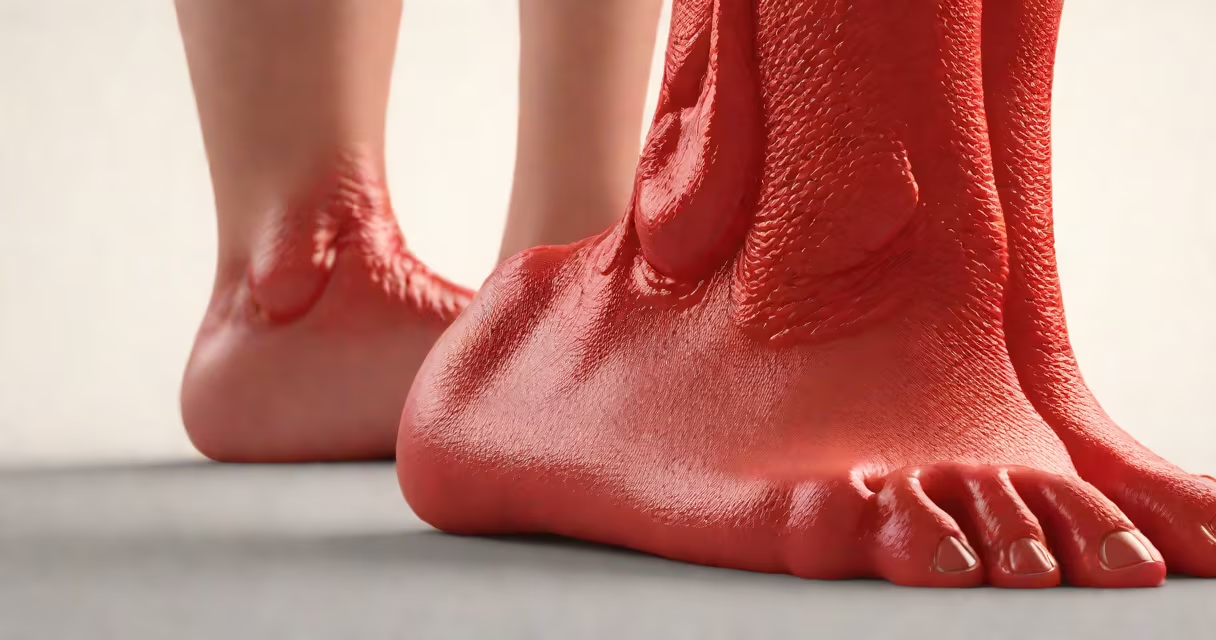
Ankle swollen after bug bite occurs when an insect's saliva triggers localized inflammation, often accompanied by redness, warmth, and itching. This reaction typically resolves within days but can signal infection or allergic response if severe or persistent.
Bug bites inject saliva containing proteins that the immune system treats as foreign. The body releases histamine and other chemicals to fight perceived threats, causing blood vessels to dilate and fluid to leak into tissues-resulting in swelling. Most bites cause mild swelling confined to the site, but location matters. The ankle's loose connective tissue allows rapid fluid accumulation, making swelling more noticeable than on tighter areas like the forearm.
Swelling usually peaks within 6-12 hours and subsides in 2-5 days. If the area remains swollen beyond 7 days, spreads rapidly, or shows pus, fever, or increasing pain, it may indicate bacterial infection or a severe allergic reaction. The Centers for Disease Control and Prevention (CDC) notes that while most insect bites are harmless, some species-like mosquitoes carrying West Nile virus or ticks spreading Lyme disease-can transmit infections requiring treatment.
When a bug bites, it pierces the skin and injects saliva. The immune system detects foreign proteins in the saliva and activates mast cells, which release histamine. Histamine increases capillary permeability, allowing plasma to escape into surrounding tissues. This fluid buildup causes swelling, redness, and itching. The process aims to isolate and neutralize potential threats, but it can lead to significant local discomfort.
Swelling in the ankle is more pronounced due to gravity and tissue structure. Fluid pools in the lower extremity because of venous pressure and low resistance in subcutaneous spaces. A single bite on the foot can result in noticeable ankle swelling, especially if the person stands or walks shortly after the bite.
For example, a 34-year-old woman reported waking with a swollen left ankle after being bitten by a mosquito while sleeping outdoors. The bite was near the heel. Within four hours, the ankle swelled to twice its normal size, with warmth and throbbing pain. She applied cold compresses and took oral antihistamines. Swelling reduced by day three and resolved completely by day five. No signs of infection appeared.
Reactions vary based on the insect and individual sensitivity. Common culprits include mosquitoes, fleas, bed bugs, and spiders. Mosquitoes account for over 90% of reported insect bites in temperate regions, according to the CDC. Fleas and bed bugs often cause clustered bites, while spider bites may produce a central puncture wound and rapid swelling.
| Insect | Typical Reaction | Red Flags |
|---|---|---|
| Mosquito | Small red bump, mild swelling, intense itch | Spreads beyond 2 inches, develops blistering |
| Flea | Small, raised, intensely itchy bumps in clusters | Multiple sites, signs of scratching-induced infection |
| Bed bug | Linear pattern of bites, delayed onset (6-8 hours) | Widespread rash, fever, insomnia |
| Spider (e.g., brown recluse) | Initial sting-like pain, rapid swelling, necrotic lesion | Darkening tissue, ulceration, systemic symptoms |
Some individuals develop large local reactions (LLRs), where swelling extends beyond the bite site and lasts longer than usual. LLRs affect about 1 in 10 people who've had multiple exposures. The American Academy of Allergy, Asthma & Immunology (AAAAI) reports that LLRs are more common in children and tend to decrease with age.
Many assume that all swelling after a bug bite is normal. While mild swelling is typical, persistent or worsening swelling suggests complications. One myth is that applying heat reduces swelling-it actually increases blood flow and worsens inflammation. Another is that home remedies like toothpaste or baking soda cure bites. These lack scientific backing and can irritate broken skin.
A common error is misidentifying the bite source. People often blame mosquitoes when fleas or bed bugs are responsible. Bed bug bites often appear in lines or clusters, especially around the ankles and wrists. They're nocturnal and feed during sleep. If swelling persists despite treating for mosquitoes, consider environmental factors like bedding or carpet infestation.
Another overlooked issue: underlying health conditions. Individuals with poor circulation, lymphedema, or diabetes may experience disproportionate swelling. A 52-year-old man with type 2 diabetes developed severe ankle swelling after a minor flea bite. His immune response was sluggish, and the area became infected. He required antibiotics and compression therapy. This case illustrates that baseline health status affects recovery time.
Seek immediate care if swelling spreads rapidly, causes difficulty walking, or is accompanied by fever, chills, or red streaks radiating from the site. These signs suggest cellulitis-a bacterial skin infection requiring antibiotics. The Mayo Clinic states that untreated cellulitis can progress to sepsis, especially in older adults or those with weakened immunity.
For mild cases, apply cold compresses for 15 minutes every few hours during the first 24 hours. Improve the leg above heart level to reduce fluid pooling. Over-the-counter antihistamines like diphenhydramine (Benadryl) or cetirizine (Zyrtec) reduce itching and histamine-driven swelling. Topical hydrocortisone 1% cream can relieve inflammation if used sparingly and for no more than 7 days.
Prevention includes wearing long pants and socks in grassy or wooded areas, using EPA-approved repellents with DEET or picaridin, and inspecting bedding and furniture for signs of pests. Regular vacuuming and washing linens in hot water kill bed bugs and their eggs. For travelers, insecticide-treated bed nets reduce exposure in endemic regions.
During a trip to northern California, I observed a cluster of campers with swollen ankles after evening hikes. All had worn short pants and used no repellent. One developed a severe reaction requiring emergency care. The group later learned that the area hosted high populations of deer ticks, which carry Lyme disease. Early diagnosis prevented long-term joint damage.
Swelling after a bug bite is usually a temporary immune response. But when it lingers, spreads, or interferes with movement, it signals a need for attention. Understanding the difference between normal and concerning reactions prevents delays in treatment. Always monitor the site and seek help if warning signs emerge.