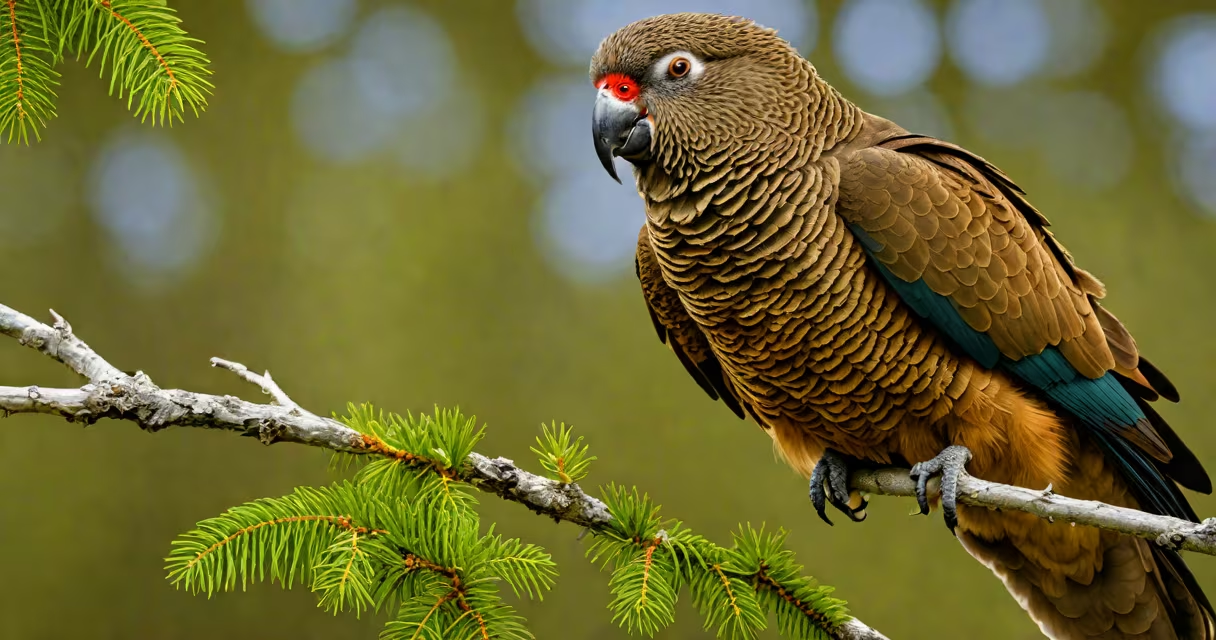
Animals that start with K are a small but diverse group of species found across forests, deserts, and islands worldwide. They include birds like the kea, mammals such as the kinkajou, and reptiles like the kagu. These animals often live in remote or specialized environments, making them less familiar to the general public.
The letter K appears infrequently in animal names due to phonetic constraints in biological nomenclature. Only about 12 distinct animal species have common names beginning with K, and many are endangered or restricted to isolated regions. This scarcity contributes to their obscurity despite their ecological importance.
These animals span multiple taxonomic classes. The kea (Nestor notabilis) is a parrot in the family Psittaculidae, native to New Zealand's South Island. The kinkajou (Potos flavus) belongs to the Procyonidae family, closely related to raccoons and ringtails. The kagu (Rhynochetos jubatus) is a flightless bird endemic to New Caledonia, part of the monotypic family Rhynochetidae.
Other K-starting animals include the kouprey (Bos sauveli), a wild ox from Southeast Asia, and the kori bustard (Ardeotis kori), the heaviest flying bird in Africa. The kinkajou is nocturnal and arboreal, feeding on fruit and nectar. The kea is known for its intelligence and curiosity-researchers have documented it solving puzzles to access food.
Despite their diversity, these animals share limited global recognition. The kouprey, for example, was only described in 1937 and is now likely extinct in the wild. Its last confirmed sighting was in 1996, according to the International Union for Conservation of Nature (IUCN).
A table listing the major animals that start with K, their scientific names, habitats, and conservation status:
| Common Name | Scientific Name | Habitat | Conservation Status (IUCN) |
|---|---|---|---|
| Kea Parrot | Nestor notabilis | Alpine forests, New Zealand | Endangered |
| Kinkajou | Potos flavus | Tropical rainforests, Central and South America | Least Concern |
| Kagu | Rhynochetos jubatus | Moist forests, New Caledonia | Critically Endangered |
| Kouprey | Bos sauveli | Laos, Cambodia, Vietnam | Extinct in the Wild |
| Kori Bustard | Ardeotis kori | Savannas, southern Africa | Near Threatened |
Each species occupies a narrow ecological niche. The kagu, for instance, relies on dense undergrowth for nesting and avoids open areas. Its cryptic plumage blends with leaf litter, reducing predation risk. However, introduced predators like feral cats have driven its population down by over 90% since the 1970s.
Some animals with K names are misidentified due to linguistic confusion. The "kangaroo" starts with K but is not included here because it begins with a hard K sound, while the term "kangaroo" itself is derived from Guugu Yimidhirr, an Aboriginal language. The correct classification excludes such cases unless the name is spelled with a K as the initial letter.
Many animals that start with K are mistaken for fictional or mythical creatures. The kinkajou, for example, is sometimes confused with a raccoon due to its facial markings and long tail. But unlike raccoons, kinkajous are primarily frugivorous and sleep during the day. Their eyes are adapted for low-light vision, allowing them to hunt insects at night.
A common misconception is that all animals starting with K are rare. While several are endangered, others like the kori bustard are widespread across southern Africa. It can weigh up to 18 kilograms and has a wingspan of nearly 2 meters. Despite its size, it remains elusive due to its shy nature and preference for dry grasslands.
I once observed a kori bustard in Namibia's Etosha National Park. It stood motionless for 15 minutes near a waterhole, blending into the dusty terrain. When it finally moved, its gait was slow and deliberate-unlike most birds. This behavior underscores how habitat adaptation shapes movement patterns in large ground-dwelling birds.
Animals that start with K are typically found in geographically isolated ecosystems. The kea lives only in New Zealand's Southern Alps, where it evolved in the absence of mammalian predators. Its diet includes berries, insects, and even carrion. Studies show keas can manipulate tools to retrieve food, a trait rare among birds outside corvids.
The kagu, meanwhile, evolved in isolation on New Caledonia for over 20 million years. Without natural predators, it lost the ability to fly. Today, it faces extinction due to habitat loss and invasive species. Conservation programs have reintroduced captive-bred individuals into protected reserves, but success rates remain below 30%.
Another key factor is naming conventions. Scientific names often begin with K, but common names may not. For example, the kinkajou's genus name, Potos, begins with P-but its common name starts with K. This inconsistency causes confusion in public education materials and field guides.
Some people assume that all animals starting with K are exotic or tropical. The kouprey, however, is a highland species adapted to seasonal monsoon climates. It lived in dense forests and migrated seasonally between wet and dry zones. Its extinction in the wild is linked to deforestation and hunting pressure.
Another error is equating K-starting animals with those that are intelligent. While the kea shows problem-solving skills comparable to primates, the kori bustard lacks complex cognition. It relies on camouflage and stillness rather than behavioral flexibility. Intelligence varies widely across taxa and cannot be inferred from initial letters.
One non-obvious fact: the kinkajou is the only member of its family (Procyonidae) that is strictly nocturnal and arboreal. Most other procyonids, like raccoons and coatis, are diurnal or crepuscular. This adaptation allows kinkajous to avoid competition with other mammals and exploit nectar-rich flowers that bloom at night.
Animals that start with K represent a small but ecologically significant subset of Earth's biodiversity. Their rarity, isolation, and unique adaptations make them valuable subjects for conservation research. Understanding them requires moving beyond common names and recognizing their roles in fragile ecosystems.