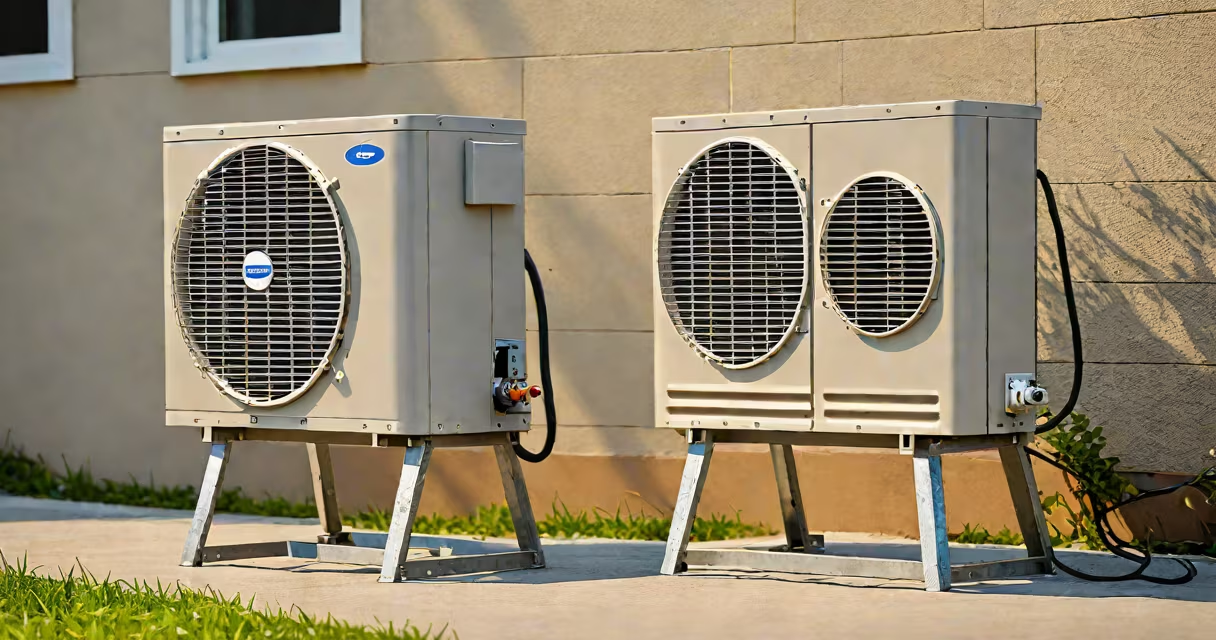
An air conditioner outdoor unit stand is a raised platform designed to securely support the condenser unit of a central or split-system air conditioner. It elevates the unit above ground level to improve airflow, reduce vibration, and protect against moisture and debris. Proper installation prevents long-term wear and improves cooling efficiency.
Most stands are made from galvanized steel or powder-coated metal, chosen for durability and resistance to rust. They come in fixed-height models (typically 6 to 12 inches) or adjustable versions with leveling feet. The base must match the unit's footprint-common sizes range from 24 x 24 inches to 36 x 36 inches-and support at least 1.5 times the unit's weight. A standard 3-ton condenser weighs around 250 pounds; the stand must handle that load plus wind and vibration forces.
Stand height matters. The U.S. Department of Energy recommends placing the unit at least 6 inches above ground to avoid water pooling and to allow unrestricted airflow. Lower stands increase risk of water intrusion, which can cause corrosion and electrical shorts. The Environmental Protection Agency notes that poor airflow due to blocked vents can reduce system efficiency by up to 15%.
The stand acts as a stable foundation that isolates the condenser from ground-level disturbances. By lifting the unit, it ensures unobstructed airflow through the fins and fan housing. This reduces strain on the compressor and maintains consistent refrigerant pressure. Without proper elevation, debris like leaves, snow, or dirt can accumulate under the unit, restricting airflow and increasing energy consumption.
Vibration is another key concern. When the compressor runs, it generates mechanical oscillations. A rigid, level stand absorbs and disperses these vibrations, reducing stress on the mounting bolts and refrigerant lines. Loose connections caused by constant shaking can lead to refrigerant leaks-repair costs average $800 to $1,200, according to the National Association of Home Builders.
Some stands include integrated drainage channels or sloped surfaces to direct rainwater away. Others feature rubber pads or isolation mounts to dampen noise and further reduce vibration transfer to the structure. These features are especially useful in multi-unit buildings or homes with wooden decks.
Stands fall into three categories based on construction and adjustability:
| Type | Material | Adjustable? | Best For | Typical Height Range |
|---|---|---|---|---|
| Fixed-height metal frame | Galvanized steel, powder-coated | No | Concrete pads, flat yards | 6-12 inches |
| Adjustable leveling stand | Steel with threaded legs | Yes | Raised decks, uneven terrain | 8-14 inches |
| Modular concrete base | Reinforced concrete | No | Permanent installations, high-wind zones | 12-18 inches |
Galvanized steel stands offer the best balance of strength and weather resistance. Powder coating adds extra protection against UV degradation and salt exposure-critical in coastal areas. Concrete bases provide maximum stability but require pouring and curing time. They're ideal for permanent installations where movement is unacceptable.
A common mistake is using a stand that's too small. A 24-inch-wide unit requires a base at least 28 inches wide to allow clearance on all sides. The American Society of Heating, Refrigerating and Air-Conditioning Engineers (ASHRAE) Standard 189.1 specifies a minimum 2-inch clearance around all sides for maintenance access and airflow.
Proper installation begins with a level surface. Even a 1-degree tilt can cause refrigerant flow issues. Use a laser level or spirit level to confirm the base is perfectly flat. Anchor the stand to a concrete pad or deck using lag bolts rated for at least 3,000 psi shear strength. Failure to secure the stand increases the risk of tipping during storms.
One overlooked issue is drainage. If the stand doesn't slope slightly away from the unit, water pools around the base. Over time, this leads to rust, mold growth, and potential electrical faults. A 1/4-inch-per-foot slope is sufficient to redirect runoff. Some units have built-in drain holes; ensure they aren't blocked by gravel or soil.
I once installed a 12-inch adjustable stand on a wooden deck with a 2-inch gap between the wood and the base. After one winter, frost heave lifted the stand, and the unit shifted. The refrigerant line developed a micro-fracture from repeated stress. Repair took two days and cost $950. The fix required replacing the entire line and repositioning the stand on a concrete footer.
An air conditioner outdoor unit stand is not a substitute for proper site preparation. It cannot compensate for poor drainage, unstable soil, or inadequate clearance. It also isn't a universal fit-each model must be matched to the correct stand dimensions. Using a generic stand can result in misalignment, which strains the refrigerant lines and reduces cooling capacity.
Some confuse it with a "condenser mount" or "AC cradle," which are often temporary or portable solutions. These lack structural integrity and are unsuitable for long-term use. A true stand is designed for permanent installation and must meet local building codes.
Another misconception is that any elevated surface qualifies. A stack of bricks or a piece of scrap lumber may raise the unit, but they don't provide uniform support or stability. The National Fire Protection Association (NFPA) 70 (National Electrical Code) requires that electrical enclosures remain accessible and protected from physical damage-stacks of materials fail this standard.
Replace the stand if it shows signs of warping, rust-through, or loose welds. Inspect annually after winter. If the unit wobbles or makes unusual noises, check the stand's condition. Corrosion on the base can compromise load-bearing capacity. A weakened stand increases the risk of collapse during high winds.
For older systems, consider upgrading to a reinforced stand with anti-vibration mounts. These reduce sound transmission by up to 10 decibels, improving neighbor relations and comfort. The U.S. Department of Energy estimates that reduced noise levels contribute to better sleep quality and lower stress-factors linked to improved health outcomes.
When choosing a new stand, measure your unit's dimensions and weight. Confirm the stand's load rating exceeds the unit's weight by at least 50%. Check local regulations-some cities require permits for permanent outdoor equipment installations. Always follow manufacturer guidelines for placement and clearance.
Understanding the role of an air conditioner outdoor unit stand is essential for maintaining system longevity and efficiency. It's not just a base-it's a critical component of safe, effective cooling.