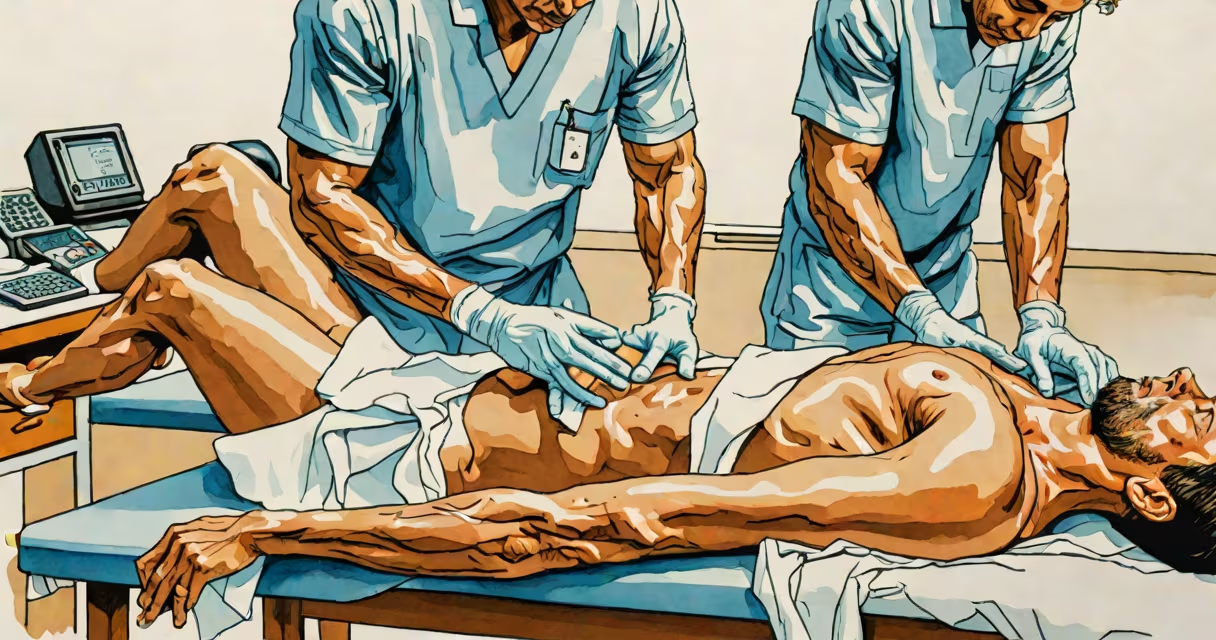
Recovery time for an adductor strain ranges from 2 to 6 weeks, depending on injury severity. Mild strains (Grade 1) typically resolve in 2-3 weeks with rest and early mobility. Moderate injuries (Grade 2) take 4-6 weeks. Severe tears (Grade 3) may require 8-12 weeks or surgical intervention.
Adductor strains occur when the inner thigh muscles-adductor longus, brevis, and magnus-are overstretched or torn during sudden movements like sprinting, kicking, or changing direction. These injuries are common in athletes who play soccer, hockey, or track. The strain results in pain, tenderness, swelling, and weakness in the groin region.
Recovery time depends on accurate diagnosis and adherence to a structured rehab plan. Delayed treatment increases risk of chronic pain or recurrent injury. According to the American Academy of Orthopaedic Surgeons (AAOS), early mobilization improves outcomes compared to prolonged immobilization.
Medical professionals classify adductor strains using a grading system based on MRI or physical exam findings. Grade 1 involves minor tearing with mild pain and minimal functional loss. Grade 2 shows moderate tearing, significant pain, and noticeable weakness. Grade 3 indicates a complete rupture, often with a palpable gap and inability to contract the muscle.
Recovery time correlates directly with grade. A Grade 1 strain treated with 3-5 days of rest, ice, compression, and elevation (RICE) may return to activity within 10-14 days. A Grade 2 strain requires 4-6 weeks of progressive rehab, including isometric strengthening and controlled stretching. Grade 3 injuries often need surgical repair followed by 3-6 months of rehab.
Imaging confirms severity. Ultrasound can detect partial tears in real time. MRI provides detailed images of muscle fiber disruption and edema. A 2021 study in the British Journal of Sports Medicine found that MRI-based classification predicted return-to-play timing with 87% accuracy.
The following table outlines expected recovery times based on injury grade and treatment approach:
| Grade | Characteristics | Typical Recovery Time | Rehab Focus |
|---|---|---|---|
| 1 | Mild pain, no swelling, full strength | 2-3 weeks | Rest, gentle stretching, light activity |
| 2 | Sharp pain, swelling, partial loss of function | 4-6 weeks | Isometrics, resisted exercises, gait training |
| 3 | Severe pain, visible deformity, no contraction | 8-12 weeks (non-surgical); 3-6 months (surgical) | Surgical repair, protected weight-bearing, progressive loading |
Grade 1 strains often go undiagnosed because symptoms are mild. One athlete reported returning to training after just 10 days of rest, only to re-injure the muscle during a drill. This highlights the risk of premature return to sport.
Many assume that "rest" means complete inactivity. This is incorrect. Early, controlled movement reduces scar tissue formation and maintains joint mobility. The AAOS recommends initiating gentle motion within 72 hours of injury.
Another error is skipping rehab phases. A 2020 study in Journal of Athletic Training showed that athletes who progressed too quickly had a 40% higher recurrence rate. One participant returned to soccer after 3 weeks despite lingering pain-re-injury occurred 10 days later.
Some confuse adductor strain with hip flexor strain or hernia. Hip flexor pain occurs near the front of the hip, while adductor strain is felt along the inner thigh. Hernias present as a bulge in the groin and worsen with coughing or lifting.
A 24-year-old midfielder sustained a Grade 2 adductor strain during a match. He experienced sharp pain during a sprint and could not push off with his left leg. An MRI confirmed a partial tear in the adductor longus.
He followed a phased recovery protocol: - Week 1-2: RICE, non-weight-bearing, and ultrasound therapy. - Week 3-4: Isometric contractions (pushing against wall), heel slides. - Week 5-6: Resistance band work, single-leg balance drills, jogging. - Week 7: Sport-specific drills, lateral shuffles, agility ladder.
By week 7, he completed a functional test: 10-meter sprint with no pain, 90% strength symmetry. He returned to full training in week 8. His recovery time matched the average for Grade 2 injuries.
See a sports medicine specialist if pain persists beyond 10 days, swelling worsens, or you cannot walk without limping. Delayed care increases risk of chronic strain or tendonitis.
Signs of a severe strain include bruising spreading down the thigh, inability to stand on one leg, or a sensation of "gapping" in the groin. These suggest a complete rupture requiring surgical evaluation.
One patient reported walking with a limp for three weeks before seeing a doctor. MRI revealed a Grade 3 tear. After surgery and six months of rehab, he returned to competitive play-but only after completing a full neuromuscular retraining program.
adductor strain recovery time is not a fixed number. It depends on injury grade, treatment adherence, and individual healing capacity. Most people recover in 2-6 weeks with proper care. Skipping rehab phases increases reinjury risk. Always consult a healthcare provider for accurate diagnosis and personalized recovery planning.