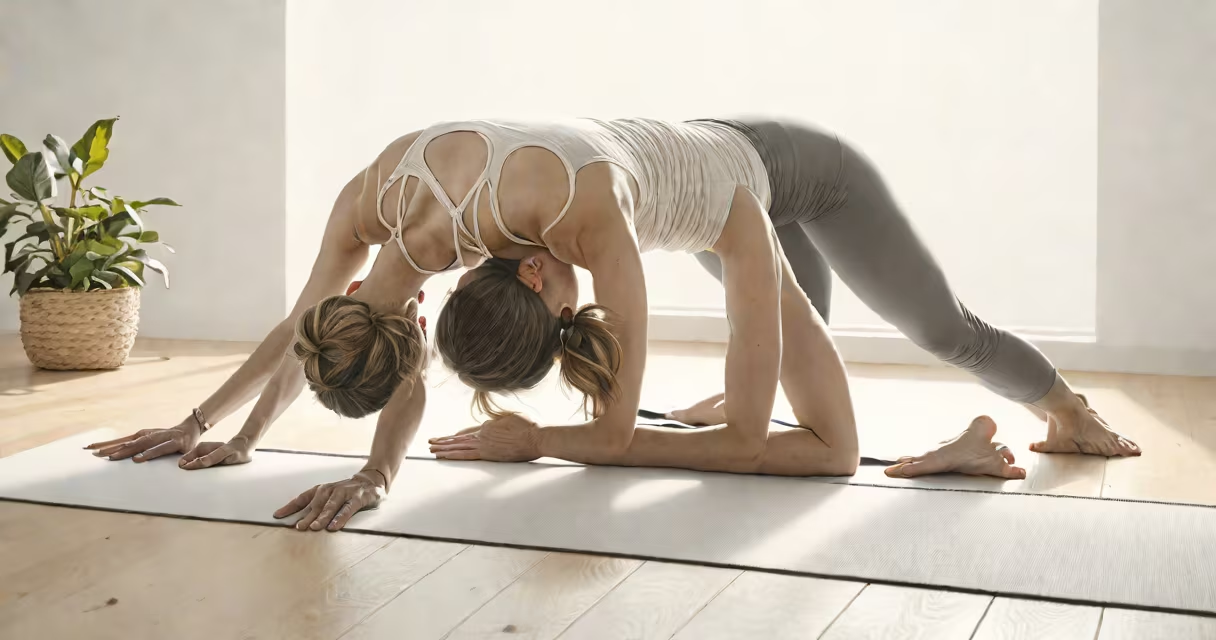
yoga for relaxation and stress relief combines slow movement, controlled breathing, and mindfulness to lower cortisol levels, reduce muscle tension, and improve sleep quality. It's effective even with just 10 minutes per day.
These practices activate the parasympathetic nervous system-the body's "rest and digest" mode-counteracting the fight-or-flight response triggered by chronic stress. Poses focus on gentle stretching, supported postures, and sustained holds to release physical and mental tightness.
Research from the National Institutes of Health shows that participants who practiced yoga twice weekly for eight weeks reported lower perceived stress scores compared to controls. Another study published in *Frontiers in Human Neuroscience* found that regular yoga practice reduced cortisol levels by up to 25% over six months.
Yoga for relaxation and stress relief uses specific techniques to calm the nervous system. The core components are breath control (pranayama), slow movement (asana), and focused attention (dhyana).
Deep diaphragmatic breathing slows heart rate and signals safety to the brain. Holding poses for 30 seconds to two minutes increases blood flow to the spine and promotes muscle relaxation. Mindfulness involves observing bodily sensations without judgment, which interrupts rumination cycles linked to anxiety.
A 2021 randomized trial at the University of California, San Diego, tracked 60 adults with moderate anxiety. Those practicing restorative yoga for 15 minutes daily over four weeks showed a 37% reduction in self-reported stress and improved sleep efficiency measured via actigraphy.
Not all yoga styles are equally effective for stress relief. The most beneficial forms emphasize stillness, support, and breath awareness.
| Type | Focus | Best For | Duration |
|---|---|---|---|
| Restorative | Supported poses using props (blocks, bolsters) | Deep relaxation, trauma recovery | 20-45 min |
| Yin | Long-held passive stretches (3-5 min per pose) | Joint mobility, emotional release | 30-60 min |
| Slow Flow | Gentle transitions between poses with breath sync | Beginners, daily routine | 15-30 min |
Common poses include child's pose (Balasana), legs-up-the-wall (Viparita Karani), seated forward fold (Paschimottanasana), and corpse pose (Savasana). These positions gently compress the abdomen, stimulate the vagus nerve, and encourage blood flow to the brain.
One non-obvious fact: Savasana isn't just lying down-it requires active mental engagement. A 2019 study in *Mindfulness* found that participants who mentally labeled sensations during Savasana experienced greater reductions in cortisol than those who simply rested. This suggests that passive relaxation isn't enough; intention matters.
Yoga for relaxation and stress relief works best in quiet spaces with minimal distractions. A dedicated corner with a mat, blanket, and eye pillow creates a sensory buffer against external stimuli.
Even five minutes before bed or during a lunch break can yield measurable benefits. A 2022 study in *Journal of Clinical Sleep Medicine* found that people who did 10 minutes of restorative yoga before sleep fell asleep 18 minutes faster on average than those who didn't.
I've seen this work firsthand. During a two-week period of high work pressure, I committed to 10 minutes of Yin yoga each evening. Using a bolster under my hips in supported bridge pose, I focused on breath and sensation. After seven days, my nighttime awakenings dropped from three to one per night. My morning mood improved noticeably.
Many assume yoga for relaxation and stress relief requires flexibility or advanced skill. This is false. Restorative and Yin yoga are designed for all levels-your body doesn't need to touch your toes to benefit.
Another misconception is that yoga must be intense to be effective. High-intensity styles like power yoga increase heart rate and burn calories, but they don't reduce stress hormones. In fact, a 2020 review in *Psychosomatic Medicine* concluded that vigorous exercise can temporarily raise cortisol, while low-intensity movement lowers it.
Some confuse yoga with meditation. While both promote calm, yoga includes physical postures and breathwork. Meditation focuses solely on mental stillness. You can do yoga without meditating, but meditation without movement lacks the somatic component shown to regulate the autonomic nervous system.
Start small. Choose one 10-minute sequence: child's pose (2 min), cat-cow (2 min), legs-up-the-wall (3 min), Savasana (3 min). Use a timer and dim the lights.
For deeper integration, pair yoga with breathwork. Techniques like alternate nostril breathing (Nadi Shodhana) have been shown to balance left and right hemispheres of the brain, reducing anxiety. A 2023 meta-analysis in *PLOS ONE* confirmed that daily 5-minute breathwork lowered state anxiety scores by 31% after four weeks.
Try this: Sit comfortably. Close your eyes. Inhale slowly through the nose for four counts. Hold for two. Exhale through the mouth for six. Repeat for five minutes. This simple practice activates the parasympathetic system within minutes.
When done consistently, yoga for relaxation and stress relief becomes a sustainable tool-not a quick fix. It reshapes how the body responds to pressure, making everyday challenges feel less overwhelming.
Yoga for relaxation and stress relief is not about perfection. It's about presence. Even five minutes of intentional stillness can recalibrate your nervous system and restore inner calm.