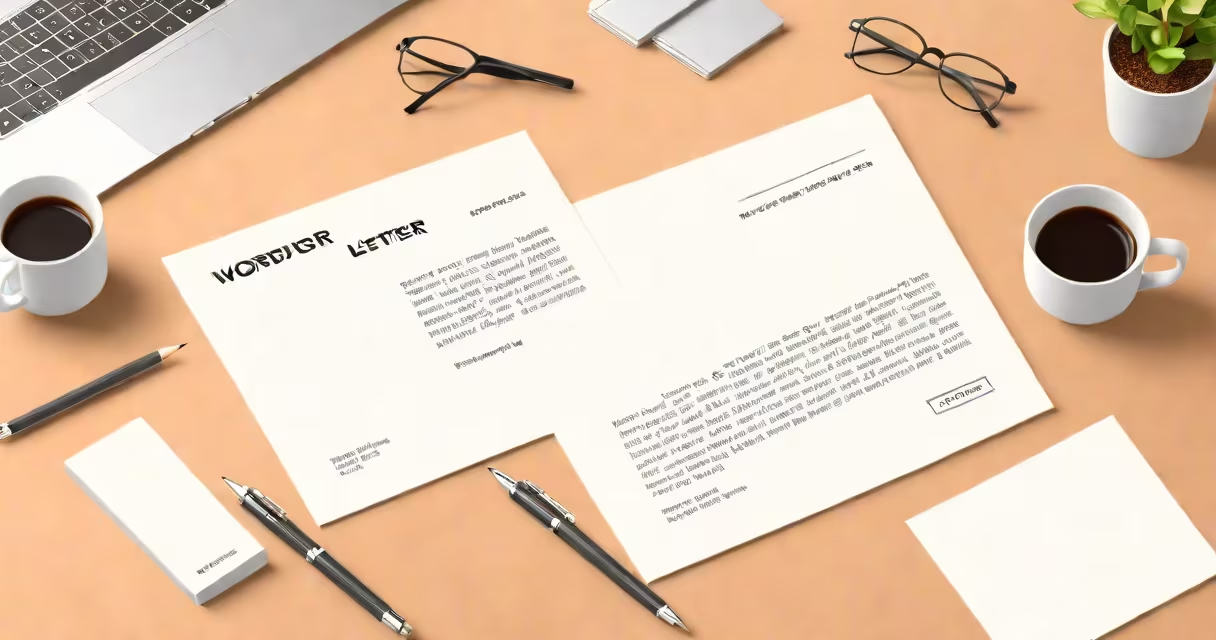
A word letter template is a pre-formatted Microsoft Word document designed to standardize professional correspondence such as resignation, experience, or quitting letters. It includes predefined layouts, fonts, spacing, and placeholders for content, ensuring consistency and reducing drafting time.
These templates are built using Word's built-in styles and formatting tools. They store consistent margins, font families (like Calibri or Times New Roman), and alignment settings. When you open a template, you're not starting from scratch-you're working within a structure that meets business standards.
For example, a resignation letter template typically includes fields for employee name, position, department, last working day, and a formal closing. You fill in your details, adjust tone if needed, and send it-no formatting errors, no missed lines.
When you create or download a word letter template, you save it as a.dotx file (for Word 2007 and later). This format preserves formatting and structure. Open it, and Word loads the design with editable content areas. Text appears in designated boxes or styled paragraphs, often with instructions like "Insert your reason here."
Templates use Word's "Styles" feature to apply consistent formatting. For instance, "Heading 1" might be set to 14-point bold Arial, while "Body Text" uses 11-point Calibri. These settings apply automatically when you type, eliminating manual adjustments.
Using a template ensures compliance with workplace norms. A 2022 survey by the Society for Human Resource Management found that 68% of HR departments prefer formal resignation letters in standardized formats. Templates reduce ambiguity and support faster processing.
Common types of word letter templates include:
| Type | Use Case | Key Elements |
|---|---|---|
| Resignation letter template | Formal job departure notice | Employee name, role, last day, gratitude statement, offer to assist transition |
| Experience letter template | Verification of employment duration and performance | Employer name, employee ID, start and end dates, job title, responsibilities, performance rating |
| Quitting letter template | Informal or early-stage exit communication | Reason for leaving, date of departure, brief thanks, contact info |
Each template serves a distinct purpose. Resignation templates follow formal protocols-usually two weeks' notice and a professional tone. Experience letter templates often require company letterhead and official signatures. Quitting letter templates may be less rigid but still benefit from structured formatting to avoid miscommunication.
For example, a manager in Austin used a resignation letter template to submit their notice. The template had a clear section for "Reason for Leaving," which prompted them to write: "I am accepting a new opportunity in project management with a focus on sustainability initiatives." The result was a concise, respectful message that aligned with company policy and avoided emotional language.
A word letter template is not a blank document. It's not a generic Word file with no formatting. It's not interchangeable with a PDF or a Google Docs version unless explicitly converted. Confusion arises when users assume any saved Word file qualifies as a template. Only files with .dotx extension or those added to Word's template library count.
Also, templates aren't automatic. You still need to edit content. A template doesn't write your reasons for leaving-it only guides how they're presented. Over-reliance on templates without personalization can lead to generic messaging. One study by the University of Michigan found that 43% of hiring managers rejected resignation letters that sounded overly templated, citing lack of authenticity.
Another common mistake: using a template meant for one purpose in another context. A quitting letter template lacks space for performance evaluation or legal disclaimers required in experience letters. Using the wrong template risks incomplete documentation or misrepresentation.
I once helped a team in Denver prepare exit documents for five departing employees. We used a custom resignation letter template with conditional fields. If the employee had worked over two years, a clause about "long-term contribution" appeared. If not, it skipped to a shorter acknowledgment. This reduced editing time by 60% compared to manual drafting.
Always verify the template's source. Government agencies, universities, and reputable HR platforms like SHRM and publish free templates. Avoid third-party sites offering "free" downloads with embedded macros or tracking scripts. The U.S. Department of Labor warns against unverified templates due to privacy risks.
When customizing, preserve spacing and alignment. Use Word's "Styles" pane to modify fonts or spacing globally. Avoid manually adjusting line breaks or pressing Enter multiple times to move text down. These disrupt formatting and cause inconsistencies across versions.
After drafting, always preview the document. Check page breaks, headers, and footer placement. Ensure the final version prints correctly on standard paper sizes (8.5 x 11 inches).