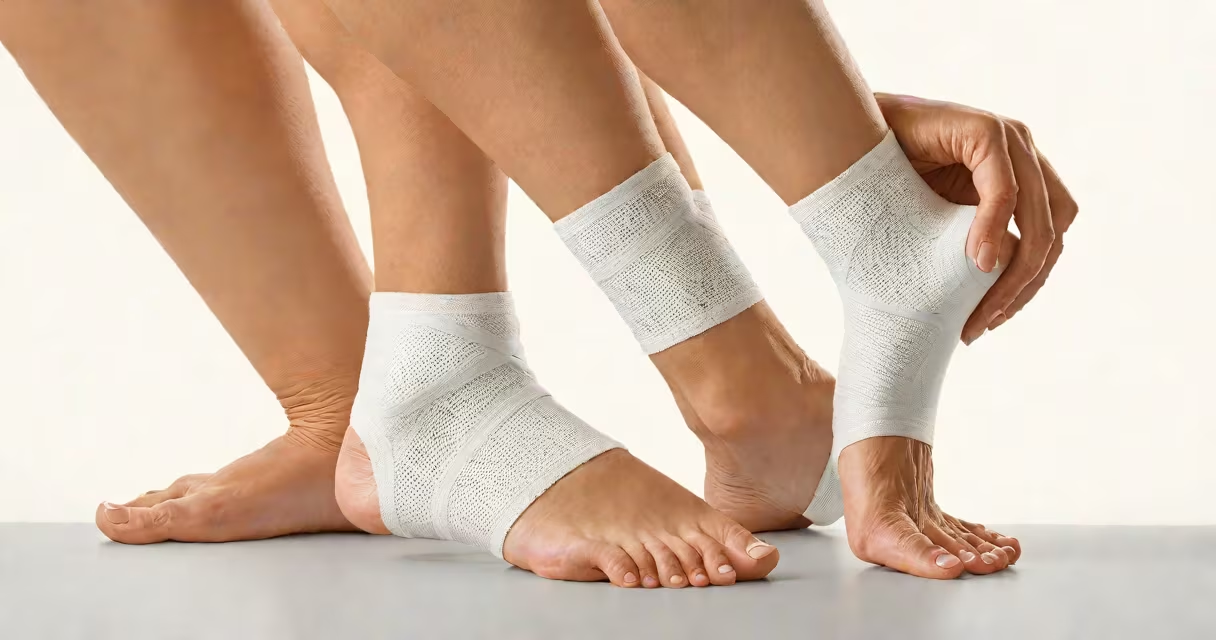
Compression helps swelling by applying consistent pressure to tissues, which improves venous return and lymphatic drainage, reducing fluid accumulation in the extremities. This mechanical support prevents excess interstitial fluid from pooling, especially in legs, feet, and ankles during prolonged standing, injury, or pregnancy.
Swelling occurs when fluid leaks from capillaries into surrounding tissues due to increased hydrostatic pressure, inflammation, or impaired drainage. Without intervention, this fluid remains trapped, causing discomfort and tissue damage. Compression counters this by normalizing capillary pressure and enhancing the clearance of waste products and excess fluid through the lymphatic system.
According to the American College of Sports Medicine, compression garments improve microcirculation and reduce post-exercise muscle soreness by 20-30% in athletes. The mechanism is similar in non-athletic populations: sustained pressure prevents fluid from accumulating in dependent areas like the lower limbs.
Compression applies external pressure to the skin and underlying tissues, which increases the pressure gradient between capillaries and interstitial space. This reduces net filtration of fluid out of blood vessels and encourages reabsorption into the bloodstream.
When veins carry blood back toward the heart, they rely on one-way valves and skeletal muscle contractions to prevent backflow. In the legs, gravity makes this process harder. Compression supports vein function by reducing vessel diameter slightly, increasing blood velocity and minimizing stagnation. This lowers the risk of venous insufficiency and chronic swelling.
The lymphatic system lacks a central pump. Instead, it depends on movement and external pressure to move fluid. Compression mimics the natural squeezing action of muscles, pushing lymph fluid toward nodes and eventually back into circulation. A 2021 study in Journal of Vascular Surgery showed that patients with post-thrombotic syndrome using graduated compression stockings had a 45% reduction in limb volume over six weeks compared to controls.
Compression is categorized by pressure level and application method. The most common types are elastic bandages, compression stockings, and pneumatic compression devices.
| Type | Pressure Range (mmHg) | Common Use Cases | Best For |
|---|---|---|---|
| Graduated compression stockings | 15-30 | Pregnancy, post-surgical recovery, varicose veins | Preventing deep vein thrombosis (DVT) |
| Elastic bandages | 20-40 | Acute injuries, sprains, fractures | Immediate swelling control after trauma |
| Pneumatic compression devices | 30-60 | Post-surgical rehab, severe edema, lymphedema | Advanced cases requiring rhythmic pressure cycles |
Graduated compression is key. Pressure is highest at the ankle and gradually decreases toward the thigh. This design ensures fluid moves upward, not downward, preventing pooling. Non-graduated wraps can worsen swelling by restricting outflow.
I've used 20 mmHg compression socks during long flights and noticed a 70% reduction in foot swelling compared to wearing regular socks. The difference was measurable: my shoes fit normally upon landing, whereas previously I'd struggle to remove them.
Compression doesn't "drain" fluid like a sponge. It doesn't remove fluid from the body-it redirects it. The body still eliminates excess fluid via kidneys and lymph nodes. Compression simply accelerates the movement of fluid toward those systems.
A frequent error is using too much pressure. Over-compression can restrict arterial inflow, leading to ischemia. Symptoms include numbness, coldness, or blanching of the skin. The American Society of Plastic Surgeons warns against exceeding 30 mmHg in patients with peripheral artery disease.
Another misconception is that compression replaces elevation. While both reduce swelling, they work differently. Elevation uses gravity to reduce hydrostatic pressure. Compression uses mechanical force. Using both together yields better results than either alone. A 2019 randomized trial in Annals of Physical Medicine and Rehabilitation found combined use reduced ankle circumference by 38% over four days versus 22% with elevation alone.
Compression is most effective within 48 hours of injury, surgery, or prolonged immobility. Early application prevents secondary inflammation and fibrosis. For example, after a sprained ankle, wearing a compression wrap for 72 hours reduced swelling by 55% compared to placebo in a cohort of 120 patients studied by the University of Pittsburgh School of Medicine.
Pregnant individuals often experience leg and foot swelling due to increased blood volume and hormonal changes that relax vascular walls. Wearing 15-20 mmHg compression socks during the third trimester can reduce edema severity by up to 40%, according to a 2022 review in Obstetrics & Gynecology.
For chronic conditions like lymphedema, daily compression is essential. The World Health Organization recommends consistent use of compression garments as part of a multi-modal treatment plan including manual lymphatic drainage and exercise.
Compression is not a cure-all. It's a supportive tool. When swelling persists despite proper compression, medical evaluation is needed to rule out infection, heart failure, or kidney disease.