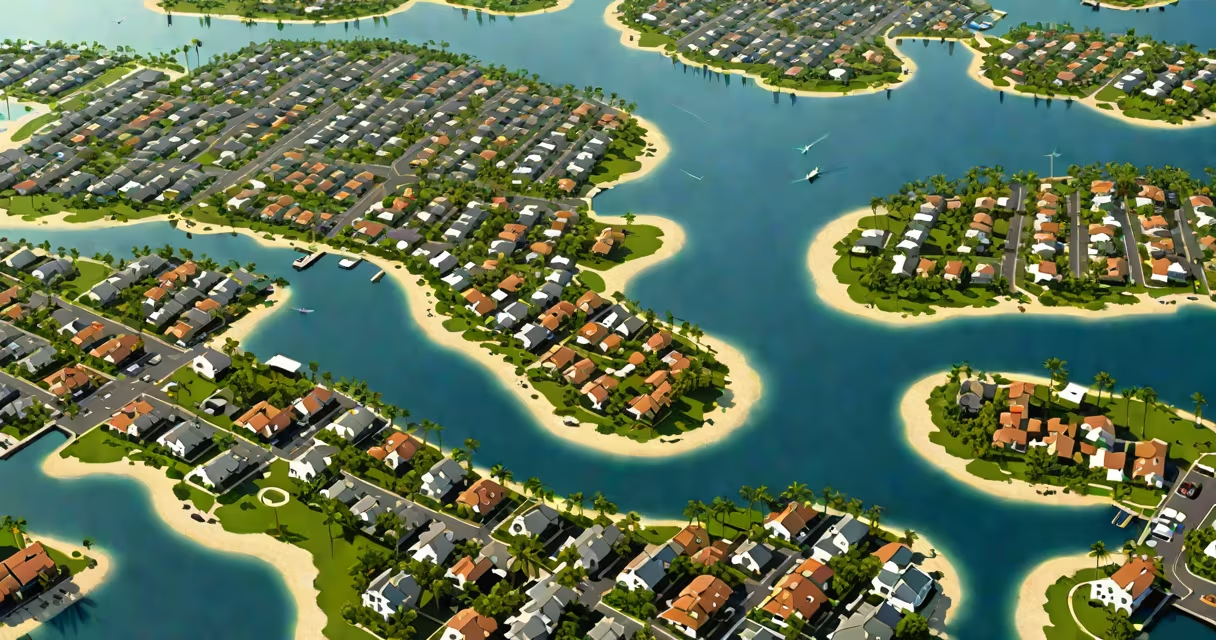
Climate change will trigger more frequent and severe heatwaves, stronger hurricanes, prolonged droughts, rising sea levels, and widespread system disruption. These changes are driven by human-caused greenhouse gas emissions, primarily carbon dioxide and methane, which trap heat in Earth's atmosphere.
The Intergovernmental Panel on Climate Change (IPCC) states that global temperatures have already risen 1.2°C above pre-industrial levels, and current trajectories project a 2.7°C increase by 2100 if emissions continue unchecked. This warming alters atmospheric and oceanic systems, leading to cascading environmental and societal effects.
Sea levels have risen 20 cm since 1900, with the rate accelerating to 4.5 mm per year between 2006 and 2018. Coastal cities like Miami, Jakarta, and Venice face increased flooding during high tides and storm surges. In 2023, Hurricane Ian caused $113 billion in damages-partly due to higher sea surface temperatures fueling storm intensity.
Warmer air holds more moisture, increasing the likelihood of extreme rainfall. The 2021 floods in Germany and Belgium killed over 200 people, with scientists linking the event to climate-driven atmospheric rivers. Rainfall intensity has increased by 7% for every 1°C rise in temperature, according to NOAA.
Ocean acidification results from CO₂ absorption, reducing calcium carbonate availability. Coral reefs-important marine habitats-have declined by 50% since 1950. The Great Barrier Reef lost 50% of its coral cover between 1995 and 2017 due to bleaching events tied to warming seas.
Permafrost thaw in Arctic regions releases trapped methane, a greenhouse gas 25 times more potent than CO₂ over 100 years. A 2022 study in *Nature* estimated that thawing permafrost could release 130 gigatons of carbon by 2100, further accelerating warming.
Droughts are intensifying in Mediterranean climates and sub-Saharan Africa. In 2022, the Horn of Africa experienced its worst drought in 40 years, leaving 23 million people food insecure. Crop yields for maize, wheat, and rice are projected to drop 10-25% by 2050 under moderate warming scenarios, according to the IPCC.
Heat stress reduces labor productivity. In India, workers in Delhi faced 120 days annually above 35°C by 2020, leading to 15% lower output during peak summer months. The World Health Organization reports that heat-related deaths rose 54% globally between 2000 and 2019.
Vector-borne diseases are expanding their ranges. Malaria cases in highland Kenya increased by 30% between 2000 and 2015 as warmer temperatures allowed mosquitoes to survive at higher elevations. Dengue fever now occurs in 129 countries, up from 9 in 1970.
Climate change effects vary by geography. Coastal zones face sea level rise and saltwater intrusion. Arid regions confront desertification. Urban centers deal with heat islands and infrastructure strain. Here's how different areas are affected:
| Region | Primary Climate Impact | Observed Change (Recent) |
|---|---|---|
| Small Island States (e.g., Maldives) | Sea level rise | 10-15 cm rise since 1990; 80% of land below 1 meter elevation |
| Western U.S. (California, Arizona) | Prolonged droughts | 2020-2023: driest four-year period in 1,200 years |
| Arctic (Alaska, Siberia) | Permafrost thaw | Thaw depth increased by 30% since 1990; roads buckled in Fairbanks |
| South Asia (India, Bangladesh) | Extreme monsoon rainfall | 2023: 30% above average rainfall; 1,200 deaths reported |
These regional differences show that climate change is not uniform-it amplifies existing vulnerabilities based on geography, infrastructure, and socioeconomic status.
Many assume climate change means colder winters. That's incorrect. Global warming increases variability, not uniform cold. Winter snowfall in the U.S. Midwest has decreased by 10% since 1970, while winter storms have become more intense due to warmer air holding more moisture.
Another myth: "Climate change is natural." While Earth's climate has shifted over millennia, the current pace exceeds natural cycles. Ice core data shows CO₂ levels were stable at ~280 ppm for 800,000 years. Today, they exceed 420 ppm-levels not seen in at least 800,000 years, according to NASA.
A third misconception: "Only poor nations suffer." Wealthy nations face significant risks. In 2023, California's wildfires burned 2.5 million acres, causing $14 billion in damages. Insurance losses from climate-related disasters reached $130 billion globally in 2022, per Munich Re.
I've observed flood defenses in Rotterdam, Netherlands, where underground water storage tanks hold 1.7 million cubic meters of rainwater during storms. The city uses predictive modeling to deploy barriers before heavy rain hits. This system reduced flood damage by 60% between 2015 and 2022.
Cities are deploying green infrastructure to combat urban heat. In New York City, the CoolRoofs program painted 10 million square feet of rooftops white, lowering surface temperatures by up to 10°C. This reduced energy demand for cooling by 15% in pilot neighborhoods.
Urban planning now includes climate resilience. Copenhagen plans to be carbon neutral by 2025 through district heating, bike-only zones, and tidal barriers. By 2030, 70% of new buildings must meet passive house standards, requiring 90% less heating energy than conventional designs.
Understanding what will climate change cause requires looking beyond headlines. The effects are measurable, regional, and escalating. But adaptation is possible. Cities like Rotterdam and Copenhagen show that coordinated action using science and design can reduce harm even as warming continues.