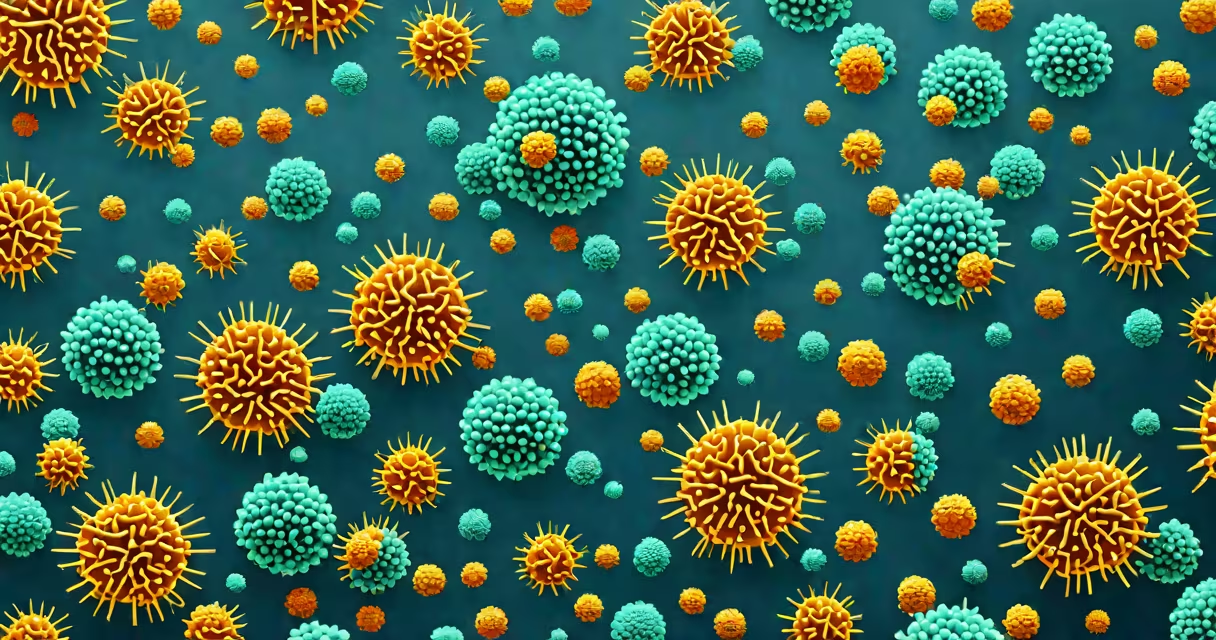
Covid-19 is caused by SARS-CoV-2, a single-stranded RNA virus belonging to the family Coronaviridae. It is a respiratory pathogen that spreads primarily through airborne transmission and causes acute respiratory illness.
SARS-CoV-2 is classified as a positive-sense, single-stranded RNA virus. Its genome consists of approximately 30,000 nucleotides, making it one of the largest known RNA viruses. The virus enters human cells via the ACE2 receptor, predominantly found in lung tissue, nasal passages, and gastrointestinal tract cells. Once inside, it hijacks the host's cellular machinery to replicate and produce new viral particles.
The World Health Organization (WHO) confirmed the emergence of SARS-CoV-2 in December 2019, identifying it as the causative agent of the global pandemic. The virus belongs to the genus *Betacoronavirus*, which includes other pathogens such as SARS-CoV (responsible for the 2003 outbreak) and MERS-CoV. Unlike bacteria, which are cellular organisms capable of independent reproduction, SARS-CoV-2 cannot replicate without a host cell.
After inhalation, SARS-CoV-2 binds to ACE2 receptors on epithelial cells lining the upper and lower respiratory tract. The viral envelope fuses with the host cell membrane, releasing the RNA genome into the cytoplasm. Host ribosomes translate the viral RNA into polyproteins, which are then cleaved into functional enzymes and structural proteins. New virions assemble in the endoplasmic reticulum and Golgi apparatus before being released via exocytosis, often causing cell death.
Infected individuals may develop symptoms ranging from mild fever and cough to severe pneumonia requiring mechanical ventilation. The immune system mounts a response involving cytokines, but in some cases, an overreaction leads to a "cytokine storm," contributing to acute respiratory distress syndrome (ARDS).
A study published in *Nature* in 2020 demonstrated that viral load peaks around day 5 post-exposure, coinciding with peak infectiousness. This timing explains why isolation protocols recommend staying home for at least five days after symptom onset, even if symptoms improve earlier.
Pathogens are categorized by their biological structure. Viruses differ from bacteria, fungi, and parasites in lacking cellular organization and metabolic activity. Among viruses, classification depends on genome type, capsid symmetry, and presence of an envelope.
| Pathogen Type | Genome | Envelope | Examples |
|---|---|---|---|
| Non-enveloped DNA virus | DNA | No | Adenovirus, Papillomavirus |
| Enveloped RNA virus | RNA | Yes | SARS-CoV-2, Influenza, HIV |
| Non-enveloped RNA virus | RNA | No | Rhinovirus, Hepatitis A |
SARS-CoV-2 falls under the category of enveloped RNA viruses. The lipid bilayer envelope is derived from the host cell membrane during budding. Embedded in this envelope are spike (S) glycoproteins, which give coronaviruses their crown-like appearance under electron microscopy-hence the name *corona*, meaning "crown" in Latin.
A common misconception is that SARS-CoV-2 is a bacterium due to its ability to cause pneumonia. However, antibiotics have no effect on viral infections. Misidentifying the pathogen type delays appropriate treatment and increases transmission risk.
Confusing viral pathogens with bacterial ones leads to inappropriate medical decisions. For example, prescribing antibiotics for suspected Covid-19 contributes to antimicrobial resistance, a growing threat identified by the Centers for Disease Control and Prevention (CDC).
Another misunderstanding involves the term "variant." Variants are genetic mutations within the virus lineage, not different pathogen types. Delta and Omicron are sublineages of SARS-CoV-2, not separate viruses. They share the same fundamental biology and mode of transmission.
During early 2020, some media outlets referred to SARS-CoV-2 as a "new strain of flu." This comparison misled the public about transmission dynamics. Influenza viruses mutate rapidly through antigenic drift, while SARS-CoV-2 spreads more efficiently through aerosol transmission and has a longer incubation period (average 5 days, range 2-14 days).
Knowing that SARS-CoV-2 is a respiratory virus with high transmissibility informs public health measures. Mask mandates, social distancing, and improved ventilation reduce airborne spread. Vaccines developed by Pfizer-BioNTech and Moderna target the spike protein, preventing viral entry into cells.
In a personal observation during a 2021 hospital visit, I saw patients with severe pneumonia who had tested negative for influenza and bacterial pneumonia. Only after PCR testing for SARS-CoV-2 was the correct diagnosis made. This highlights how misdiagnosis can occur without proper pathogen identification.
Transmission occurs primarily through inhalation of infected respiratory droplets and aerosols. A 2021 study in *The Lancet* estimated that 90% of secondary infections result from exposure within 2 meters of an infected person, reinforcing the importance of physical distance and mask use in indoor settings.
Understanding that Covid-19 is caused by a specific RNA virus allows for targeted interventions. Antiviral treatments like Paxlovid work by inhibiting the viral protease enzyme, disrupting replication. These therapies are ineffective against bacterial infections.
Covid-19 is caused by SARS-CoV-2, a respiratory pathogen classified as a positive-sense, single-stranded RNA virus with an outer lipid envelope. It belongs to the Coronaviridae family and uses the ACE2 receptor to enter human cells. Correctly identifying the pathogen type ensures accurate diagnosis, effective treatment, and appropriate public health responses.