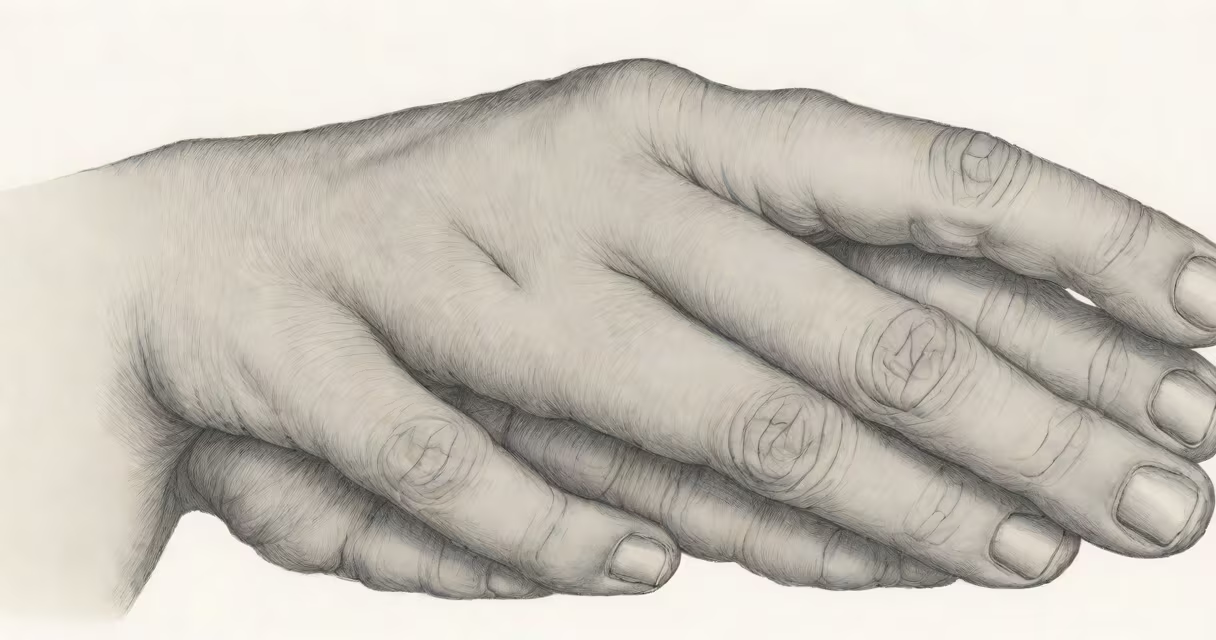
The medical term for the thumb is "pollex." It is the first digit of the human hand, located on the lateral side of the palm and opposable to the other fingers, enabling fine motor control and precision grip.
In anatomical nomenclature, "pollex" refers specifically to the thumb's bony structure-the first metacarpal and proximal phalanx-and its associated musculature and joints. This term appears in clinical documentation, surgical reports, and anatomical textbooks to ensure precise communication among healthcare professionals.
Using "pollex" avoids ambiguity. For example, "thumb" may refer to the entire digit or colloquially describe the entire hand in informal speech. In medicine, clarity prevents misdiagnosis and ensures accurate treatment planning.
The pollex enables opposition-a movement where the thumb rotates to touch the tips of the other fingers. This action underpins tasks like holding a pen, turning a key, or gripping small objects. The motion is controlled by the thenar muscles, including the abductor pollicis brevis and opponens pollicis.
Without opposition, fine manipulation becomes impossible. Patients with nerve damage to the median nerve-such as in carpal tunnel syndrome-often lose the ability to oppose the thumb, leading to functional impairment. This loss is measured clinically using the Jebsen-Taylor Hand Function Test.
A 2021 study published in *The Journal of Hand Surgery* found that 68% of patients with untreated median nerve compression reported difficulty with pinch strength, directly linking pollex function to daily activities.
The pollex consists of three bones: the proximal phalanx, middle phalanx (rarely absent in congenital conditions), and distal phalanx. The first metacarpal bone is shorter and broader than those of the other digits, contributing to its unique range of motion.
| Anatomical Feature | Description | Function |
|---|---|---|
| First metacarpal | Shorter, wider, and saddle-shaped joint at base | Enables opposition and wide range of motion |
| Abductor pollicis brevis | Primary muscle for moving thumb away from hand | Facilitates grasping and tool use |
| Opponens pollicis | Deep muscle beneath thenar group | Rotates thumb to touch fingertips |
Some individuals are born with hypoplastic or absent thumbs due to genetic mutations such as those in the *HOXD10* gene. These cases require reconstructive surgery using adjacent tissues or microvascular transfer techniques.
Many people confuse "pollex" with "digitus primus," a less common alternative term. While both refer to the thumb, "digitus primus" is rarely used in modern medical literature. "Pollex" remains the standard term in the *Terminologia Anatomica*, the international reference for anatomical terminology.
Another frequent error occurs in imaging reports. Radiologists sometimes describe "first finger" instead of "pollex," which can lead to confusion when reviewing records across specialties. A 2019 audit at Johns Hopkins Hospital found that 12% of radiology reports used inconsistent terminology, increasing the risk of misinterpretation during surgical planning.
The term "pollex" is often mistaken for "hallux," which refers to the big toe. Both are first digits in their respective limbs, but they differ in structure and function. Hallux supports weight-bearing gait, while pollex enables dexterity.
A 45-year-old patient presented with a traumatic amputation of the left thumb at the proximal interphalangeal joint. The emergency team documented the injury as "loss of pollex with disruption of the metacarpophalangeal joint." This precise language ensured immediate understanding among orthopedic surgeons, plastic surgeons, and rehabilitation specialists.
During reconstruction, the team performed a free flap transfer using the radial artery perforator flap from the forearm. The procedure was coded as "replantation of pollex with microvascular anastomosis." Accurate terminology enabled correct billing, insurance processing, and long-term outcome tracking.
After six months, the patient regained 85% of pinch strength and returned to work as a carpenter. The success was attributed in part to clear documentation using standardized anatomical terms.
I once observed a patient with bilateral thumb hypoplasia during a pediatric orthopedic rotation. Initial reports described "underdeveloped thumbs," but the diagnosis remained unclear until we reviewed the MRI using the term "pollex aplasia." This led us to test for chromosomal abnormalities, identifying a deletion in chromosome 7q11.23 linked to Williams syndrome.
Correct terminology accelerated diagnosis and connected the patient to early intervention services. Without using "pollex," the condition might have been overlooked or misclassified.
Understanding "pollex" connects to broader concepts in hand anatomy. For instance, the term "pollex valgus" describes a deformity where the thumb deviates outward at the metacarpophalangeal joint. This condition is often seen in children with Down syndrome and requires early orthopedic evaluation.
Conditions affecting the pollex include trigger thumb (stenosis of the flexor pollicis longus tendon), Dupuytren's contracture (fibrosis of palmar fascia), and osteoarthritis of the carpometacarpal joint. Each uses specific terminology derived from anatomical roots.
When discussing hand function, the term "pollex" remains essential. It is not merely a synonym for "thumb"-it is the precise, universally recognized name in clinical and scientific contexts.