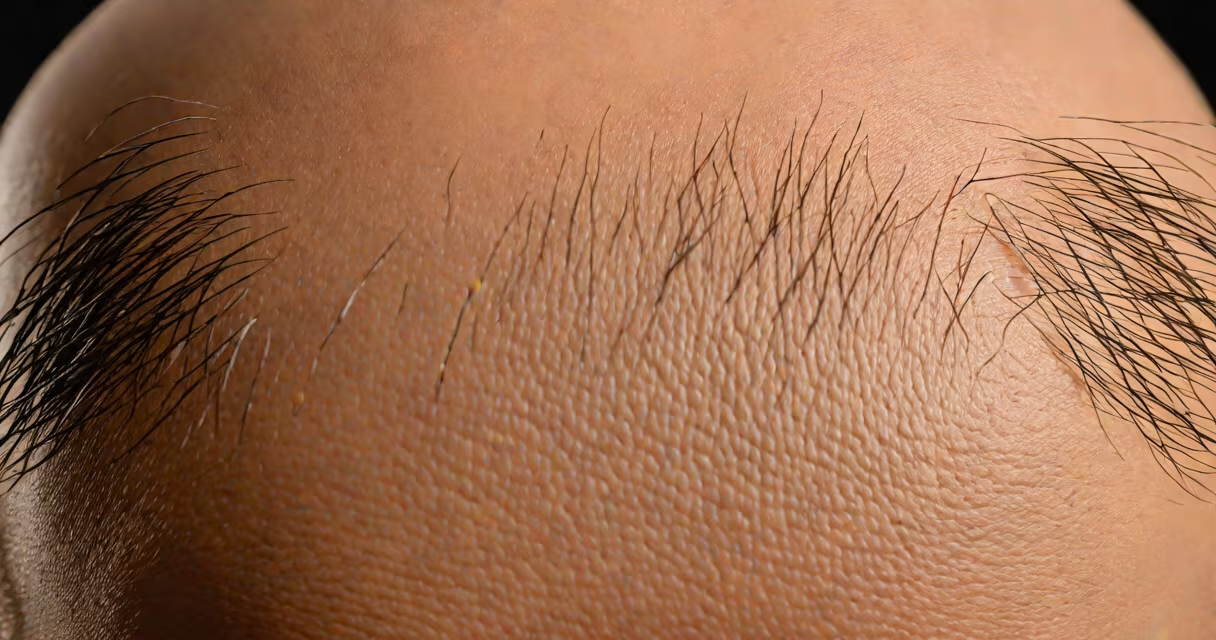
Alopecia is a medical term describing abnormal hair loss from the scalp, eyebrows, eyelashes, or other body areas. It results from genetic, hormonal, autoimmune, or environmental triggers and can manifest as partial or complete hair loss. The condition is not a single disease but a category encompassing multiple distinct disorders.
The term originates from the Greek word *alōpeia*, meaning "fox mange," referencing the patchy, fox-like appearance of hair loss in ancient descriptions. Modern medicine classifies alopecia based on cause, pattern, and affected area. The most common form, androgenetic alopecia, affects about 50% of men and 30% of women by age 50, according to the American Academy of Dermatology (AAD).
Diagnosis begins with a physical exam and medical history. A dermatologist may perform a scalp biopsy or pull test to confirm active shedding. Blood tests can detect autoimmune markers or hormone imbalances. Early intervention improves outcomes, especially in inflammatory forms like alopecia areata.
Alopecia occurs when hair follicles enter a prolonged resting phase or shrink due to disrupted signaling. In androgenetic alopecia, dihydrotestosterone (DHT) binds to receptors in follicles, shortening the growth cycle and thinning hair over time. This process is genetically driven and progresses slowly over years.
In autoimmune alopecia, the immune system attacks hair follicles as if they were foreign invaders. This leads to sudden, patchy bald spots. The National Institutes of Health (NIH) reports that up to 60% of people with alopecia areata have a family history of autoimmune conditions, including thyroid disease or vitiligo.
Other causes include telogen effluvium-triggered by stress, surgery, or childbirth-where a large number of follicles shift into rest simultaneously. This typically resolves within six months without treatment. Scarring alopecias, such as lichen planopilaris, permanently destroy follicles through inflammation and fibrosis.
Understanding the type clarifies prognosis and treatment. The table below outlines major forms:
| Type | Onset | Pattern | Common Triggers |
|---|---|---|---|
| Androgenetic alopecia | Gradual, over years | Receding hairline, thinning crown | Genetics, DHT sensitivity |
| Alopecia areata | Sudden, weeks | Round patches, often on scalp or beard | Autoimmune, stress, genetics |
| Telogen effluvium | 2-4 months post-event | Diffuse thinning, not patchy | Childbirth, illness, crash diet |
| Scarring alopecia | Slow, progressive | Permanent loss, inflamed scalp | Chronic inflammation, infection |
Each type requires different management. Androgenetic alopecia responds to minoxidil or finasteride. Alopecia areata may improve with topical corticosteroids or JAK inhibitors. Telogen effluvium usually resolves on its own. Scarring alopecias require early treatment to prevent irreversible damage.
Alopecia is not caused by poor hygiene, dandruff, or excessive shampooing. These myths persist despite evidence from the AAD that hair washing frequency does not affect follicle health. The misconception likely stems from seeing increased shedding during washing-shedding is normal, but not causative.
Age, sex, and ethnicity influence risk. Men are more likely to develop androgenetic alopecia, while women often experience diffuse thinning. Black and Asian populations show lower rates of male-pattern baldness but higher incidence of scarring alopecias due to tight hairstyles and chemical treatments.
Stress-related hair loss is real but often misunderstood. Acute stress can trigger telogen effluvium, but chronic stress does not directly cause permanent baldness. A 2021 study in *JAMA Dermatology* found that 78% of patients reporting "stress-induced" hair loss had identifiable physiological triggers like iron deficiency or thyroid dysfunction.
Alopecia is not synonymous with baldness. Baldness implies complete absence of hair, while alopecia includes partial loss. Some people with alopecia retain hair in areas like the sides or back of the head-this is key for surgical options like hair transplants.
Another error is assuming all hair loss is treatable. While many cases respond to therapy, scarring alopecias often lead to permanent loss. Early diagnosis is critical. Delaying care increases the chance of irreversible damage.
I once observed a patient with sudden eyebrow loss who was initially told she had "allergies." After blood work revealed anti-thyroid antibodies, she was diagnosed with alopecia areata. Treatment with topical steroids reversed the loss within four months. This case underscores the need for proper testing-not assumptions.
Recognizing the correct definition of alopecia prevents misdiagnosis and delays in care. It is not a cosmetic issue alone-it is a medical condition with biological roots. Early evaluation by a dermatologist ensures accurate classification and appropriate treatment.