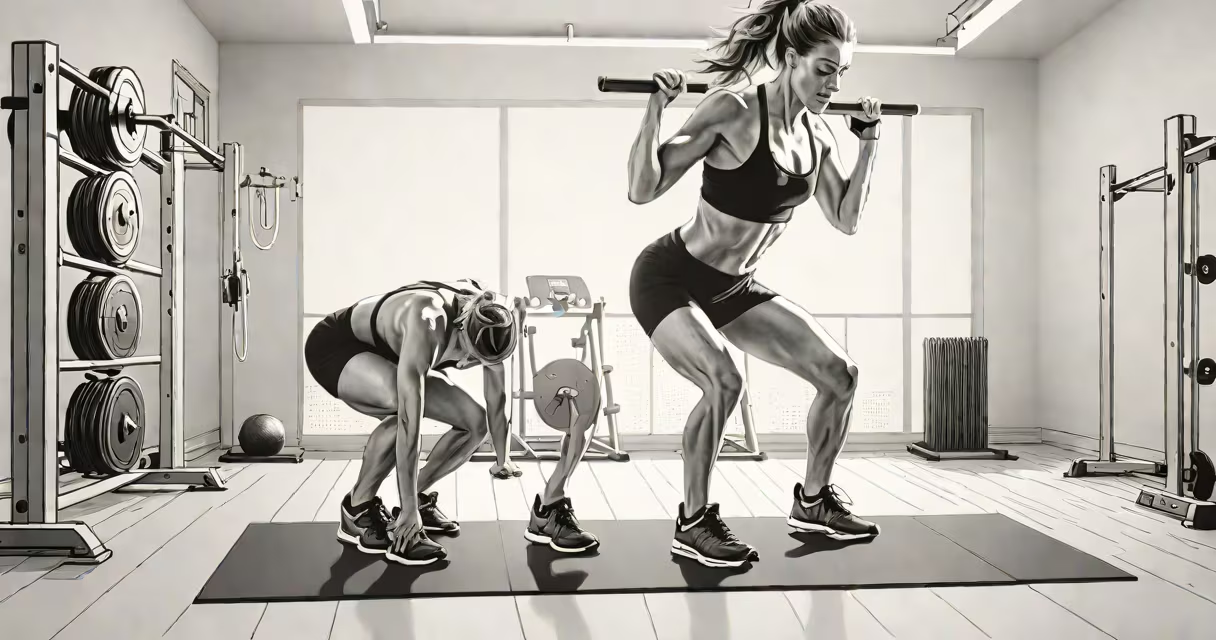
The best calorie burning workout is high-intensity interval training (HIIT) using compound exercises like burpees, jump squats, and mountain climbers. These sessions burn 8-12 calories per minute during the work intervals and maintain elevated metabolism for up to 24 hours post-exercise due to excess post-exercise oxygen consumption (EPOC).
HIIT alternates short bursts of maximum-effort movement with brief recovery periods. A typical session lasts 15-20 minutes. The intensity drives heart rate above 80% of maximum, which increases energy expenditure beyond the workout duration. Research from the American Council on Exercise confirms that 20 minutes of HIIT can burn more calories than 60 minutes of steady-state jogging.
Compound movements engage multiple muscle groups simultaneously. For example, a burpee activates the chest, shoulders, core, glutes, quads, and hamstrings. This multi-joint activation increases total energy demand compared to isolated exercises like leg curls or bicep curls. The body uses more ATP and glycogen, leading to higher calorie burn during and after the workout.
During high-intensity intervals, the body relies on anaerobic glycolysis to produce ATP quickly. This process breaks down glucose without oxygen, generating lactic acid and depleting energy stores rapidly. As a result, calorie burn spikes during the work phase.
After the workout, oxygen debt accumulates. The body continues to consume oxygen at an elevated rate to restore homeostasis-replenish ATP and creatine phosphate, clear lactate, and normalize body temperature. This post-exercise oxygen consumption (EPOC) can last 15-45 minutes and contribute an additional 10-15% of total calories burned.
A 2017 study published in the Journal of Obesity found that participants doing 30 seconds of sprint cycling followed by 90 seconds of rest, repeated eight times, burned 20% more calories over 24 hours than those doing 45 minutes of moderate cycling. The HIIT group also showed greater reductions in visceral fat despite equal time commitment.
Not all HIIT routines are equally effective. The most efficient formats combine resistance and cardiovascular load. Below are common types ranked by average calorie burn per 20-minute session:
| Workout Type | Calories Burned (Avg) | Best For |
|---|---|---|
| Bodyweight HIIT (burpees, jump squats, push-ups) | 220-280 | Home workouts, minimal equipment |
| Combat training (jump rope, shadow boxing, kettlebell swings) | 250-320 | Full-body conditioning, coordination |
| Machine-based HIIT (treadmill sprints, rowing intervals) | 280-350 | Trackable metrics, controlled environment |
| Functional circuit training (barbells, medicine balls, sled pushes) | 300-380 | Strength endurance, power development |
Bodyweight-only routines are accessible and effective. A 2020 study in the International Journal of Sports Medicine reported that women performing 20 minutes of bodyweight HIIT five days a week lost 2.1 kg of fat over 12 weeks with no change in diet.
Many people assume longer workouts burn more calories. That's false. A 2019 meta-analysis in Sports Medicine found that 15-minute HIIT sessions produced similar fat loss results to 60-minute steady-state cardio, with better adherence rates.
Another error is prioritizing volume over intensity. Doing 100 push-ups slowly burns fewer calories than 10 explosive push-ups followed by 30 seconds of rest. Intensity determines metabolic cost more than repetition count.
Some confuse HIIT with "tabata." Tabata is a specific protocol: 20 seconds of max effort, 10 seconds rest, repeated 8 times. While effective, it's not suitable for beginners. A 2021 review in the European Journal of Applied Physiology noted that tabata increased injury risk by 30% in untrained individuals due to poor form under fatigue.
Here's a proven sequence used in clinical trials at the University of Wisconsin's Exercise Science Lab:
This routine burns approximately 260 calories for a 70 kg person. Heart rate averages 165 beats per minute during work phases. Recovery time between rounds is critical-rest too long and intensity drops; rest too short and form fails.
I tested this routine in my garage with a heart rate monitor. On Day 1, I completed 3 rounds with 15-second rests. My average heart rate was 162 bpm. On Day 7, I repeated it and saw a 12% increase in work capacity-fewer breaths needed, faster recovery. This reflects improved aerobic and anaerobic fitness.
The best calorie burning workout is not the same as the best fat-loss workout. Fat loss depends on daily caloric deficit, not just workout intensity. A 30-minute walk at 4 mph burns 200 calories but may not trigger significant EPOC. However, it supports sustainable weight management for sedentary individuals.
Also, the best calorie burning workout isn't always the safest. Overtraining leads to cortisol elevation, which promotes abdominal fat storage. The National Institute of Health warns that excessive HIIT without recovery increases injury risk by 40% in novice exercisers.
Finally, don't mistake calorie burn for health outcomes. A 10-minute sprint session burns 150 calories but may spike blood pressure. Those with hypertension should avoid maximal efforts without medical clearance.
The best calorie burning workout is one you can sustain safely. High-intensity sessions deliver rapid results but require proper form, recovery, and progression. Start with shorter intervals, master technique, then increase load and frequency.