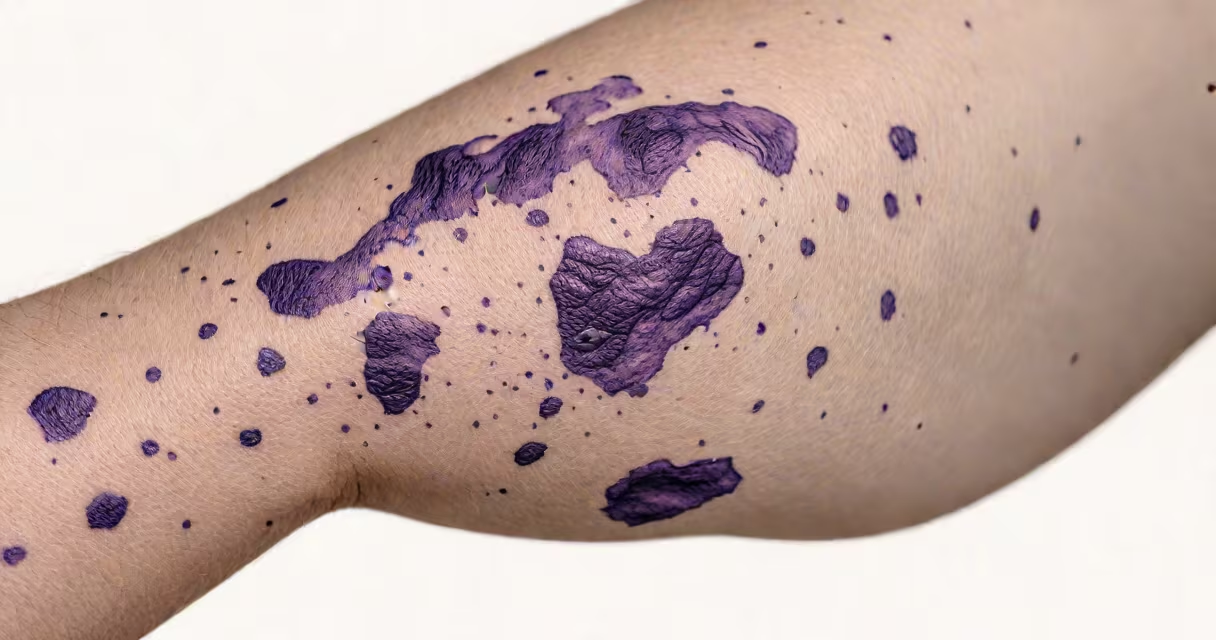
Purpuric dermatosis is a skin condition characterized by purple or reddish discolorations caused by bleeding beneath the skin surface, not blanching when pressed. It results from vascular damage, coagulation issues, or low platelet counts, and may indicate underlying systemic disease.
These lesions form when small blood vessels rupture, releasing red blood cells into surrounding tissues. Unlike bruises from trauma, purpuric dermatosis lesions do not change color with pressure and often appear in clusters. They differ from petechiae (small pinpoint spots) and ecchymoses (larger patches) based on size and distribution.
The term "dermatosis" signals a skin disorder, while "purpuric" specifies the appearance-purple or dark red due to hemoglobin breakdown. The condition is not a diagnosis itself but a clinical sign pointing to conditions like vasculitis, thrombocytopenia, or drug reactions.
Blood vessels in the dermis maintain structural integrity through endothelial cells and connective tissue support. When damaged, they leak red blood cells into the skin. These cells break down over time, releasing hemoglobin, which degrades into bilirubin and hemosiderin-pigments responsible for the color changes seen in purpura.
Leakage occurs due to three primary mechanisms: direct vessel injury (like in vasculitis), reduced platelet count (thrombocytopenia), or impaired clotting factors (coagulopathy). In each case, the body's ability to stop microhemorrhages fails, leading to visible skin deposits.
A key diagnostic clue is the absence of blanching. Pressing a lesion with a glass slide should not cause fading. If it does, the discoloration is likely due to pigmentation or flushing, not bleeding. This test distinguishes purpura from other rashes.
Purpuric dermatosis is classified by mechanism and associated disease. The most common causes fall into three categories: immune-mediated vasculitis, platelet-related disorders, and drug-induced effects.
| Type | Primary Cause | Common Triggers | Typical Age Group |
|---|---|---|---|
| Immune-mediated vasculitis | Inflammation of small blood vessels | Henoch-Schönlein purpura, lupus, infections | Children and young adults |
| Thrombocytopenic | Low platelet count | Idiopathic thrombocytopenic purpura (ITP), leukemia, heparin-induced | All ages, peaks in children and middle-aged adults |
| Drug-induced | Medication side effect | Antibiotics (e.g., sulfonamides), NSAIDs, antipsychotics | Adults, especially those on polypharmacy |
Henoch-Schönlein purpura (HSP) is a classic example. It affects children aged 4-10 and presents with palpable purpura on the lower legs, abdominal pain, joint swelling, and kidney involvement. In HSP, immune complexes deposit in vessel walls, triggering inflammation and leakage.
Another non-obvious distinction: purpuric dermatosis in elderly patients often stems from medication use rather than infection or autoimmunity. A 2021 study in JAMA Dermatology found that 62% of older adults with unexplained purpura were taking drugs known to impair platelet function, including aspirin and clopidogrel.
Purpuric dermatosis appears most frequently on dependent areas-lower legs, feet, and buttocks-due to gravity and increased capillary pressure. Lesions often start as small petechiae, then grow into larger ecchymoses over hours to days.
It occurs in settings of systemic illness. For example, in sepsis, widespread endothelial damage leads to purpura fulminans-a life-threatening condition marked by rapid skin necrosis and coagulopathy. This form develops within 24 hours of symptom onset and requires immediate ICU care.
One overlooked factor: vitamin C deficiency (scurvy) can mimic purpuric dermatosis. Low collagen synthesis weakens capillaries, causing spontaneous bleeding. In a 2019 case series from the New England Journal of Medicine, four adults with scurvy presented with purpura on the shins and gums, misdiagnosed initially as ITP.
Purpuric dermatosis is not synonymous with bruising. Bruises result from mechanical trauma, while purpura arises from internal pathology. A person with purpuric dermatosis may have no history of injury.
It is also not always a sign of serious disease. Benign forms exist, such as senile purpura in older adults due to fragile capillaries. However, even mild cases warrant evaluation-especially if new or spreading-to rule out malignancy or autoimmune disease.
A critical error in practice: assuming all purpura is due to low platelets. In reality, normal platelet counts do not exclude bleeding risk. A patient with severe vasculitis may have normal platelets but still develop purpura due to vessel wall fragility.
I once observed a 28-year-old woman with widespread purpura who had normal lab values. She was diagnosed with antiphospholipid syndrome after persistent skin lesions failed to resolve. The condition causes antibody-mediated hypercoagulability and paradoxically leads to both clots and bleeding.
Diagnosis begins with physical exam and history. Key questions include onset speed, location, presence of fever or joint pain, and medication list. Blood tests assess platelet count, PT/INR, aPTT, and markers of inflammation.
When suspicion remains high, a skin biopsy may be needed. Histology shows red blood cell extravasation, neutrophil infiltration, and fibrinoid necrosis in vasculitic cases. Biopsy sites are typically chosen from early lesions to avoid artifacts from healing.
Treatment targets the root cause. For HSP, steroids reduce inflammation. In ITP, intravenous immunoglobulin (IVIG) raises platelet levels. Drug-induced cases require discontinuation of the offending agent.
One underreported fact: corticosteroids can worsen purpura in some cases. A 2020 retrospective analysis in Clinical and Experimental Dermatology showed that 14% of patients with steroid-responsive vasculitis experienced transient purpura flare after initiation-likely due to increased vascular permeability.
Purpuric dermatosis is a clinical sign of bleeding under the skin, not a standalone diagnosis. It indicates vascular compromise, coagulopathy, or thrombocytopenia. Early recognition and investigation are essential to identify treatable causes like autoimmune disease, infection, or medication side effects.
Understanding what is purpuric dermatosis enables faster triage and prevents delays in managing life-threatening conditions such as purpura fulminans or systemic vasculitis.