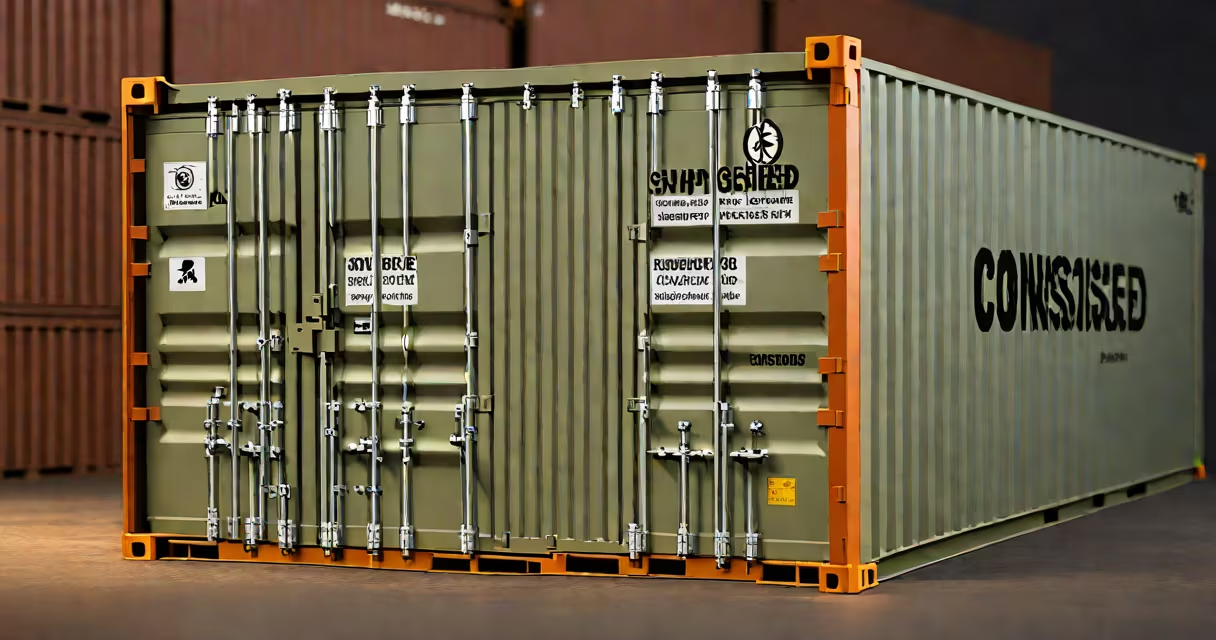
The consignee in shipping is the individual or company legally entitled to receive cargo upon arrival at its destination. This role appears on the bill of lading and determines who has authority to claim the shipment from the carrier.
On international shipments, the consignee is often listed as the buyer, importer, or distributor. The term is distinct from the shipper (who sends the goods) and the freight forwarder (who arranges transport). Misidentifying the consignee causes customs holds, demurrage fees, and delayed warehouse entry.
For example, a U.S.-based retailer importing electronics from Shenzhen lists their logistics manager in Shanghai as the consignee. If the name is misspelled or the address outdated, the container may sit idle at the port for five days while corrections are processed. According to the International Air Transport Association (IATA), 14% of air freight delays stem from incorrect consignee data.
When a carrier accepts a shipment, they verify the consignee's identity against the bill of lading. Only the named consignee can sign for delivery or release the cargo from customs custody. This prevents unauthorized pickup and reduces theft risk.
Carriers use the consignee field to route documents, schedule deliveries, and coordinate with customs brokers. In ocean freight, the consignee must provide a customs broker with import documentation, including the commercial invoice and certificate of origin. Failure to supply correct consignee details results in clearance delays exceeding 72 hours, per U.S. Customs and Border Protection (CBP) data.
Consignment agreements may allow the consignee to reject damaged goods or request inspection. For perishable goods, such as fresh produce, the consignee must inspect within four hours of unloading. A 2022 study by the Journal of Supply Chain Management found that 63% of food spoilage incidents occurred due to late inspections caused by misrouted consignee notifications.
Consignment arrangements fall into three categories based on responsibility:
| Type | Responsibility | Common Use Case |
|---|---|---|
| Direct Consignee | Receives and clears goods independently | Importers buying direct from overseas suppliers |
| Third-Party Consignee | Acts on behalf of the actual recipient | Freight forwarders handling customs clearance |
| Designated Consignee | Named in contract but not necessarily the end user | Wholesalers receiving bulk orders for resale |
Some shipments use a "to order" consignee clause, allowing the shipper to assign the recipient later. This is common in trade finance, where banks hold title until payment is confirmed. Once funds clear, the bank releases the bill of lading to the buyer, who then becomes the consignee.
A key distinction: the consignee is not always the end customer. A manufacturer in Germany ships to a U.S. distribution center using a third-party logistics provider as the consignee. The actual buyers never interact with the carrier. The consignee's role ends at receiving the goods and notifying the internal warehouse team.
Many shippers mistake the consignee for the freight forwarder. The forwarder manages transport logistics but does not take possession of goods unless explicitly named as consignee. A forwarder acting as consignee assumes liability for customs duties and storage fees.
Another error is listing multiple consignees on a single bill of lading. This creates ambiguity. If two parties claim ownership, the carrier halts delivery until legal resolution. The Federal Maritime Commission reports that 8% of maritime disputes arise from overlapping consignee designations.
Even minor spelling errors cause issues. A 2021 audit by FedEx revealed that 12% of delayed deliveries involved incorrect consignee names-common cases included missing middle initials or mismatched company registration numbers. One client shipped 300 cartons of medical supplies to a hospital in Atlanta. The consignee was listed as "St. Joseph's Medical Center," but the correct name was "St. Joseph's Health System." The shipment was held for 96 hours until the discrepancy was flagged.
Always cross-check the consignee name and address against official business records. Use the same format as the entity's tax ID or import license. For international shipments, confirm the consignee's local VAT or GST registration number with the destination country's customs authority.
When using electronic bills of lading (eBLs), ensure the consignee field is digitally signed and timestamped. Blockchain-based systems like TradeLens validate consignee identities through secure credentials. In 2023, Maersk reported a 40% reduction in delivery disputes after implementing eBLs with verified consignee authentication.
I once managed a shipment of industrial machinery from Chicago to Dubai. The original bill listed the consignee as "Al-Falah Engineering LLC." After customs clearance, the agent requested a copy of the UAE trade license. We had the document, but the company name in the license used a different transliteration ("Al-Falah Engineering Co."). The delay cost $1,800 in storage fees. Since then, we've standardized name matching across all export documents.
Accurate consignee identification prevents costly delays and ensures compliance. Always verify the name, address, and registration status before finalizing the bill of lading. For further guidance on packaging and load stability, see this guide on shipping pallets.