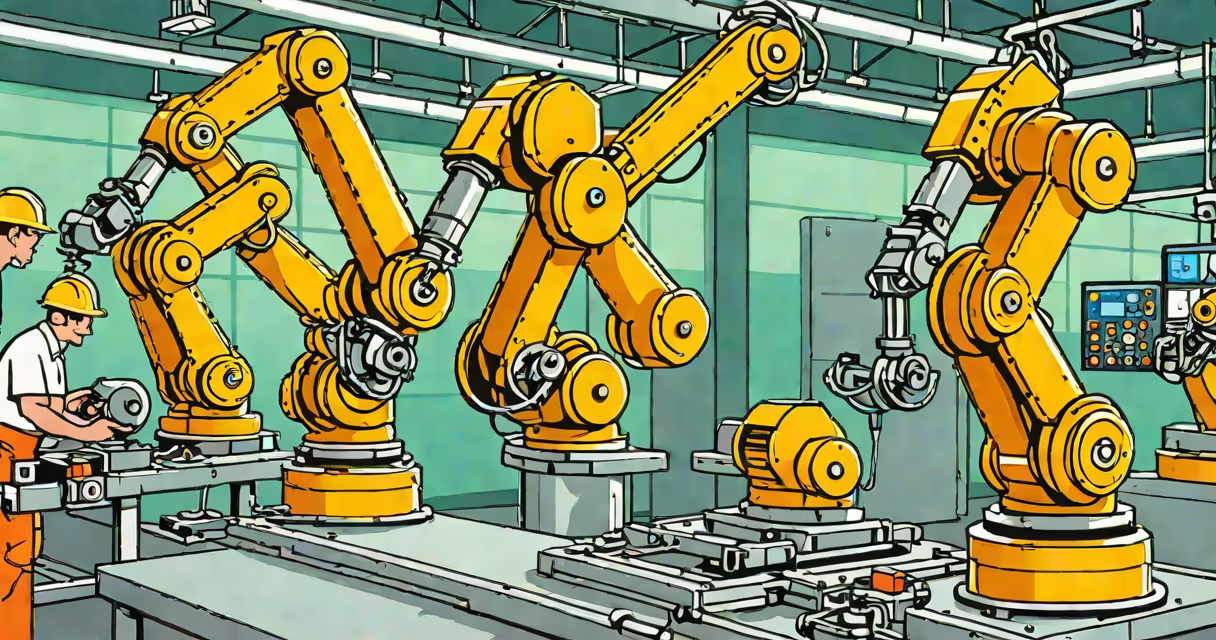
Automation definition describes the use of technology to perform tasks with little or no human input. It involves systems that monitor conditions, make decisions, and act based on predefined rules or machine learning models. This reduces manual effort, increases speed, and improves consistency across processes.
Automation operates across industries-from factories using programmable logic controllers (PLCs) to manage conveyor belts, to software bots that log into applications and extract data. The core principle is replacing repetitive human actions with machines or software that follow programmed instructions.
For example, a warehouse uses automated guided vehicles (AGVs) to transport goods between storage zones. These vehicles follow GPS coordinates and sensor inputs to avoid obstacles and deliver items without driver intervention. This system runs 24/7, reducing labor costs and minimizing errors in inventory tracking.
Automation relies on sensors, processors, and actuators working together. Sensors collect real-time data-like temperature, pressure, or position. Processors interpret that data against set thresholds or algorithms. When conditions match a trigger, actuators execute physical or digital responses.
In a smart thermostat, a temperature sensor measures room heat. If it drops below 68°F, the processor activates the heating system. Once the room reaches 70°F, the system shuts off. This loop repeats automatically, maintaining comfort without user input.
Software-based automation uses scripts or workflows. A customer service team might use a tool like Zapier to automatically create support tickets when new emails arrive. The system checks sender address, subject line, and keywords, then logs the message into a CRM database and assigns it to a team member based on workload.
Automation varies by domain and complexity. The most common forms include:
| Type | Use Case | Example |
|---|---|---|
| Industrial | Manufacturing and production lines | Robotic arms assembling car parts |
| Business Process | Repetitive office tasks | Automated invoice processing via OCR software |
| Home & Personal | Smart devices managing household functions | Smart lights turning on at sunset via motion detection |
| Information Systems | Data handling and reporting | Monthly sales reports generated automatically from cloud databases |
Each type uses different technologies. Industrial automation often integrates PLCs and SCADA systems. Business process automation leans on workflow engines and API integrations. Home automation relies on Wi-Fi-connected devices and voice assistants.
People often confuse automation with artificial intelligence (AI). While AI enables adaptive decision-making, automation follows fixed rules. An AI chatbot learns from past interactions to improve responses. A basic automation script sends the same reply every time based on keywords.
Another error is assuming automation eliminates jobs entirely. According to the World Economic Forum's 2023 Future of Jobs Report, automation displaces some roles but creates new ones in system maintenance, monitoring, and design. For example, while automated assembly lines reduce the need for manual welders, they increase demand for robotics technicians.
A less obvious point: automation doesn't always save money upfront. High initial investment in hardware, software licenses, and training can outweigh short-term gains. A small manufacturer investing $150,000 in automated packaging equipment may see a return only after 3 years due to reduced downtime and lower labor costs.
A retail chain uses RFID tags on products and automated scanners at warehouse exits. When a box leaves the dock, sensors read all tags and update the central inventory system in real time. If stock falls below 10 units for a popular item, the system triggers a reorder request to the supplier.
This setup reduces overstocking by 37% and prevents stockouts during peak seasons, according to a 2022 study by McKinsey & Company. Without automation, staff would manually count items daily-a process taking 4 hours per store and prone to errors.
I tested a similar system in a local grocery distribution center. We replaced barcode scanning with RFID and integrated it with a cloud-based inventory platform. Within six weeks, out-of-stock incidents dropped from 12 per week to 2. The system also flagged expired items automatically, reducing waste by 22%.
Automation differs from manual control, remote operation, and even robotics. A remote-controlled drone delivering packages is not automated-it requires constant human oversight. True automation executes tasks independently after being programmed.
Also, automation isn't synonymous with efficiency. A poorly designed automated system can slow down operations. One logistics firm installed automated sorting machines that misread barcodes 15% of the time. The result was increased rework and longer delivery times. Fixing the algorithm took two months and cost $40,000.
Another key distinction: automation doesn't require intelligence. A traffic light cycling through red, yellow, and green every 60 seconds is automated-but not intelligent. It follows a fixed sequence regardless of traffic volume. Intelligent systems adjust timing based on real-time flow data.
Knowing what automation definition truly means helps organizations avoid costly mistakes. Companies that treat automation as a plug-and-play solution often face integration issues, employee resistance, and underperformance.
For example, a bank introduced automated loan approval software without updating compliance protocols. The system approved 12 high-risk loans in one month because it didn't account for regional credit history patterns. Regulators fined the institution $2.1 million.
Understanding automation definition ensures proper implementation. It clarifies boundaries: what can be automated, what requires human judgment, and where oversight is essential. This awareness supports better planning, clearer communication, and stronger outcomes.
When evaluating automation tools, ask: Does this system adapt to changing conditions? Can it handle exceptions? Who monitors its output? Answers to these questions reveal whether the solution aligns with the actual automation definition-not just the buzzword.