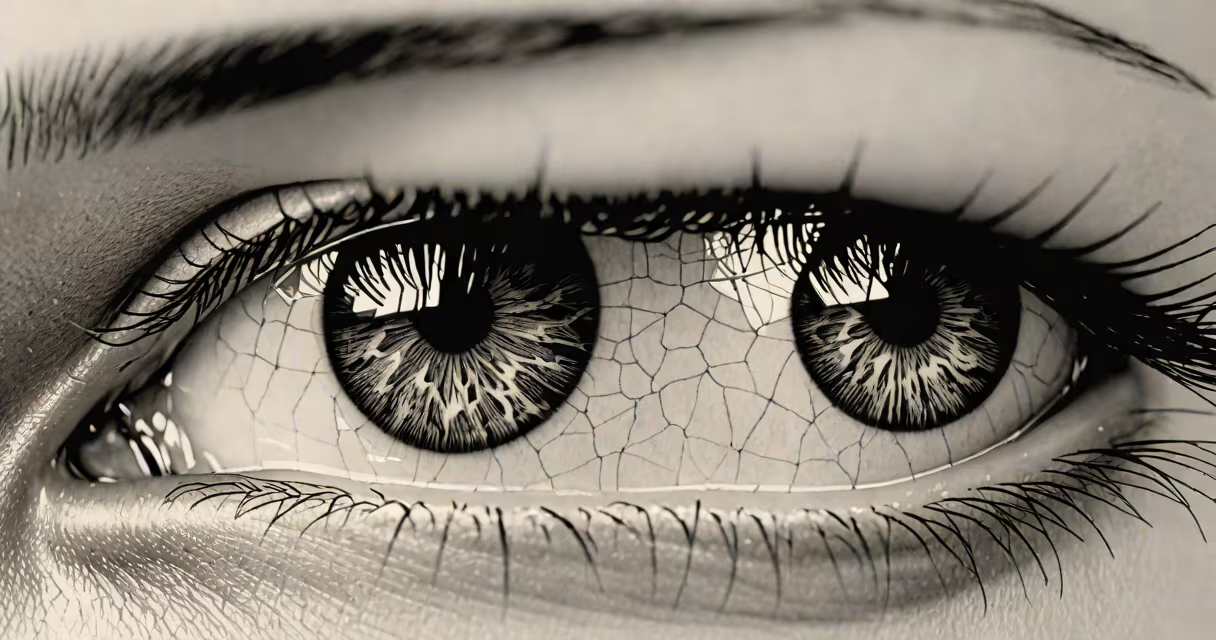
Astigmatism is a common refractive error caused by an irregularly shaped cornea or lens, which prevents light from focusing evenly on the retina, leading to blurred or distorted vision at all distances.
The cornea-the clear front surface of the eye-is usually curved like a basketball. In astigmatism, it's more oval-shaped, like a football. This uneven curve bends light differently in various directions, creating multiple focal points instead of one sharp image. The result is consistent blurriness, especially during tasks requiring visual precision such as reading or driving.
According to the American Academy of Ophthalmology, about 1 in 3 people in the United States has some degree of astigmatism. It often appears in childhood and may worsen gradually over time. It's not a disease-it's a structural variation in eye anatomy that affects how light enters and focuses.
Light entering the eye passes through the cornea and lens, both of which bend light to focus it precisely on the retina. In a normal eye, the cornea is symmetrically curved. In astigmatism, the curvature varies-more pronounced in one direction than another. This creates two separate focal points: one in front of the retina and one behind it.
Because of this, objects appear stretched or warped. A straight line may look wavy. Letters on a page blur together. These symptoms typically affect both near and far vision equally, unlike myopia (nearsightedness) or hyperopia (farsightedness), which primarily impact one distance range.
For example, someone with moderate astigmatism might see the letters "E" on a standard Snellen chart only when rotated at a specific angle. This is because the eye's optics align better with certain orientations of light. That's why optometrists test vision using lines in different directions during an eye exam.
There are two primary types based on the location of the refractive error:
| Type | Origin | Common Symptoms | Correction Method |
|---|---|---|---|
| Corneal astigmatism | Irregular corneal shape | Blurred vision at all distances, eye strain | Glasses, toric contact lenses, refractive surgery |
| Lenticular astigmatism | Abnormal lens shape | Blurry vision, difficulty with night vision | Same as above; less common |
Corneal astigmatism accounts for over 90% of cases. It can be congenital-present at birth-or develop due to eye trauma, cataract surgery, or keratoconus (a progressive thinning of the cornea).
Some people inherit astigmatism. Research published in Investigative Ophthalmology & Visual Science shows that genetic factors contribute to corneal shape variation. However, it's not always hereditary-many individuals develop it later in life without family history.
Diagnosis begins with a complete eye exam. Your optometrist uses a keratometer to measure corneal curvature and a phoropter to test how different lenses affect your vision. They'll also perform a refraction test, asking you to compare which lens makes the letters on a chart clearer.
During testing, you might be asked to distinguish between vertical and horizontal lines. If clarity improves only when a specific lens orientation is applied, astigmatism is confirmed. The measurement is recorded in diopters and axis degrees-for example, −1.50 × 180. This means 1.5 diopters of correction needed at a 180-degree angle.
Correction options include:
I once had a patient who wore standard contacts for years with persistent blurriness. After switching to toric lenses, they reported seeing street signs for the first time since childhood. The difference wasn't just improved acuity-it was a return to normal visual experience.
People often confuse astigmatism with other vision problems. It's not the same as nearsightedness (myopia), which results from an elongated eyeball. Nor is it the same as farsightedness (hyperopia), caused by a short eyeball. Astigmatism affects focus across all distances.
Another myth: astigmatism causes eye fatigue or headaches. While eye strain can occur from uncorrected astigmatism, the condition itself doesn't cause permanent damage. It's not linked to retinal detachment or glaucoma, though regular eye exams are still essential.
Astigmatism does not worsen overnight. It progresses slowly, often over years. Sudden changes in vision should prompt an immediate eye checkup-not assumed to be astigmatism.
One overlooked fact: many people live with mild astigmatism without noticing it. The brain adapts to slight distortions, especially if both eyes compensate. Only when vision becomes disruptive do people seek care.
If you notice frequent squinting, eye discomfort while reading, or difficulty distinguishing fine details, schedule an eye exam. Children under 6 should have their first screening at age 3 or earlier if there's a family history of vision issues.
Early detection prevents amblyopia (lazy eye) in children. Untreated astigmatism can lead to reduced visual development during critical growth periods. The American Optometric Association recommends routine eye exams every one to two years for adults and annually for children.
Once diagnosed, treatment is straightforward. Most people adapt quickly to corrective lenses. Surgical correction offers long-term freedom from glasses-but requires careful evaluation of candidacy.
Understanding what it means when you have astigmatism removes fear and clarifies action steps. It's not a flaw-it's a variation in eye structure that modern medicine corrects reliably and safely.