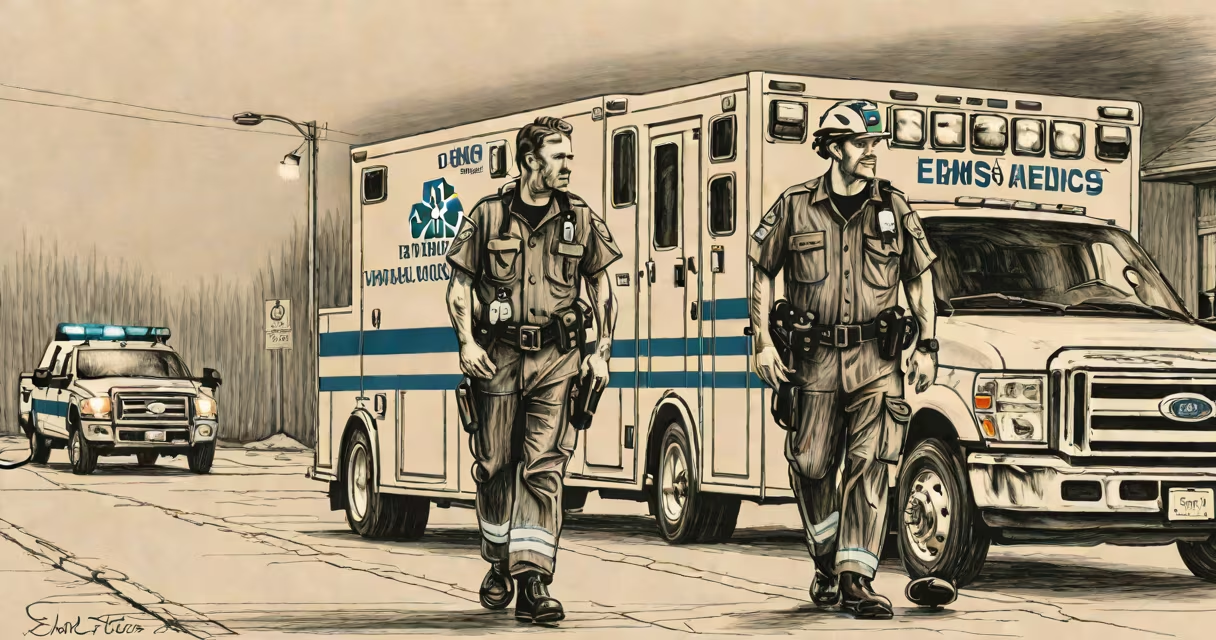
EMS stands for Emergency Medical Services. It is the coordinated network of personnel, vehicles, and facilities responsible for delivering immediate medical care to individuals experiencing acute illness or injury, from the scene to definitive treatment in a hospital.
EMS operates under standardized protocols developed by national health organizations. These protocols ensure consistent response times, triage accuracy, and treatment effectiveness across regions. The system includes pre-hospital care providers such as paramedics and emergency medical technicians (EMTs), who assess patients, administer life-saving interventions, and transport them safely.
The National Highway Traffic Safety Administration (NHTSA) defines EMS as "a system of emergency medical care that includes trained personnel, communication systems, transportation, and medical direction." This structure supports rapid response and improves survival rates in cardiac arrests, trauma incidents, and severe allergic reactions.
When a 911 call is placed, dispatchers use geographic location data to assign the nearest available EMS unit. Paramedics arrive within minutes-typically 6 to 10 minutes in urban areas, longer in rural zones. Upon arrival, they perform a primary survey: airway, breathing, circulation, disability, exposure (ABCDE).
For example, in a 2022 study published in the Journal of the American Heart Association, patients receiving CPR within four minutes of cardiac arrest had a 45% higher survival rate than those treated later. EMS teams are trained to initiate CPR, defibrillation, and medication administration immediately upon assessment.
After stabilization, patients are transported to designated trauma centers or hospitals based on severity. EMS crews maintain continuous monitoring using devices like pulse oximeters, capnography, and electrocardiograms. All data is documented and shared with hospital staff to ensure smooth handoff.
EMS roles vary by training level and jurisdiction. The most common designations are:
| Role | Training Duration | Scope of Practice | Common Tasks |
|---|---|---|---|
| Emergency Medical Responder (EMR) | 40-60 hours | Limited | Basic first aid, bleeding control, AED use |
| Emergency Medical Technician (EMT) | 120-150 hours | Intermediate | IV access, oxygen therapy, spinal immobilization |
| Paramedic | 1,200-1,800 hours | Advanced | Medication administration, intubation, cardiac monitoring |
Each role reflects increasing clinical responsibility. Paramedics, for instance, can administer drugs like epinephrine, atropine, and lidocaine-medications not available to EMTs. This tiered structure ensures appropriate care based on provider skill and patient need.
Modern ambulances carry advanced equipment: automated external defibrillators (AEDs), portable ventilators, intravenous fluid pumps, and mobile electronic medical records systems. In 2023, the U.S. Department of Health and Human Services reported that 94% of EMS agencies now use electronic patient care reports (ePCRs), reducing documentation errors by 37% compared to paper forms.
EMS responds to over 110 million calls annually in the United States, according to the National Registry of Emergency Medical Technicians (NREMT). Common scenarios include motor vehicle crashes, heart attacks, strokes, overdoses, and falls in elderly patients.
For stroke cases, time is critical. The American Stroke Association states that administering tissue plasminogen activator (tPA) within 4.5 hours of symptom onset increases recovery chances by 30%. EMS teams identify stroke symptoms using tools like the Cincinnati Prehospital Stroke Scale and activate stroke protocols en route to the hospital.
A non-obvious fact: EMS is not limited to emergencies. Many systems now provide non-emergency medical transportation (NEMT) for patients needing dialysis, chemotherapy, or mental health appointments. In California, NEMT accounts for 18% of all EMS transports, highlighting the system's expanding role beyond acute care.
EMS is often confused with ambulance services alone. While ambulances are a key component, EMS encompasses the entire chain: dispatch, response, on-scene care, transport, and handover. An ambulance without trained personnel is not EMS.
Another misconception is that EMS workers are always doctors. They are not. Paramedics hold associate degrees or certificates and work under medical direction. Their authority comes from state licensing boards and standing orders approved by physicians.
I once observed a paramedic team respond to a suspected opioid overdose in a suburban neighborhood. The patient was unresponsive, with shallow breathing and pinpoint pupils. The team administered naloxone via nasal spray, reversed respiratory depression within five minutes, and stabilized the patient before transport. The entire event took less than ten minutes-proof of how quickly trained professionals act under pressure.
Some people assume EMS is only for urban areas. Rural EMS faces unique challenges: longer response times, fewer personnel, and limited access to specialty care. In Montana, average EMS response times exceed 15 minutes due to vast distances and low population density. Despite this, rural EMS programs have reduced mortality rates by 22% since 2015 through improved training and telemedicine support.
These distinctions prevent confusion in clinical settings and improve communication between healthcare providers.
EMS remains the frontline of medical response in crisis situations. Its structured approach, evidence-based practices, and trained workforce make it essential to public health outcomes. When someone says "EMS," they're referring to a nationwide system designed to save lives in the moments that matter most.