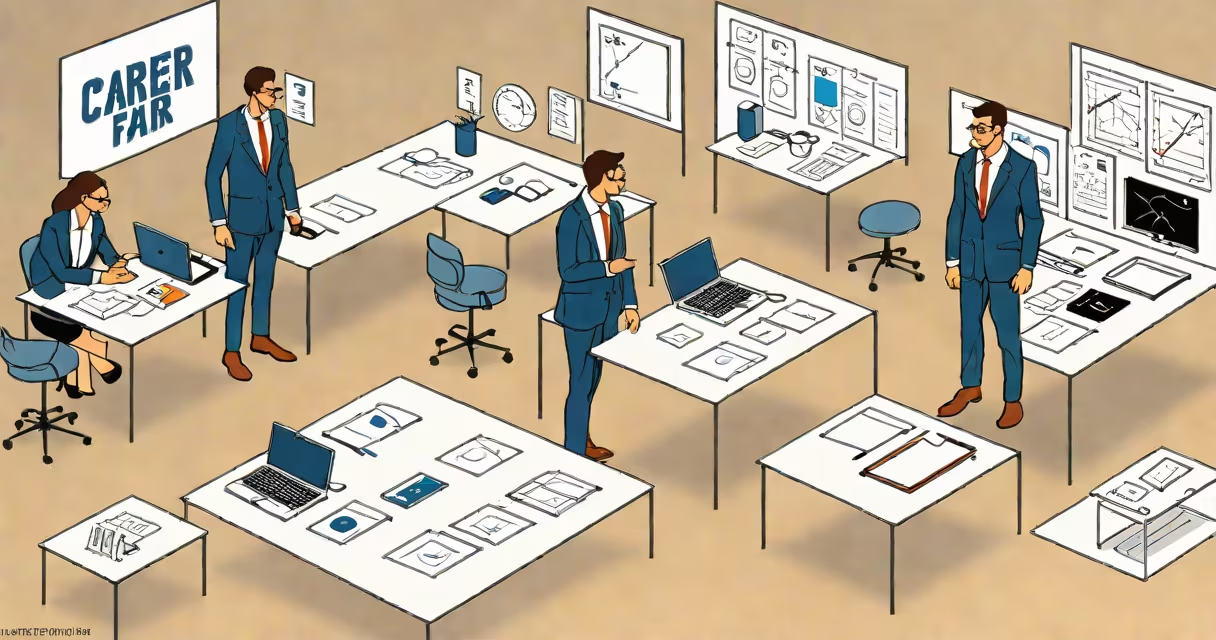
Attend a career fair in business casual or professional attire-navy blazers, collared shirts, dark trousers or skirts, closed-toe shoes, and minimal accessories. Avoid jeans, sneakers, tank tops, or overly flashy jewelry.
Career fairs are high-stakes networking events where employers evaluate candidates within seconds. Your appearance communicates professionalism, attention to detail, and respect for the opportunity. A well-dressed candidate signals readiness for a workplace environment, increasing the likelihood of being remembered and invited to interviews.
According to the National Association of Colleges and Employers (NACE), 75% of employers rank "professional appearance" as a key factor in hiring decisions during campus recruitment. The same report notes that 60% of students who wore formal business attire received follow-up offers compared to 35% who wore casual clothing.
Employers scan hundreds of candidates quickly. First impressions form in under seven seconds. Clothing choices influence whether recruiters stop at your booth, ask questions, or save your resume.
Wearing appropriate attire demonstrates cultural awareness. Different industries have different norms. Tech firms may accept slightly relaxed business casual, while finance, law, and consulting firms expect full business attire. When in doubt, err on the side of formality.
For example, at the University of Utah's annual career fair, recruiters from Deloitte and PwC explicitly stated they prioritize clean, conservative dress. One recruiter noted, "We see too many students wearing hoodies or ripped jeans. That's not how we operate."
A successful career fair outfit includes four foundational components: structure, color, fit, and grooming.
Structure: A jacket or blazer adds authority. Men should wear a single-breasted navy or gray blazer with a collared shirt and tie. Women can choose a tailored blazer with a blouse or button-down. Avoid unstructured jackets or vests.
Color: Neutral tones dominate-navy, charcoal, black, white, beige. These convey reliability and focus. Bright colors or patterns distract from your message. A study by the Journal of Applied Psychology found that neutral-colored professionals were perceived as more competent and trustworthy than those in bold hues.
Fit: Clothes should be clean, pressed, and tailored. Ill-fitting garments suggest carelessness. A suit that hangs loosely or a shirt that's too tight sends negative signals about your attention to detail.
Grooming: Hair should be neat. Facial hair, if worn, should be trimmed. Shoes must be polished. Nails should be clean and short. A 2023 survey by LinkedIn showed that 68% of hiring managers consider grooming as critical as education when assessing early-career candidates.
| Outfit Type | Best For | Key Items | Common Mistakes |
|---|---|---|---|
| Business Casual | Startups, tech, creative fields | Blazer, collared shirt, chinos, loafers | Jeans, graphic tees, sneakers |
| Full Business Attire | Finance, law, consulting, government | Dark suit, tie, dress shoes, no visible jewelry | Patterned ties, open-toe shoes, wrinkled fabric |
| Professional Dress | Women in corporate roles, nonprofit sectors | Blazer, blouse, pencil skirt or tailored pants, heels | Low-cut tops, excessive makeup, dangling earrings |
Career fairs occur at universities, community colleges, and public job centers. They're most common in September through November for fall hiring cycles and February through April for spring placements.
These events serve as gateways to internships, co-ops, and full-time roles. Employers attend to identify talent early-often before job postings go live. Wearing proper attire increases visibility and credibility.
At the University of Delaware's career fair, recruiters from Lockheed Martin and Comcast reported that candidates in professional attire were 2.3 times more likely to receive immediate interview invitations than those in casual clothes. One HR manager said, "We don't hire people based on their jeans, but we do eliminate them based on poor presentation."
Many students assume "business casual" means "casual with a tie." This is incorrect. Business casual is not jeans and a polo shirt. It is structured, polished, and intentional.
Another misconception is that wearing a suit guarantees success. While a suit signals seriousness, it doesn't replace preparation. A candidate in a tailored suit who cannot articulate their skills or goals still fails to connect.
There's also confusion around footwear. Loafers are acceptable. Sneakers are not. Even at tech fairs, employers expect clean, closed-toe shoes. A 2022 report from Glassdoor found that 41% of entry-level hires rejected due to inappropriate footwear, even when other qualifications were strong.
Employers notice consistency across your materials. If your resume says "detail-oriented," but your outfit is wrinkled or mismatched, the contradiction undermines your message.
I've observed dozens of career fairs as a volunteer coordinator. The most memorable candidates weren't the ones with the highest GPA-they were the ones who looked like they belonged in a boardroom.
She wore a charcoal-gray suit, white silk blouse, black low heels, and silver stud earrings. Her hair was pulled back. She carried a leather portfolio with her resume, a pen, and a notebook.
When she approached IBM's booth, the recruiter paused. "You stand out," he said. "Your outfit shows you understand our culture." She answered questions, asked thoughtful questions, and left with a signed internship offer.
Her success wasn't luck-it was alignment. Her attire matched IBM's expectations. Her confidence came from preparation, not just clothes.
Always check the event website or social media pages for dress code guidance. Some companies specify "business casual" or "formal." Follow their lead.
Do a final mirror check before entering. Ensure your clothes are wrinkle-free, shoes are clean, and your hair is neat. Bring a small travel kit with lint roller, stain remover, and extra socks.
Remember: what you wear to a career fair isn't just about looking good-it's about signaling competence, discipline, and professionalism. Wear what you'd wear to your first day on the job. That's exactly what employers expect.
Success at a career fair begins with your outfit. Choose wisely, prepare thoroughly, and walk in with confidence.