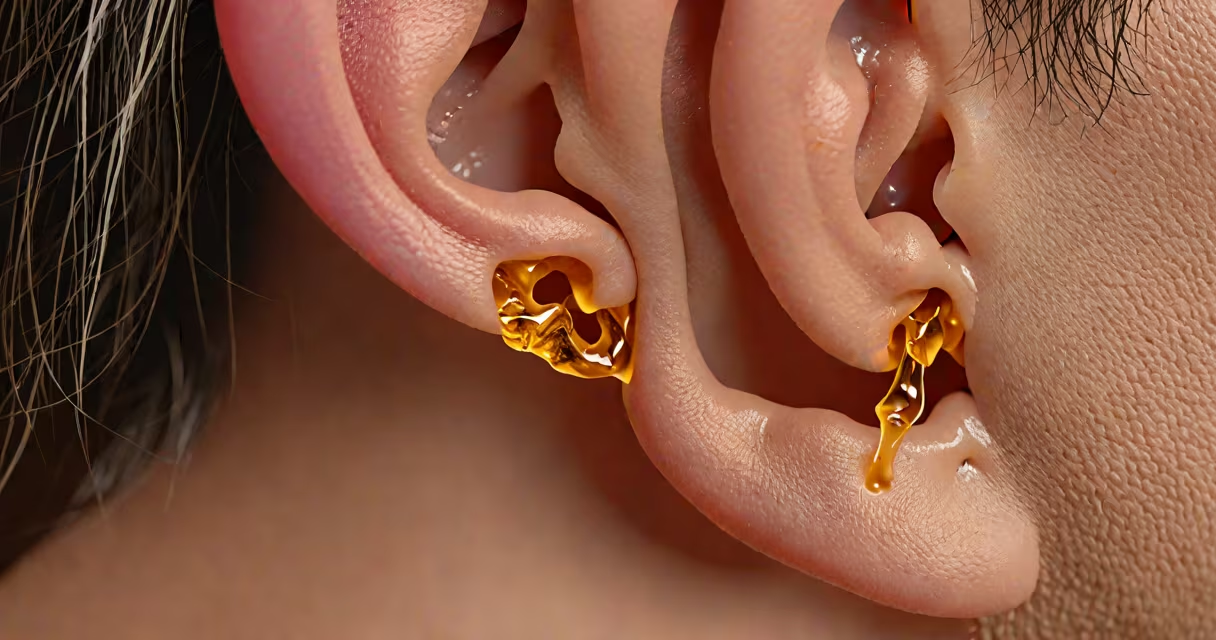
Ear wax impaction happens when ear wax (cerumen) accumulates too deeply in the ear canal, forming a solid plug that blocks sound transmission and may cause discomfort. This condition affects about 5% of adults annually and is often preventable.
Cerumen is a natural substance produced by glands in the outer ear canal. It traps dust, debris, and microbes, then slowly migrates out through jaw movement and skin shedding. When this process fails, wax builds up and hardens, leading to impaction. The most common triggers include improper cleaning methods, anatomical factors, and environmental exposure.
Ear wax is normally expelled through natural jaw motion-chewing, talking, and yawning. The skin lining the ear canal moves outward at about 1 mm per day, carrying wax toward the ear opening. When this system is disrupted, wax can't exit and accumulates. Over time, moisture loss causes wax to dry and compact, forming a dense plug.
Impaction typically begins with excess wax production or reduced clearance. Once wax reaches the narrowest part of the ear canal-the isthmus-it can't move further. Pressure builds, distorting the eardrum and reducing sound conduction. The brain interprets this as muffled hearing or fullness, even though the inner ear functions normally.
A 2021 study in The Journal of Laryngology & Otology found that 68% of patients diagnosed with ear wax impaction had used cotton swabs in the past month. This practice pushes wax deeper rather than removing it, increasing impaction risk by nearly fourfold.
Several factors increase the likelihood of ear wax impaction. The most significant are:
Non-obvious fact: Cerumen isn't just wax-it's a mix of sebum, sweat, dead skin cells, and antimicrobial proteins. Its composition varies between individuals, and some people produce wax that hardens faster due to higher cholesterol content.
Many assume ear wax impaction results from poor hygiene. In reality, it's often caused by over-cleaning. Removing wax too frequently disrupts the ear's self-cleaning mechanism, prompting glands to produce more wax as a compensatory response.
Another confusion: people equate ear fullness with infection. While both can cause pressure, impaction lacks fever, discharge, or severe pain. Fullness from impaction resolves quickly after wax removal. In contrast, ear infections usually involve sharp pain, swelling, and sometimes fluid drainage.
Distinction: Impaction is not the same as excessive ear wax. Excess wax refers to volume; impaction refers to location and impact. A person can have large amounts of wax without obstruction. Impaction requires the wax to reach the eardrum and interfere with function.
In 2022, a 58-year-old man presented with progressive hearing loss and a sensation of fullness in his left ear. He reported using cotton swabs daily for five years. On otoscopy, a firm wax plug blocked the entire ear canal. After irrigation with warm saline, hearing returned to normal within 24 hours. His symptoms resolved completely after removal.
This case illustrates how routine home remedies worsen the problem. The patient had no history of ear infections or allergies. His wax was not unusually thick-it simply hadn't been able to exit due to mechanical interference from swabbing.
Do not attempt to remove impacted wax at home. Methods like ear candling are ineffective and dangerous. The FDA warns that ear candles can cause burns, perforated eardrums, and wax blockages.
Medical treatment options include:
| Treatment | How It Works | Success Rate |
|---|---|---|
| Ear irrigation | Warm water flushes wax out using gentle pressure | 85% |
| Manual removal | Specialized instruments used under direct vision | 95% |
| Softening drops | Over-the-counter solutions like carbamide peroxide dissolve wax | 60% (when used correctly) |
For persistent cases, a doctor may prescribe prescription-strength drops or refer to an ENT specialist. The NIDCD recommends professional evaluation if symptoms last longer than two weeks.
I once observed a clinic where a patient used a flashlight to look inside their ear and attempted to remove wax with tweezers. The procedure failed, and the wax was pushed deeper. The patient later required manual removal under local anesthesia. This underscores that self-treatment increases risk.
Preventive steps include avoiding cotton swabs, limiting earbud use, and using over-the-counter wax softeners once a month if prone to buildup. For frequent issues, a healthcare provider can recommend regular checkups.
People who wear hearing aids should clean devices regularly and schedule biannual ear exams. The AAO-HNS notes that 40% of hearing aid users report wax-related problems, many of which stem from inadequate maintenance.
Understanding what causes ear wax impaction prevents unnecessary suffering. Recognizing early signs-muffled hearing, itching, or mild pain-leads to timely care. Avoiding home remedies reduces complications.
Ear wax impaction is a preventable condition rooted in anatomy, behavior, and environment. Knowing the real causes allows for informed choices and better ear health outcomes.