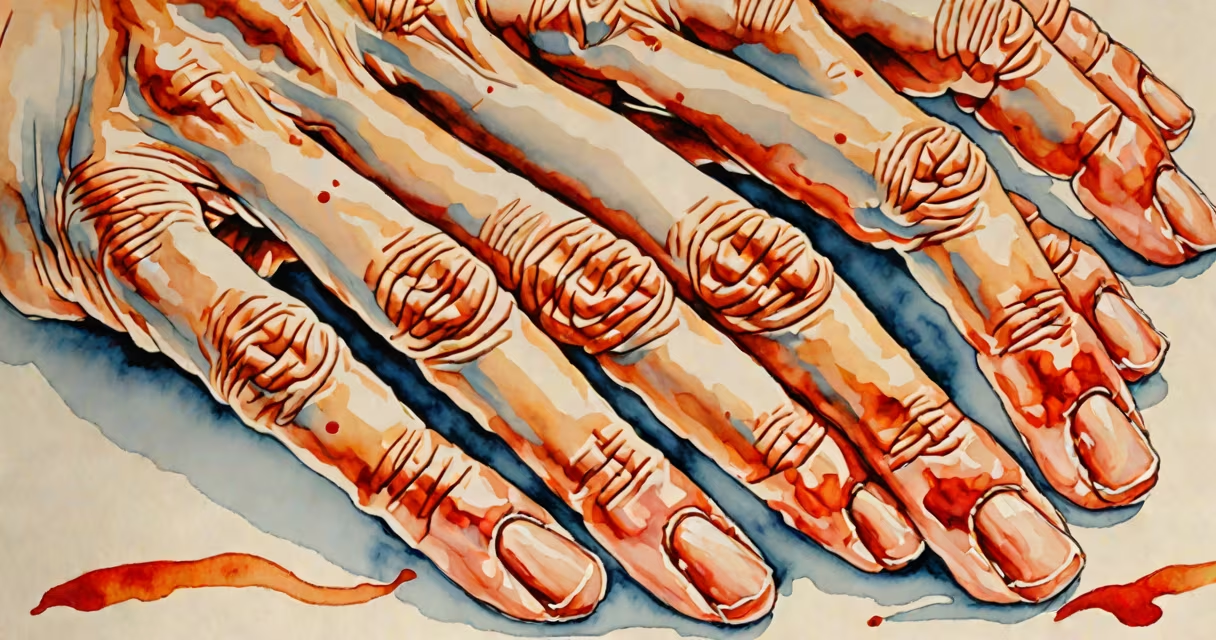
Arthritis in the hands results from joint inflammation due to immune system attacks, cartilage breakdown, or genetic predisposition. It manifests as pain, stiffness, swelling, and reduced grip strength, most commonly from osteoarthritis or rheumatoid arthritis.
Hand arthritis begins when the body's natural joint protection fails. Cartilage wears down over time, or the immune system mistakenly targets joint linings. These processes lead to pain and loss of motion in fingers, thumbs, and wrists. The condition affects over 54 million adults in the U.S., according to the CDC, with hand involvement seen in nearly half of those diagnosed.
Most cases stem from two distinct root causes: mechanical degeneration (osteoarthritis) or immune-driven destruction (rheumatoid arthritis). Distinguishing between them guides treatment. Osteoarthritis typically develops slowly after years of use. Rheumatoid arthritis often appears suddenly, affecting multiple joints symmetrically.
Joint health relies on a balance between wear and repair. In healthy hands, cartilage cushions bones, synovial fluid reduces friction, and blood vessels deliver nutrients. When this balance breaks, inflammation sets in.
In osteoarthritis, repetitive motion or injury damages cartilage. As it thins, bones rub directly, causing pain and bone spurs. This process is common in people who perform frequent manual tasks-such as carpenters or musicians-and increases with age. By age 65, about 80% of adults show some signs of joint degeneration, though not all develop symptoms.
Rheumatoid arthritis is an autoimmune disorder. The immune system attacks the synovium-the lining of joints-causing chronic inflammation. This leads to tissue erosion, joint deformity, and nerve compression. Symptoms often begin in the small joints of the hands and feet, spreading over months. Early diagnosis improves outcomes, as untreated disease can cause irreversible damage within two years.
Understanding the type clarifies the underlying cause. The two most common forms differ in origin, progression, and treatment.
| Type | Primary Cause | Onset Pattern | Common Symptoms | Prevalence |
|---|---|---|---|---|
| Osteoarthritis | Cartilage wear from aging or overuse | Gradual, over years | Pain with movement, bony nodules (Heberden's and Bouchard's nodes) | ~80% of hand arthritis cases |
| Rheumatoid arthritis | Autoimmune attack on synovial tissue | Sudden, symmetrical, over weeks | Morning stiffness lasting >30 minutes, swelling, fatigue | ~1% of U.S. population; higher in women |
Psoriatic arthritis, another autoimmune form, affects people with psoriasis. It causes asymmetrical swelling, sausage-like digit enlargement (dactylitis), and nail changes. Up to 30% of individuals with psoriasis develop joint issues, often involving the distal interphalangeal joints-the ones closest to fingertips.
A less common but critical cause is gout. Uric acid crystals deposit in joints during metabolic imbalance. Gout in the hands is rare compared to the big toe, but it can occur. A 2021 study in Arthritis & Rheumatology found that 12% of gout patients reported hand involvement, usually in the thumb base or wrist.
Many assume all hand pain is arthritis. Not true. Tendonitis, carpal tunnel syndrome, and Dupuytren's contracture mimic arthritis but involve different tissues. Carpal tunnel compresses the median nerve, causing tingling, numbness, and weakness-not joint swelling.
Another misconception: arthritis only happens in older adults. While osteoarthritis is age-related, rheumatoid arthritis often begins between ages 30 and 50. The average onset is 40, per the American College of Rheumatology. Women are three times more likely to develop it than men.
Crucially, hand arthritis is not always progressive. Some people with mild osteoarthritis manage symptoms for decades without worsening. Others with aggressive rheumatoid arthritis deteriorate rapidly. Early intervention prevents joint fusion and disability.
A 52-year-old woman reported morning stiffness in her right hand, difficulty turning keys, and pain when gripping a coffee mug. She had no history of trauma. Physical exam revealed tender, swollen proximal interphalangeal joints and a positive rheumatoid factor test. Ultrasound showed synovial thickening and fluid.
She was diagnosed with early rheumatoid arthritis. Within six months of starting methotrexate and biologic therapy, her joint swelling reduced by 70%, and she regained 90% of grip strength. Her case illustrates how early diagnosis alters long-term outcomes.
By contrast, a 70-year-old man with gradual knuckle pain and hard lumps on his finger joints had Heberden's nodes. X-rays confirmed osteoarthritis. He managed with acetaminophen, heat, and activity modification-no medication needed beyond symptom control.
Consult a rheumatologist if you notice persistent joint swelling, warmth, or morning stiffness lasting more than 30 minutes. Early signs include difficulty buttoning shirts, opening jars, or typing. Delayed care increases risk of permanent joint damage.
Arthritis in the hands is not inevitable. Preventive steps include maintaining a healthy weight, avoiding repetitive strain, and managing comorbidities like diabetes. Regular hand exercises improve range of motion and reduce stiffness.
Understanding what causes arthritis in your hands enables accurate diagnosis and timely treatment. Whether due to wear, autoimmunity, or crystal deposits, identifying the root cause shapes effective management.